
- Home
- Company
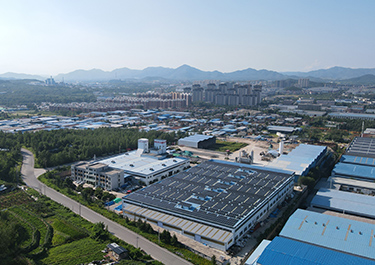 Our FactoryWe have a team of more than 30 talented geotechnical material R&D experts and a 30,000 square meter advanced modern intelligent manufacturing plant.
 - Products
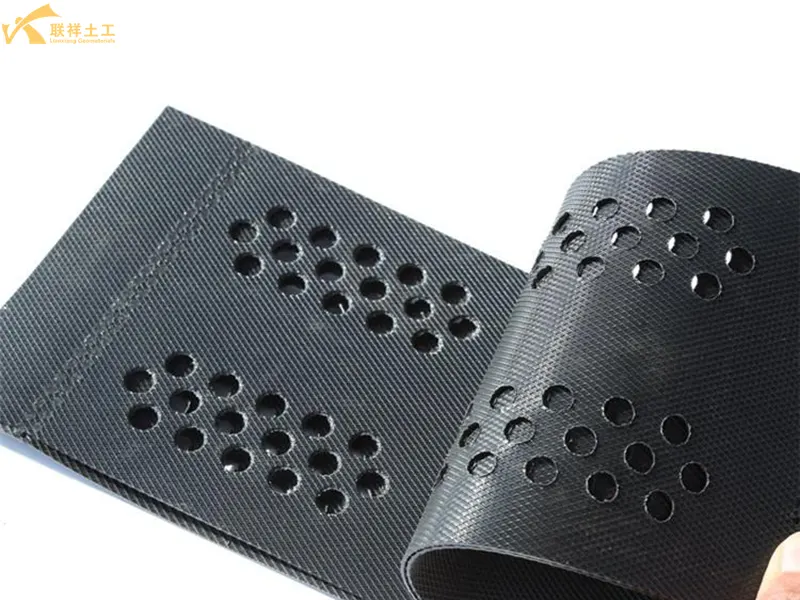
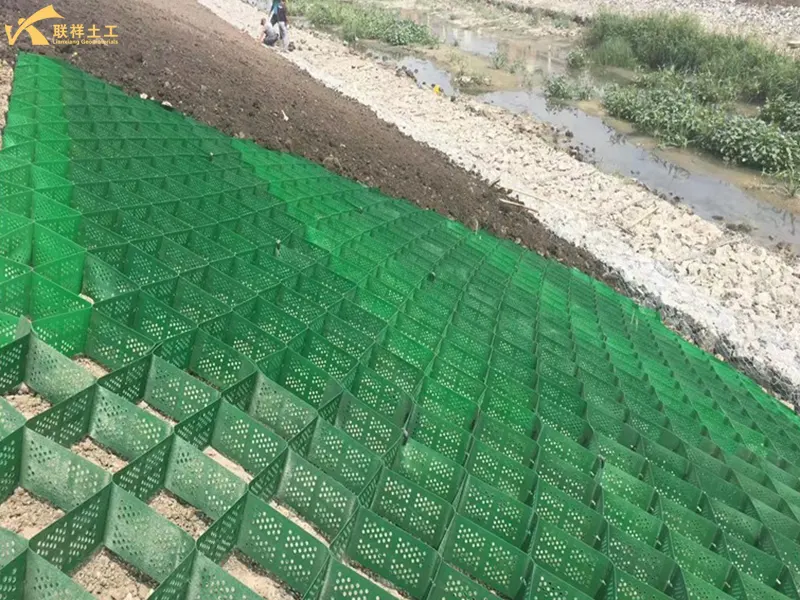
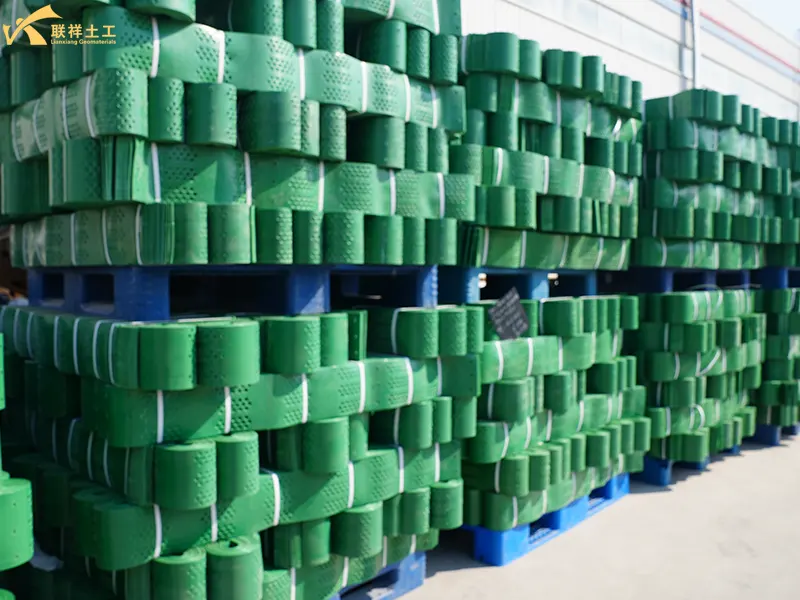
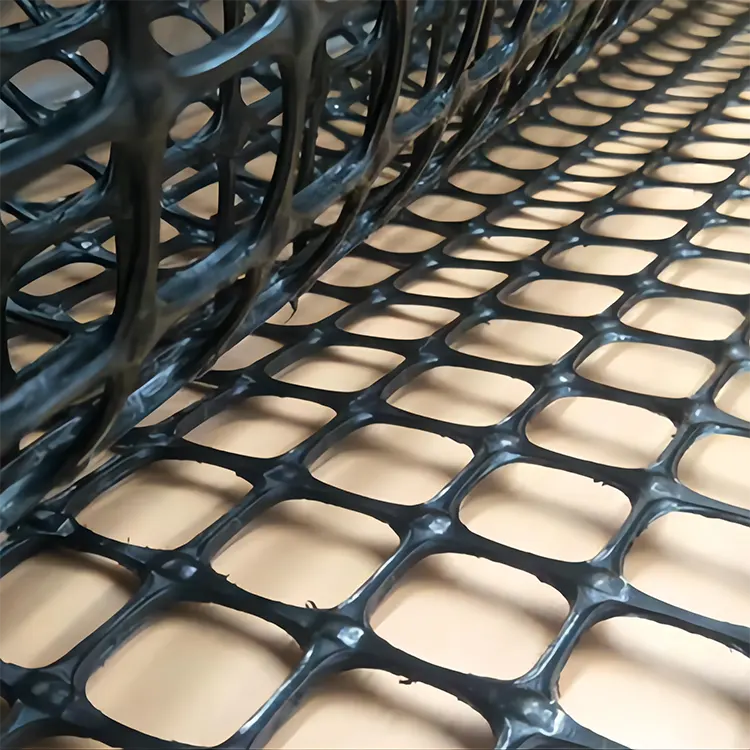
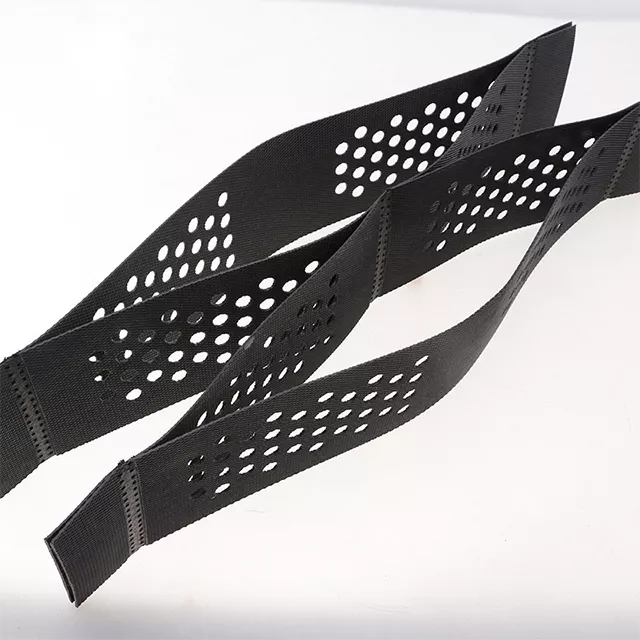 Geocell is a three-dimensional mesh structure made of high-strength polymer sheets (such as HDPE, PP, etc.) through ultrasonic welding. When unfolded, it presents a three-dimensional grid shape.
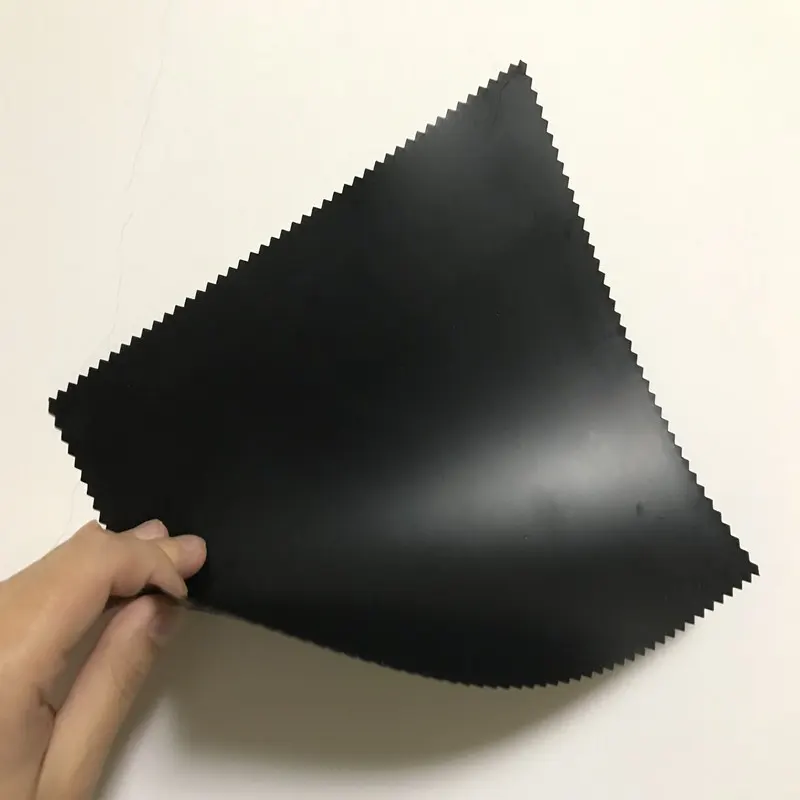 Geomembrane is a thin, extremely low-permeability sheet material made from high-molecular-weight polymers (high-density polyethylene, linear low-density polyethylene).
 - Blog
- Contacts
Solutions for Erosion Control and Slope Stabilization of Geocells in Hydraulic Engineering


In the construction and operation of water conservancy projects, bank erosion and instability are common hazards, easily leading to river course changes, reservoir leakage, and canal collapse, threatening project safety and the surrounding ecological environment. Geocells, as a novel geosynthetic material, possess significant advantages in confining soil, enhancing erosion resistance, and improving bank stability due to their unique three-dimensional structure. Based on the material properties and engineering application experience of geocells, this solution proposes a systematic technical solution for bank erosion prevention and stability in water conservancy projects, providing guidance for engineering design, construction, and operation and maintenance.
1. Scope of Application
This solution is applicable to various riverbank scenarios in water conservancy projects that are prone to erosion or have insufficient stability, mainly including:
- Riverbanks: Especially severely eroded areas such as concave banks of meandering river sections, sections subjected to main current surges, and sections affected by sand mining, as well as the reinforcement of natural riverbanks with steep slopes and loose soil.
- Reservoir Slopes: Reservoir banks, spillway inlet and outlet slopes, and slopes connecting to water conveyance tunnel entrances, areas requiring resistance to seepage damage and erosion caused by wind and wave impacts and water level fluctuations.
- Water Diversion Channels: Earthen channel slopes and aqueduct inlet and outlet connecting sections, addressing channel deformation and leakage problems caused by water flow erosion.
- Soil and Water Conservation Projects: Slopes of sloping farmland and barren slopes around water conservancy hubs and in watershed management, scenarios that consider both erosion prevention and ecological restoration needs.
- Post-Disaster Restoration Projects: Emergency reinforcement and repair of riverbanks damaged by floods, debris flows, and other disasters, areas requiring rapid restoration of riverbank stability.
2. Core Technology Principles
2.1 Erosion Prevention Principle
Geocells, through unfolding, form a three-dimensional honeycomb structure, confining the filling soil (or sand, gravel, vegetation substrate, etc.) within the cell units to form a composite structure with high integrity and shear strength. Its erosion prevention effect is mainly reflected in three aspects: First, the cell structure can effectively disperse the impact force of water flow, reduce the shear stress of water flow on the slope surface, and prevent soil particles from being directly eroded and stripped; second, the integrity of the confined composite soil is improved, reducing internal porosity, lowering the permeability coefficient, and inhibiting phenomena such as piping and undercutting caused by water seepage; third, vegetation or protective layers can be laid on the cell surface to further enhance the slope's erosion resistance and achieve ecological protection.
2.2 Slope Stability Principle
The core reason for slope instability is that under the action of slope self-weight, water flow load, etc., the soil's shear strength is insufficient or the sliding force is greater than the anti-sliding force. Geocells enhance slope stability through the following mechanisms: First, the friction and interlocking forces between the cells and the filling soil significantly improve the shear strength of the composite soil, enhancing the slope's internal anti-sliding capacity. Second, the three-dimensional structure constrains the lateral deformation of the slope soil, preventing slope collapse. Third, the cells act as reinforcement layers, evenly transferring the load from the upper slope to the lower stable soil, reducing local stress concentration. Fourth, for embankment slopes, cells can be laid in layers to form a stepped reinforcement structure, further improving the overall slope stability.
3. Technical Solution Design
3.1 Material Selection
3.1.1 Geocell Materials
Based on the working conditions of the hydraulic engineering project (such as water flow velocity, water level fluctuations, soil properties, etc.), high-strength, aging-resistant, and corrosion-resistant geocell materials will be selected. High-density polyethylene (HDPE) or polypropylene (PP) will be the preferred materials. Specific technical parameters must meet the following requirements:
- Sheet thickness: ≥1.5mm, to enhance the structural bearing capacity.
- Tensile strength: ≥25MPa, elongation at break: 10%-15%, to ensure that it is not easily broken under load.
- Aging resistance: After artificial accelerated aging test (168h ultraviolet irradiation), the tensile strength retention rate is ≥80%, suitable for the long-term outdoor service environment of hydraulic engineering projects.
- Cell size: Cell height 50-200mm (selected according to the water flow scour intensity and slope height; high cells are selected for severely eroded areas), cell side length 300-600mm, to ensure constraint effect and construction convenience.
3.1.2 Filling Materials
The preferred filling materials are well-graded gravel, crushed stone, or improved soil, meeting the following requirements:
- Particle size distribution: Particle size 5-40mm, mud content ≤5%, avoiding excessive fine particles that reduce the permeability coefficient and cause seepage damage.
- Compaction degree: Compaction degree ≥93% after filling, enhancing the integrity and shear strength of the composite soil.
- For scenarios requiring ecological protection, ecological substrates (composed of planting soil, organic fertilizer, water-retaining agent, grass seeds, etc.) can be used as the surface filling material, balancing stability and ecological restoration.
3.1.3 Auxiliary Materials
These include fixing anchors (reinforced steel anchors or plastic anchors, diameter ≥12mm, length ≥300mm), geotextile (short-fiber needle-punched nonwoven geotextile, weight ≥200g/㎡, used for seepage prevention and soil particle loss prevention at the bottom of slopes), and connecting clips (matching the geocell material to ensure a firm connection between the geocell units).
3.2 Structural Design
3.2.1 Erosion Resistance Structure Design
For different water flow erosion intensities, a composite structure of "geocell + filling material + surface protection" is adopted, with specific designs as follows:
- Mild erosion areas (water flow velocity v≤2m/s): Geocells with a height of 50-100mm and a side length of 400-600mm are selected. The bottom layer is laid with geotextile, and the cells are filled with gravel. Herbaceous plants can be directly planted on the surface to further enhance erosion resistance through the root system.
- Moderate erosion areas (2m/s<v≤4m/s): Geocells with a height of 100-150mm are selected. Geocells with a height of 150-200mm and a side length of 300mm, A geotextile layer is laid at the bottom, the cells are filled with crushed stone, and a 3-5cm thick layer of eco-concrete or grass pavers is laid on the surface, balancing erosion control and ecological protection.
- Severe erosion areas (v > 4m/s): High-strength geocells with a height of 150-200mm and a side length of 300mm are selected. A double layer of geotextile is laid at the bottom (one layer for seepage prevention, one layer for protection). The cells are filled with high-strength crushed stone (compressive strength ≥ 30MPa), and the surface is finished with mortar or granite slabs to enhance impact resistance.
- Furthermore: At the slope toe, erosion control trenches or retaining walls must be constructed. The trenches should be ≥ 1.0m deep and ≥ 0.8m wide, filled with rubble or precast concrete blocks to prevent water erosion of the slope toe and subsequent slope instability.
3.2.2 Slope Stabilization Structure Design
Based on the slope gradient, height, and soil characteristics, a layered geocell reinforcement structure is adopted. The specific design is as follows:
- Slope Ratio Design: For soil slopes, after geocell reinforcement, the slope ratio can be optimized from 1:2.5-1:3.0 to 1:1.5-1:2.0, reducing earthwork excavation. For rock slopes, geocells can be laid on the surface, and the slope ratio can be adjusted to 1:1.0-1:1.5 based on rock integrity.
- Layered Laying: When the slope height is >3m, a layered laying method is adopted, with each layer 1.5-2.0m high. The overlap width between layers is ≥300mm, and anchor bolts are used to fix the overlaps to ensure layer stability. The geocells are securely connected.
- Anchoring Design: Anchors are installed at the top, toe, and edges of each geocell layer of the slope. The anchors are spaced 1.0-1.5m apart in a quincunx pattern. The top anchors are embedded at a depth of ≥500mm into the stable soil, and the anchors in the middle of the slope are embedded at a depth of ≥300mm, ensuring a tight bond between the geocells and the slope to prevent slippage.
- Drainage Design: Drainage blind ditches are installed inside the slope (spaced 3-5m apart). These ditches use perforated corrugated pipes wrapped with geotextile to drain seepage water from the slope, reducing pore water pressure and preventing seepage damage that could lead to slope instability. Drainage holes (spaced 2-3m apart) are installed on the slope surface, connected to the drainage blind ditches, to promptly drain surface water.
4. Key Points of Construction Technology
4.1 Construction Preparation
- Site Survey: Confirm the slope gradient, soil properties, and water flow conditions of the construction area; verify design parameters; and adjust the plan if necessary.
- Material Inspection: Conduct incoming inspection of materials such as geocells, geotextiles, and anchors; check product certificates and performance test reports; sample and test key parameters (such as tensile strength of geocells and weight of geotextiles); unqualified materials are prohibited from use.
- Slope Trimming: Remove weeds, tree roots, loose soil, and other debris from the slope surface; level the slope, controlling the slope deviation within ±5°; for pitted areas, backfill and compact with the same type of soil to ensure a smooth slope.
4.2 Sub-base Laying
Lay the geotextile on the trimmed slope. The geotextile should be connected by overlapping, with an overlap width of ≥300mm. The overlaps should be sewn together or secured with special clips to prevent displacement due to water erosion. The geotextile should be laid flat and wrinkle-free, adhering tightly to the slope surface. A 300-500mm extension should be reserved at the top and bottom of the slope for fixation and protection.
4.3 Geocell Deployment and Connection
- Lay the geocells flat on the geotextile and deploy them according to the design direction, ensuring the cells are neat and free of twisting.
- Connect adjacent geocell units using snap-fit fasteners. The joints should fit tightly, with at least two fasteners installed at each connection point to ensure a secure connection and prevent them from falling off under stress.
- At the top of the slope, to the toe of the slope, and at the edges of each layer of cells, use anchor bolts to fix the geocells to the slope. The anchor bolts should be driven vertically into the slope surface, embedding to the stable soil to the required depth, and the bolt heads should be pressed firmly against the geocells to prevent slippage.
4.4 Filling and Compaction
After the geocells are fixed, fill them with pre-prepared filling material. Filling should be done in layers, with each layer's height ≤ 1/2 of the geocell height. Avoid collisions with the geocells during filling to prevent deformation. After filling, compact using a small roller or plate vibrator, proceeding from the slope toe to the top and from the inside to the outside, ensuring the compaction degree meets design requirements. After compaction, the surface of the filling material should be flush with the top of the geocell, without obvious depressions or protrusions.
4.5 Surface Protection and Finishing
Surface protection construction should be carried out according to design requirements: In ecological protection areas, grass seeds can be directly sown or turf laid, followed by covering with non-woven fabric to retain moisture; in ecological concrete or grass paver protection areas, lay and fix according to the designed thickness; in heavily eroded areas, lay mortar or granite slabs to ensure a smooth and firm surface. After construction, clean up debris on the slope, check the slope drainage system for blockages, and compact and fix the extension sections at the slope top and toe, completing the entire construction process.
5. Quality Control and Testing
5.1 Material Quality Control
Establish an incoming material inspection system. Sampling and testing will be conducted on each batch of incoming geocells, geotextiles, anchors, etc. The focus will be on testing the tensile strength and aging resistance of the geocells, the basis weight and tensile strength of the geotextiles, and the material and dimensions of the anchors. Test results must meet design requirements before materials can be used for construction.
5.2 Construction Process Quality Control
- Slope Finishing Quality: Regularly check slope gradient and flatness; rectify any deviations exceeding allowable limits promptly.
- Geotextile Laying Quality: Check geotextile overlap width and fixation to ensure no wrinkles or damage.
- Geocell Connection and Fixing Quality: Check the number and firmness of connection clips, anchor embedding depth, and fixation effectiveness to prevent loose connections and anchor detachment.
- Filling and Compaction Quality: Regularly test the compaction degree of the filling material using the ring cutter method or sand cone method. At least 3 points should be tested per 100㎡. If compaction is unqualified, recompact until requirements are met.
5.3 Finished Product Inspection
After construction, a comprehensive inspection of the reinforced slope will be conducted, including: slope surface flatness (deviation ≤ 50mm), geocell integrity (no damage, no displacement), surface protection effect (no loosening, no cracks), and drainage system patency (drainage holes are unblocked, drainage is normal). Regarding slope stability,slope stability analysis software can be used for calculation, or on-site settlement observation (observation period no less than 3 months) can be used for verification, ensuring that the slope settlement is ≤ 10mm and there are no obvious signs of sliding.
6. Key Points of Operation and Maintenance Management
- Regular Inspections: Conduct monthly inspections of the reinforced slope, focusing on whether geocells are damaged or displaced, whether surface protection is loose or detached, whether the drainage system is unobstructed, and whether there is erosion at the slope toe. Increase inspection frequency during the flood season to ensure timely detection of potential hazards.
- Hazard Management: When geocells are found to be damaged, promptly clean the damaged area, replace with new geocells, and refill and compact. If surface protection is loose or detached, re-fix or re-lay it. If the drainage system is blocked, promptly remove debris to ensure unobstructed drainage. If erosion occurs at the slope toe, promptly backfill with rubble or concrete to reinforce the toe.
- Long-Term Monitoring: Settlement and displacement monitoring points are set up at key locations on the slope. Monitoring is conducted quarterly, and the data is recorded to analyze the trend of slope stability changes. If abnormal settlement or displacement occurs, reinforcement measures are taken promptly.

7. Engineering Application Benefits
7.1 Safety Benefits
Geocell reinforcement significantly improves the erosion resistance and stability of riverbanks, effectively preventing slope collapses, river course changes, and other disasters, ensuring the safety of the main structure of the water conservancy project and the lives and property of surrounding residents.
7.2 Economic Benefits
Geocell materials are lightweight, easy to transport, and have simple construction processes, shortening the construction period by 30%-50%. Compared with traditional masonry and concrete protection, project costs can be reduced by 20%-40%, with low operation and maintenance costs, resulting in significant long-term economic benefits.
7.3 Ecological Benefits
In areas with mild to moderate erosion, vegetation cover can be achieved, improving the regional ecological environment quality and promoting soil and water conservation. Geocell materials are recyclable, causing no environmental pollution, and meeting the requirements of green water conservancy project construction.
8. Precautions
- Construction should avoid the flood season. If avoidance is not possible, temporary protective measures (such as laying waterproof fabric and setting up temporary retaining walls) must be taken to prevent water erosion from affecting construction quality.
- Geocells should be stored in a cool, dry environment, avoiding direct sunlight and rain to prevent aging and deterioration.
- For areas with seismic intensity ≥7 degrees, seismic resistance measures (such as denser anchors and the use of high-strength geocells) must be added to the design to ensure bank slope stability.
- When constructing on navigable riverbanks, warning signs must be set up, and navigation times must be coordinated to avoid conflicts between construction and navigation.
This solution combines the material properties of geocells with the actual working conditions of hydraulic engineering, achieving a synergistic solution for erosion prevention and bank slope stability, balancing safety, economy, and ecology. In practical applications, design parameters should be optimized according to specific project conditions (such as soil properties, water flow velocity, slope height, etc.) to ensure the applicability and effectiveness of the solution.
Written by
SHANDONG LIANXIANG ENGINEERING MATERIALS CO., LTD.
Kyle Fan
WhatsApp:+86 139 5480 7766
Email:admin@lianxiangcn.com
-
WhatsApp
-
E-MailE-Mail:admin@lianxiangcn.com
-
WeChatWeChat:18554180188