
- Home
- Company
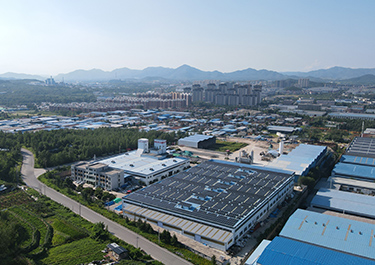 Our FactoryWe have a team of more than 30 talented geotechnical material R&D experts and a 30,000 square meter advanced modern intelligent manufacturing plant.
 - Products
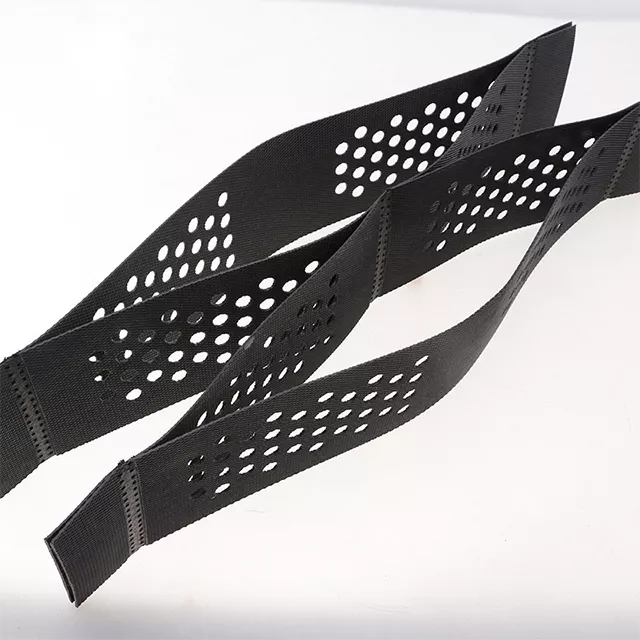 Geocell is a three-dimensional mesh structure made of high-strength polymer sheets (such as HDPE, PP, etc.) through ultrasonic welding. When unfolded, it presents a three-dimensional grid shape.
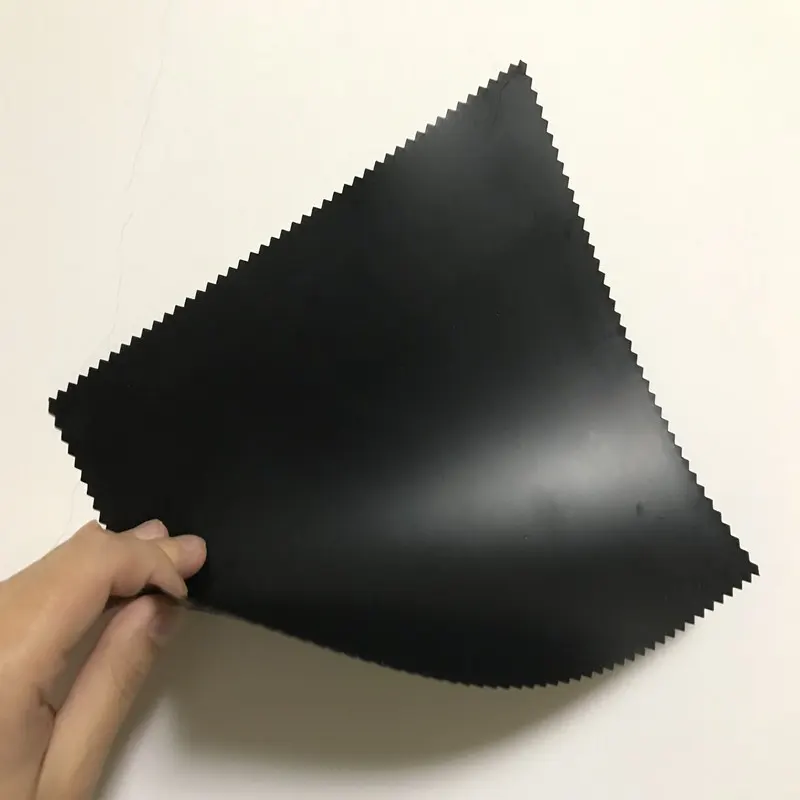 Geomembrane is a thin, extremely low-permeability sheet material made from high-molecular-weight polymers (high-density polyethylene, linear low-density polyethylene).
 - Blog
- Contacts
Six Core Reasons for the Low Price of Fiberglass Geogrid


Geogrids, as important engineering auxiliary materials, have wide applications in many fields. With continuous technological development, the types and materials of geogrids have increased significantly in recent years. For example, in terms of materials, steel-plastic geocells, fiberglass geogrids, and plastic geogrids have emerged, as well as triangular geogrids, biaxial geogrids, and uniaxial geogrids. The emergence of various geogrids has led to a variety of prices, making it difficult for purchasers to choose. Among them, fiberglass geogrids are the cheapest. Many people believe that cheap geogrids must be of poor quality, but this is incorrect. Every type of geogrid has its advantages and disadvantages. For fiberglass geogrids, low price is its biggest advantage, followed by environmentally friendly production and recyclable waste. The disadvantage is poor practicality in specific application environments. Today, I will mainly explain the reasons for the relatively low price of fiberglass geogrids from multiple aspects, including raw material properties, production processes, industry maturity, product characteristics, and cost optimization in engineering applications.
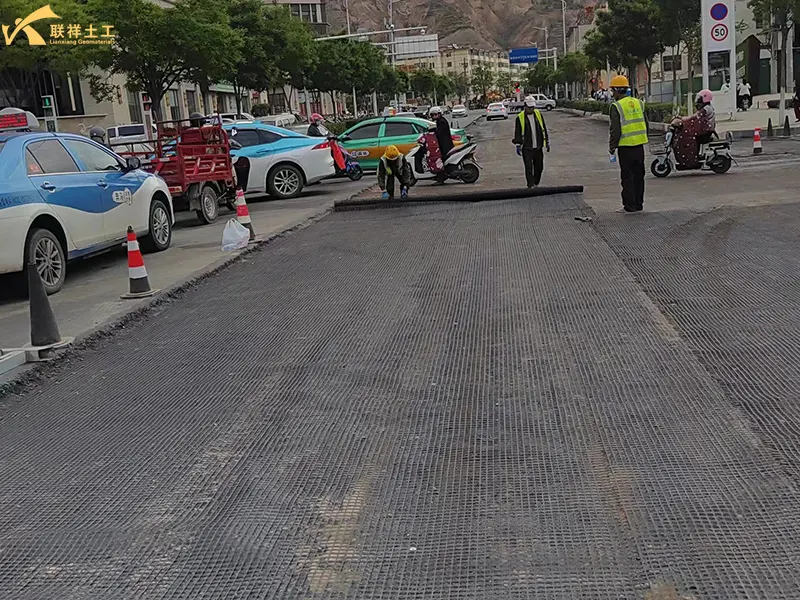
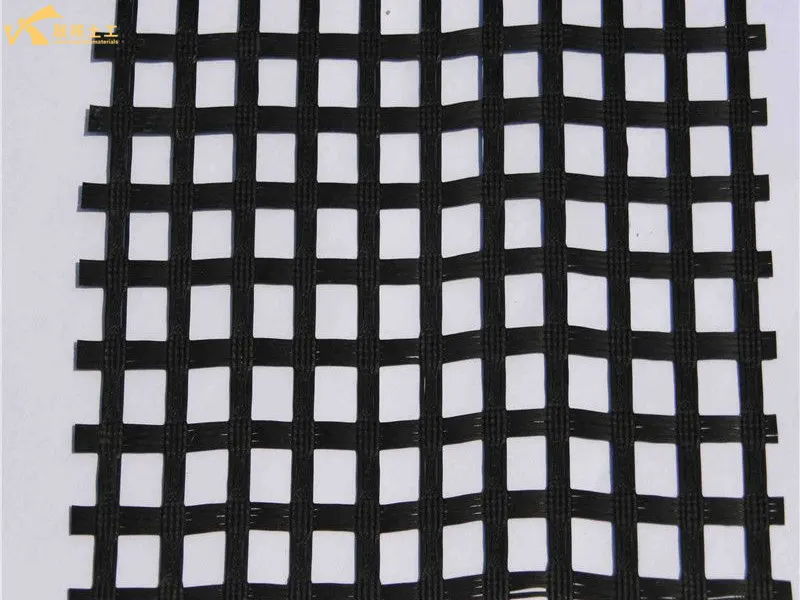
1. Raw materials are readily available and fundamental, resulting in inherently lower raw material costs.
The core raw material of fiberglass geogrids is glass fiber, which is produced from abundant natural non-metallic minerals or basic chemical raw materials such as quartz sand, soda ash, limestone, and feldspar. These are widely distributed, easy to mine and process, and their procurement costs are significantly lower than those of steel wire used in steel-plastic geogrids or high-end polyester chips used in polyester geogrids.
Furthermore, auxiliary materials used in fiberglass production (such as impregnating agents) are mostly general-purpose chemicals, lacking scarcity, further reducing raw material costs.
In contrast, other geogrids have higher raw material costs:
- Plastic geogrids: The main raw material is polypropylene (PP) or high-density polyethylene (HDPE). As petrochemical products, their price is linked to international crude oil prices and fluctuates significantly, resulting in higher overall costs than glass fiber.
- Steel-plastic geogrids: Using both steel wire and plastic, their material costs are even higher.
- Polyester fiber warp-knitted geogrids: The raw material is polyester, which is also more expensive than glass fiber.
Shandong Lianxiang Geotechnical's fiberglass geogrids boast world-leading performance across various indicators. This is primarily due to the use of the world's highest quality natural non-metallic minerals as raw materials and the company's advanced production processes. For many years, the company's total production and sales volume of fiberglass geogrids have consistently outpaced its competitors. For product inquiries, please feel free to contact Lianxiang Geotechnical.
2. A Complete Process Flow Based on Seven Standards
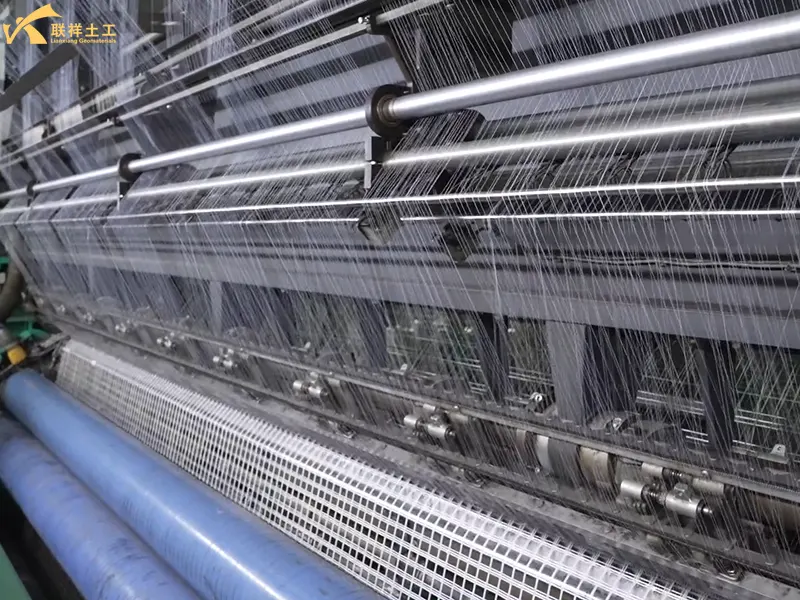
The production process of fiberglass geogrids mainly utilizes warp knitting, supplemented by a small amount of machine weaving (suitable for special widths/high-requirement customization). The core process revolves around fiberglass raw material treatment → mesh weaving → resin impregnation and curing → post-treatment and shaping. The entire process is a continuous production line. Resin impregnation and curing are crucial steps determining the finished product's weather resistance, corrosion resistance, and adhesion. Standardized processes significantly reduce production costs, making an indelible contribution to lowering product prices.
2.1. Fiberglass Raw Material Preparation and Pretreatment
- Core Raw Material: Alkali-free/medium-alkali fiberglass raw materials (typically 12-24μm in diameter; alkali-free fiberglass has better tensile strength and is the mainstream choice; medium-alkali fiberglass is cheaper and suitable for lower-requirement applications). These require pre-treatment with a sizing agent (a core step in fiberglass production; no additional removal is needed before impregnation; the sizing agent contains coupling agents and lubricants, which improve the bonding strength between the fiberglass and the subsequent adhesive, preventing raw material breakage during weaving).
- Core Equipment: Fiberglass raw material bobbin holder, tension adjustment device.
- Key Operating Points: Control the tension of each strand of raw material to ensure uniformity, preventing loose or broken fibers during subsequent weaving. Raw material bobbins must be neatly arranged and twisted according to a preset number of strands (e.g., 24 strands, 36 strands) to form fiberglass yarn bundles for weaving.
- Process Purpose: To provide uniformly strong and less prone-to-break fiberglass yarn bundles for weaving, ensuring the mechanical consistency of the subsequent mesh.
2.2. Warping Process
- Core Function: The warp yarns, after being twisted, are neatly arranged according to the preset transverse spacing of the mesh (standard 25mm, 50mm, customizable 10mm-100mm) and wound into a warp beam, preparing for warp knitting. This is a prerequisite for ensuring the uniformity of the mesh size.
- Core Equipment: High-speed batch warping machine/slit warping machine (adaptable to different production capacities; slit warping machines can produce large warp beams with widths of 6-8 meters).
- Key Operating Points: Warping tension deviation should be controlled within ±5%, warp yarns should be arranged without overlap or gaps, and the warp beam should be wound flat to prevent mesh misalignment during weaving.
2.3. Warp Knitting (Core of Mesh Formation)
- Core Principle: Warp yarns interweave to form loops through the loop-forming mechanism of the warp knitting machine, creating a continuous longitudinal reinforcement. Simultaneously, the weft yarns pass uniformly through the warp loops from the weft-insertion mechanism, without forming loops, serving only a lateral shaping function. This ultimately forms a neat, seamless, interwoven mesh fabric.
- Core Equipment: High-speed Raschel warp knitting machine (dedicated to geogrids, speed 800-1200 r/min, high capacity), weft yarn feeding device, mesh size adjustment mechanism.
- Key Operating Points: Precisely control the mesh size (e.g., 25×25mm, 50×50mm, 40×60mm) by adjusting the warp/weft yarn spacing using the equipment; synchronize the weft yarn feeding speed with the warp knitting loop-forming speed to prevent mesh skewing and deformation; the fabric width can be formed in one pass to 2-8 meters, reducing subsequent splicing.
- Process Objective: To form a fiberglass geogrid blank with a stable mechanical structure. Strength is ensured in the longitudinal direction (warp) by the interlacing of warp yarns, and overall stability is ensured in the transverse direction (weft) by the weft yarns.
2.4. Impregnation Process (Key to Finished Product Performance)
- Core Function: To fully impregnate the fiberglass geogrid blank with the adhesive, allowing the adhesive to coat each fiberglass filament, forming a protective film and improving the geogrid's weather resistance, corrosion resistance, adhesion, and overall integrity (unimpregnated fiberglass geogrids are prone to oxidation and cracking, making them unsuitable for engineering use).
- Core Raw Materials: General-purpose adhesives are divided into three categories, suitable for different engineering scenarios, and can be formulated as needed:
- Modified asphalt adhesive (mainstream, low cost, excellent adhesion to asphalt pavements, suitable for road engineering).
- Polyester resin adhesive (good weather resistance, suitable for slopes, landfills, and other open-air scenarios).
- Epoxy resin adhesive (alkali resistant, high strength, suitable for high-alkali soils, cement base courses, and other special scenarios, slightly higher cost).
- Core Equipment: Impregnation tank, extrusion rollers (upper and lower rollers), adhesive circulation device.
- Key Operating Points: Control the temperature of the adhesive in the impregnation tank (80-100℃ for modified asphalt, room temperature for resin adhesive) to ensure adhesive fluidity; adjust the amount of adhesive applied by adjusting the gap between the extrusion rollers (standard finished product weight 80-120g/㎡, adhesive application rate 60%-70%) to avoid excessive adhesive causing the grid to harden, or insufficient adhesive causing exposed fiberglass fibers; recycle the adhesive, filter impurities, and reduce waste.
2.5. Curing and Shaping (Core Process After Impregnation)
- Core Function: High temperature causes the adhesive impregnated in the grid to undergo a cross-linking reaction, curing and shaping it, tightly bonding the adhesive layer with the fiberglass fibers to form a stable "fiberglass-adhesive layer" composite structure. Simultaneously, it shapes the grid, preventing subsequent deformation. Only after curing does the grid possess the mechanical properties and weather resistance required for engineering projects.
- Core Equipment: Continuous curing oven (hot air circulation/infrared heating, divided into preheating, curing, and cooling sections).
- Key Operating Points: Controlling the curing temperature and speed according to the type of adhesive is the core control point of the process:
- Modified asphalt adhesive: Curing temperature 120-150℃, curing time 1-2 minutes.
- Polyester/epoxy resin adhesive: Curing temperature 160-180℃, curing time 2-3 minutes.
- The oven temperature deviation should be controlled within ±3℃ to avoid insufficient curing (sticky adhesive layer) or over-curing (brittle grid).
2.6. Post-processing Steps
- Core Function: Cooling, trimming, and winding the cured grid to obtain a uniform semi-finished product, eliminating edge burrs and dimensional deviations during production.
- Core Equipment: Cooling rollers (water-cooled/air-cooled), CNC trimming machine, winding machine, tension holding device.
- Key Operating Points: Cut edges only after cooling to room temperature to avoid cracking of the adhesive layer due to high-temperature cutting; ensure neat edges, free of burrs and missing corners, with width deviation controlled within ±10mm; maintain uniform winding tension and tight winding; standard roll lengths are 50m and 100m, custom lengths are available upon request.
2.7. Finished Product Inspection and Packaging
- Inspection Items: Divided into appearance inspection and performance inspection, both must comply with the national standard GB/T 21825-2008 "Fiberglass Geogrid". Only products passing inspection can be stored:
- Appearance: Regular mesh without skewing, neat edges without damage, no exposed fibers, no bubbles, and no cracks in the adhesive layer.
- Performance: Tensile strength (warp/weft), elongation at break (≤3% is acceptable), alkali resistance retention rate (alkali-resistant models ≥85%), adhesion (with asphalt mixture).
- Core Equipment: Universal testing machine, anti-aging test chamber, alkali resistance test chamber, appearance inspection instrument.
- Packaging Highlights: Double-layer packaging using waterproof plastic film and woven bags, clearly labeled with specifications (mesh size, width, roll length, weight), model, production date, and applicable standards to prevent damage to the adhesive layer and moisture absorption during transportation/storage.
3. Lightweight Product, Minimal Material Consumption per Unit Area
The core advantages of fiberglass geogrids are high modulus, high strength, and low density. The tensile strength of glass fiber is close to that of steel wire, while its density is only 1/4 that of steel wire and 2/3 that of plastic. Therefore, while meeting the same reinforcement requirements in engineering projects, the weight per unit area of fiberglass geogrids is significantly lower than other types of geogrids (e.g., conventional road fiberglass geogrids weigh only 80-120 g/m², steel-plastic geogrids are mostly 300-500 g/m², and metal geogrids can reach several kilograms/m²).
Simply put, "achieving the same performance with less material" directly reduces raw material consumption in material production, which is the core intrinsic factor for cost reduction.
4. Highly Complete Industrial Chain, Significantly Reduced Costs Across the Entire Chain
China is the world's largest producer of fiberglass and fiberglass products, and the upstream and downstream industrial chain for fiberglass geogrids is extremely complete:
- Upstream: From quartz sand mining and fiberglass filament production to adhesive processing, enterprises at each stage are concentrated (e.g., in Shandong, Jiangsu, and Hebei provinces), resulting in short raw material transportation distances and low logistics costs.
- Midstream: Numerous fiberglass geogrid manufacturers operate, with equipment, molds, and accessories being standardized products, leading to low maintenance and replacement costs. Intense industry competition leaves no room for price premiums, forcing continuous cost reduction at the production end.
- Downstream: Standardized engineering applications and large order volumes allow companies to further reduce fixed costs such as equipment, labor, and management through large-scale production.
5. Recyclable Production Waste Reduces Raw Material Waste
Waste fibers and scraps generated during fiberglass production and grating processing can be remelted and recycled into fiberglass filaments without complex treatment, achieving a raw material recycling rate of over 90% and virtually eliminating solid waste loss. Excess adhesive from the impregnation process can be recycled, filtered, and reused, further reducing cost losses during production.
In contrast, separating steel wires from plastic in steel-plastic gratings is difficult; welding waste from metal gratings cannot be directly recycled; and waste fibers from polyester gratings require regranulation, resulting in higher recycling costs and greater raw material waste.
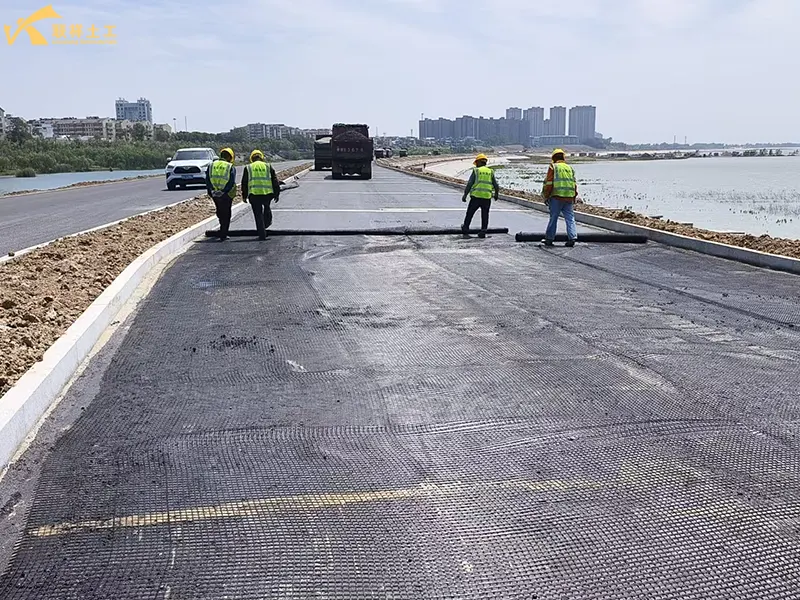
6. Comprehensive cost optimization in engineering applications further highlights overall cost advantages.
Users' perception of "low cost" includes not only the unit price of materials but also the comprehensive engineering costs such as construction, transportation, and losses. Fiberglass geogrids have significant advantages in this regard:
- Transportation costs: Their lightweight nature allows for the transport of 3-5 times the area of fiberglass geogrid per truck compared to steel/plastic/metal geogrids, significantly reducing logistics costs per unit area.
- Construction costs: Fiberglass geogrid widths can be customized to 6-8 meters (standard is 4 meters), greatly reducing on-site overlaps. Installation requires no heavy equipment and can be done manually, with overlap losses of only 1%-2%, far lower than the over 5% of steel/plastic/metal geogrids.
- Storage costs: After impregnation with resin, fiberglass geogrids are moisture-proof and anti-aging, allowing for open-air storage without the need for dedicated warehousing facilities, making storage costs negligible.
Product Specialization
The cost advantage of fiberglass geogrids is mainly reflected in conventional civil engineering projects such as roadbeds, pavement reinforcement, and shallow slope protection. For special working conditions such as high corrosion, high creep, and extreme low temperatures, high-end impregnating materials (such as alkali-resistant epoxy resin) are required, which will increase costs. However, even then, its overall cost is still lower than that of steel-plastic or metal geogrids under the same conditions.
In summary, the low cost of fiberglass geogrids is the result of a combination of inherent raw material properties and subsequent industrial maturity and process optimization. This is also one of the core reasons why it has become the most widely used and largest category of geogrids in road engineering and general civil engineering. China is currently the world's largest producer and seller of fiberglass geogrids, offering the lowest prices and impeccable quality. For inquiries, please contact Lianxiang Geotechnical.
Written by
SHANDONG LIANXIANG ENGINEERING MATERIALS CO., LTD.
Kyle Fan
WhatsApp:+86 139 5480 7766
Email:admin@lianxiangcn.com
-
WhatsApp
-
E-MailE-Mail:admin@lianxiangcn.com
-
WeChatWeChat:18554180188