
- Home
- Company
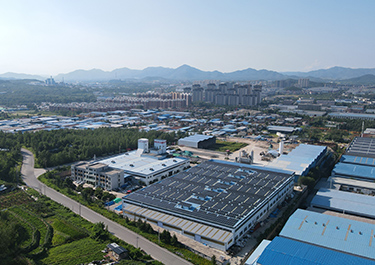 Our FactoryWe have a team of more than 30 talented geotechnical material R&D experts and a 30,000 square meter advanced modern intelligent manufacturing plant.
 - Products
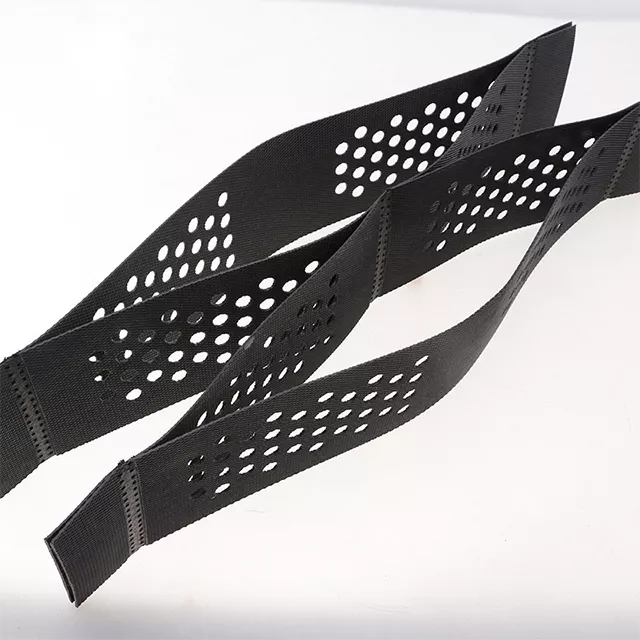 Geocell is a three-dimensional mesh structure made of high-strength polymer sheets (such as HDPE, PP, etc.) through ultrasonic welding. When unfolded, it presents a three-dimensional grid shape.
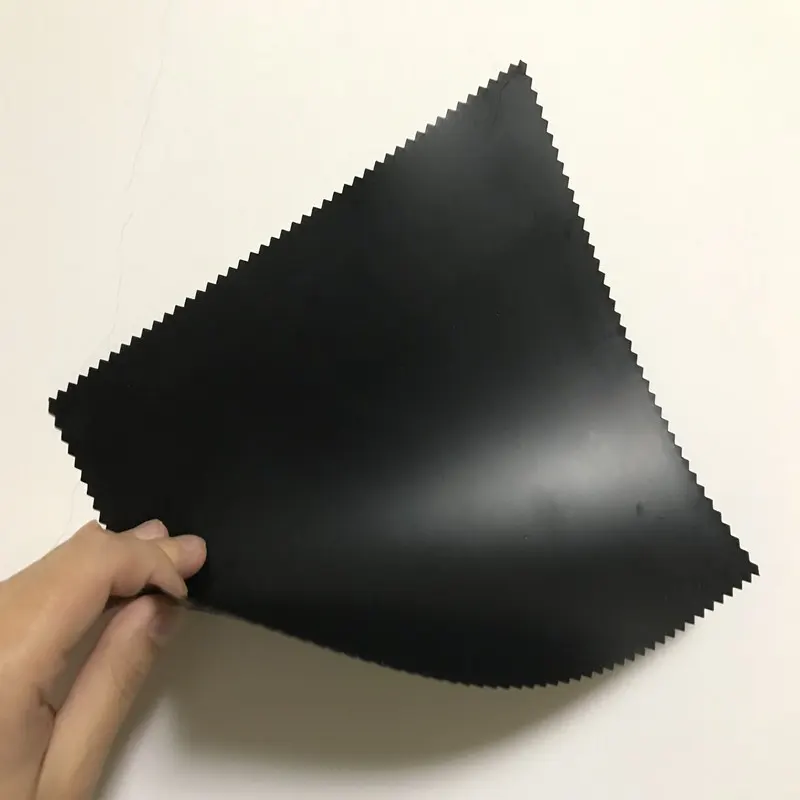 Geomembrane is a thin, extremely low-permeability sheet material made from high-molecular-weight polymers (high-density polyethylene, linear low-density polyethylene).
 - Blog
- Contacts
Seven Major Problems and Best Solutions in the Construction of Steel-Plastic Geogrid


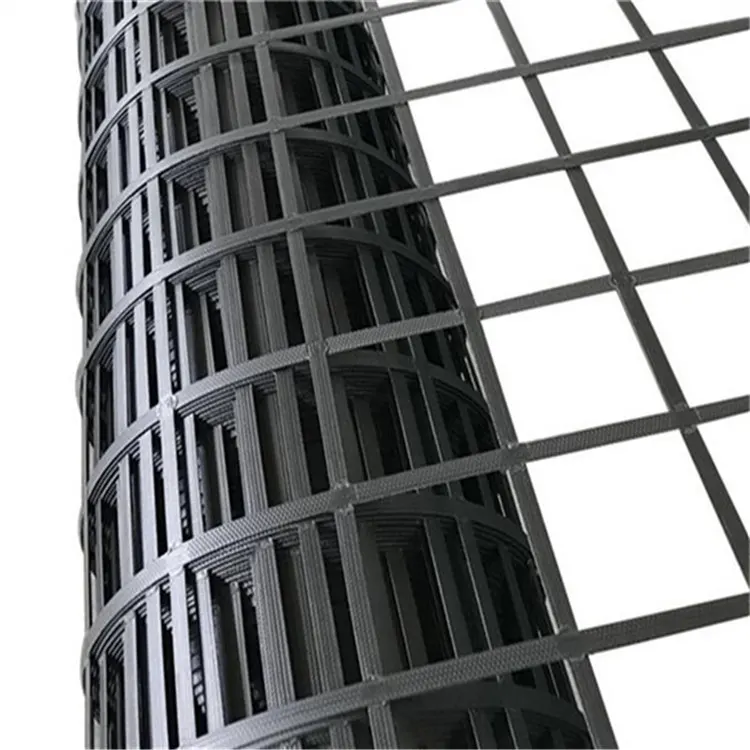
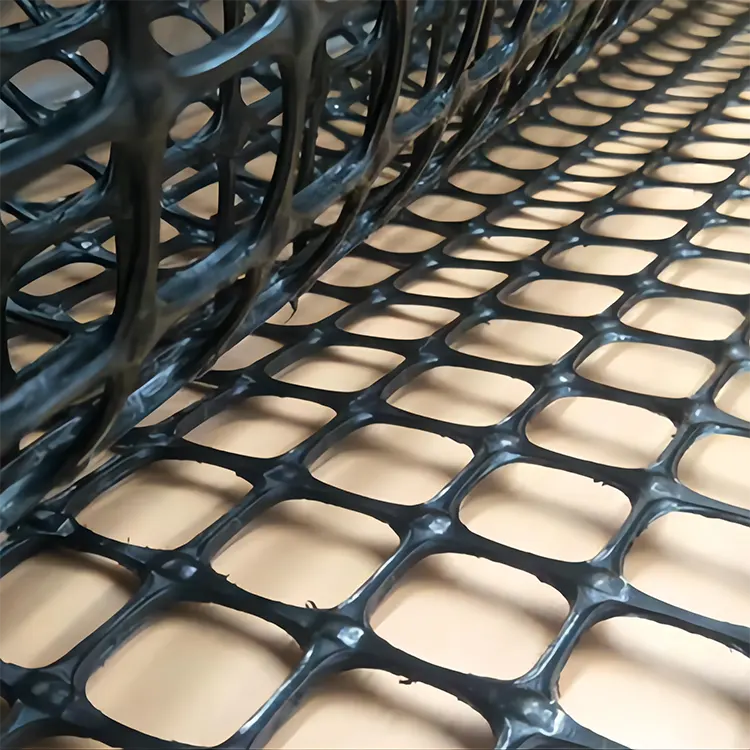
Steel-plastic geogrids are currently the main construction material used in roadbed reinforcement, slope protection, and reinforced retaining walls. They are favored by construction companies in the industry due to their excellent mechanical properties and extremely low cost. However, some tricky problems often arise during construction. Improper handling of these problems can easily lead to defects in project quality and increased construction costs. As a steel-plastic geogrid manufacturer with many years of experience, Lianxiang Geotechnical Engineering has extensive experience in its construction. Today, we will summarize the seven most common problems encountered during steel-plastic geogrid construction and their solutions.
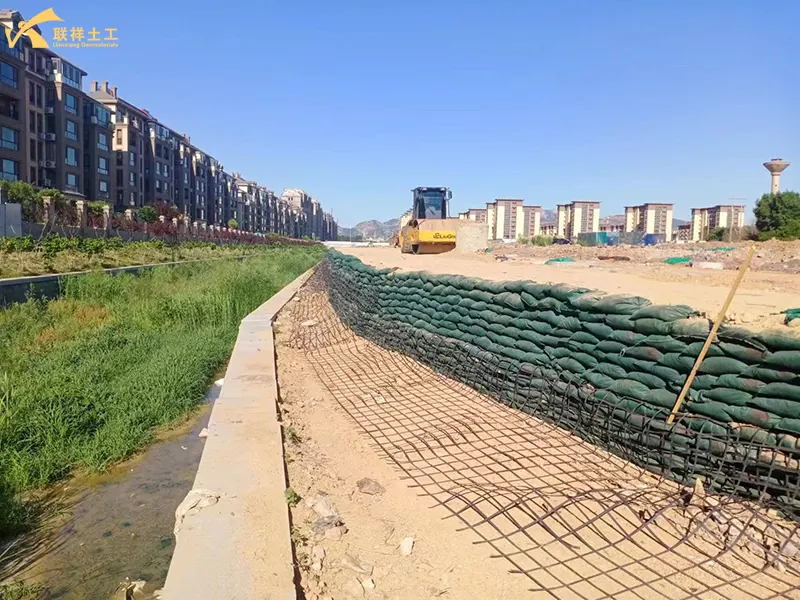
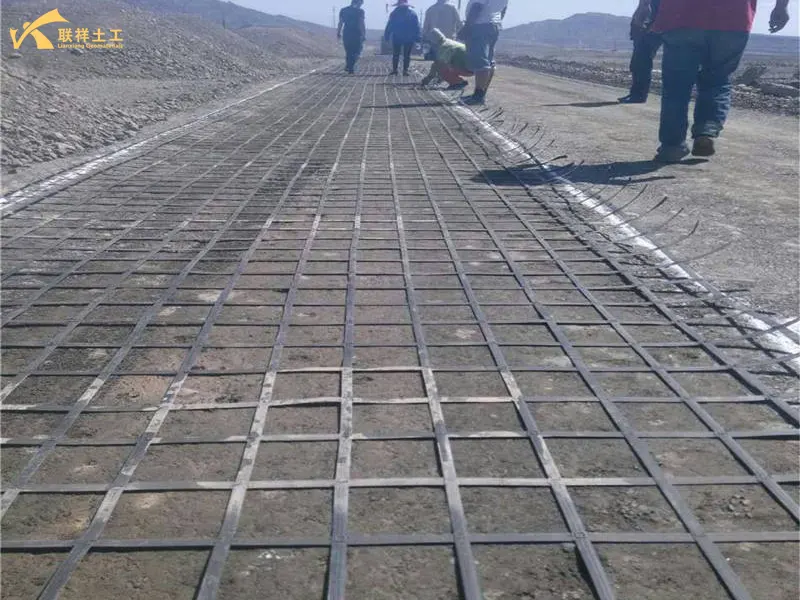
1. Wrinkling Phenomenon in Steel-Plastic Geogrids
Wrinkling manifests as creases, overlaps, and wavy deformation after the geogrid is laid. It is mostly caused by improper laying and initial construction operations, and can be divided into two categories: construction operation type and external disturbance type. The core of the solution is to flatten and restore the geogrid, and to fix it tightly.
1.1. Main Causes
- Incomplete Unrolling Before Laying: Forcibly pulling or arbitrarily bending the geogrid during manual dragging, or uneven speed during unrolling, can lead to localized wrinkling of the geogrid.
- Uneven substrate surface: Local protrusions, depressions, or steep slopes in the substrate cause the geogrid to naturally wrinkle after spreading, following the substrate's contours.
- Overlap/Anchoring too tight: Large misalignment of geogrid ribs at overlaps, or forcibly tightening the geogrid during end anchoring, causes it to spring back and wrinkle.
- Initial paving disturbance: Bulldozers driving directly on the geogrid during fill material paving, or concentrated stockpiling of material, compacts the geogrid, creating creases.
1.2. Differentiated Treatment Methods
- Slight wrinkles (no overlap, creases < 5cm): No need to remove the fill material. Use manual labor with a small plate compactor to repeatedly compact the wrinkled area, flattening the geogrid and ensuring close contact with the substrate/fill material. Avoid concentrated material stockpiling in this area during subsequent paving.
- Moderate wrinkles (partial overlap, creases 5-20cm): Remove the fill material within 20cm of the wrinkled area, manually flatten the grid completely, remove debris from the wrinkled areas, adjust the grid overlap/anchoring tightness, and gently straighten any deformed ribs. After flattening, secure with special clips (30cm spacing), then backfill with fine-grained soil and compact initially.
- Severe wrinkles (large area overlap, creases >20cm, slight rib deformation): Remove all fill material above the wrinkled area, re-lay and reposition the grid. If some ribs have lost tensile strength due to bending, patch them with grid of the same specification (patch size ≥20cm×20cm, overlap ≥10cm on all sides), re-overlap and anchor, then lay the fill material according to specifications and lightly compact.
2. Causes and Solutions for Geogrid Voids
Voids manifest as gaps between the geogrid and the substrate, forming "hollow areas." This is mostly caused by inadequate substrate treatment and backfilling. It is classified into two types: substrate-related and backfill-related. The core of the solution is to compact the backfill and eliminate gaps. Direct compaction of the void areas is strictly prohibited (as it easily leads to geogrid tearing).
2.1. Main Causes
- Inadequate Substrate Treatment: Localized soft soil depressions, unfilled silt pits, or pits left during surface clearing can cover the geogrid after it is laid, resulting in voids.
- Poor Substrate Drainage: Excessive moisture content or water accumulation in the substrate, which is not drained before laying, leads to water evaporation/seepage after geogrid laying, causing the substrate to settle and creating voids.
- Inadequate Compaction of the Underlying Backfill: Insufficient compaction during the compaction of the underlying (substrate) filler, or localized coarse aggregate buildup, prevents the geogrid from adhering tightly to the substrate after laying.
- Incomplete Backfilling During Laying: Dead zones such as edges and overlaps are not backfilled promptly after geogrid laying, resulting in localized voids.
2.2. Treatment Methods Based on Location
- Small-area localized voids (area < 1m2, gap < 10cm, middle of the roadbed): Remove the fill material from the side of the void area and backfill the gaps with graded sand/gravel/fine-grained soil (particle size < 2cm). Compact the backfill with a small tamping rod while backfilling until the grid adheres tightly to the fill material. Then backfill the outer fill material and lightly compact it to avoid the grid sinking due to direct backfilling from above.
- Large-area voids (area > 1m2, gap 10~30cm, or critical parts of the roadbed): Completely remove the fill material above the void area to expose the grid. Then, compact and backfill the void area at the base: If the base is soft soil, replace it with lime-soil; if it is a pit, directly backfill with graded sand and gravel and compact it (compaction degree ≥ design value). Then flatten the grid, backfill the gaps below the grid with fine soil and compact it to ensure there are no voids in the grid. Secure the grid with tighter clips before spreading the fill material.
- Edge Suspension (toe of roadbed slope, overlap, arbitrary gaps): After removing the fill material, readjust the ends of the geogrid to adhere to the base. Backfill the suspended area with fine soil and compact it. Simultaneously strengthen edge anchoring: use U-shaped steel bars (Φ12mm) at 50cm intervals for anchoring, or set small anchoring trenches (20cm wide, 30cm deep) at the edge, bury the geogrid, and backfill and compact to prevent further suspension.
2.3. Special Case Handling
- If the geogrid in the suspended area has slight tears, after repairing the suspension, patch it with geogrid of the same specification. The patch should overlap by ≥15cm on all sides, secure it firmly with clips, and then proceed with the fill material laying.
3. Geogrid Overlap Slippage
The most significant problem is that after fill material compaction or roadbed stress, the two geogrid pieces at the overlap slip relative to each other, causing rib misalignment, separation of the overlap surface, and gaps.
3.1. Core Causes
- Unsecured overlap/excessive spacing between securing points.
- excessive coarse aggregate in the fill material, generating lateral thrust on the grid during compaction.
- Loose substrate at the overlap, causing grid misalignment due to settlement.
3.2. Remedial Measures
- Remove the fill material at the slipped area, reposition the grid, realign the ribs, and reinforce with special clips (30cm longitudinal spacing, 50cm transverse spacing). Use U-shaped steel bars (Φ12mm) at 1m intervals to assist in anchoring the overlap edges.
- If the slippage causes slight deformation of the grid ribs, gently straighten them with a wooden mallet. For severely deformed areas, cut and replace with new grid.
- Compact the substrate at the overlap, backfill with fine-grained soil (particle size < 2cm) as a subgrade layer to prevent direct contact between coarse aggregate and the grid.
4. Loose Substrate at Overlap, Water Accumulation, or Debris
The most prominent manifestation of this is a sunken and loose substrate beneath the overlap, containing water, stones, weeds, and other debris. The geogrid does not adhere tightly to the substrate, creating a "hollow" appearance.
4.1. Core Causes
- The overlap area was overlooked during substrate treatment; debris was not cleared and compacted.
- Poor roadbed drainage causes rainwater to accumulate in the low-lying area at the overlap.
- Debris is drawn into the overlap area during fill material application.
4.2. Remedial Measures
- Remove the fill material at the overlap, remove all debris from the substrate, drain the water, and backfill the sunken area with graded sand/fine-grained soil. Compact the area with a small tamping rod to ensure the substrate compaction is consistent with the surrounding area.
- Re-lay the geogrid, ensuring it adheres tightly to the substrate without any gaps, and then complete the overlap and fixation.
- If the overlap is located in a low-lying section of the roadbed, excavate shallow drainage ditches on both sides of the substrate to guide water out and prevent further water accumulation.
5. Geogrid Damage and Tearing Issues
Damage and tearing of steel-plastic geogrids directly undermine their tensile anchoring structure, leading to failure in roadbed load transfer and subsequently causing localized settlement and cracking. These problems often stem from improper construction practices, contact with sharp objects, or external force compaction; a minority are due to inherent material quality issues.
5.1. Core Causes and Corresponding Manifestations of Steel-Plastic Geogrid Damage and Tearing
Geogrid damage is categorized into surface sheath damage (steel ribs not exposed) and deep tears (steel ribs exposed/grid broken). Tears are mostly longitudinal (along the rib direction) or transverse (perpendicular to the rib direction). There are six core causes, each with clearly identifiable on-site manifestations.
5.1.1. Improper Construction Practices (Most prevalent cause, accounting for over 70%)
- During installation, manually dragging or dropping the geogrid, or rolling the entire roll of geogrid directly from a height, causes friction with the underlying stones and hard soil, resulting in sheath tearing.
- Cutting with iron tools (rebar, pry bar) instead of specialized scissors causes nicks and tears at the edges of the grid.
- Forcibly prying or pressing the clips during overlapping/fixing, or forcibly binding with thick iron wire, punctures the grid sheath or tears the rib connections.
5.1.2. Inadequate substrate treatment, presence of sharp debris.
- Incomplete substrate cleaning leaves behind sharp objects such as stones >5cm in diameter, concrete fragments, rebar ends, and tree roots. When the grid is laid, this debris comes into hard contact with the grid, causing damage to the sheath and tearing of the grid during the spreading/compacting of the fill material.
5.1.3. Fill Material Spreading and Compaction Disturbance
- Directly laying large stones or construction waste on the geogrid causes the aggregate to fall or the lateral thrust during compaction to puncture or tear the geogrid.
- Bulldozers and road rollers drive directly on geogrids without fill material covering, and the tracks and sudden braking cause localized tearing of the geogrid, especially at overlaps.
- Concentrated fill material in localized areas of the geogrid causes gravity to crack the geogrid ribs, forming longitudinal cracks.
5.1.4. Stress Concentration at Overlaps/Anchorages
- Insufficient overlap length or excessive spacing between anchor points causes slippage at the overlap under load, leading to tearing due to the ribs pulling against each other. Overly tight end anchorages can cause the geogrid to crack near the anchorage points due to temperature deformation or roadbed settlement.
5.1.5. Material Quality Defects (Rarely Occur)
- Insufficient adhesion between the plastic sheath and steel ribs of the incoming grating causes the sheath to detach during installation; substandard steel rib material leads to bending and breakage under slight external force, causing overall grating tearing.
5.1.6. On-Site Construction Machinery
- Collisions During roadbed construction, excavators, loaders, and other machinery operating around the grating may collide with its edges, causing large tears or end damage.
5.2. Grading and Treatment Methods for Damage and Tearing of Steel-Plastic
Grating Based on the degree of damage, whether the steel ribs are exposed, and the size of the tear, gratings are classified into four levels. The core principle is: small damage requires local repair; large damage requires patch reinforcement; complete breakage requires reassembly. After repair, the tensile strength of the grating joint/patch should not be less than 80% of the original strength, and the repaired area must be in close contact with the substrate/fill material, without stress concentration.
Grading Criteria + Corresponding Handling Methods
| Damage Level | Criteria | On-site Handling Methods |
| Level 1 (Surface Sheath Damage) | Only the plastic sheath is scratched/detached, steel ribs are not exposed, no cracks, damaged area < 10cm² | 1. Clean the damaged area of loose soil and debris to ensure the surface is clean; 2. Use geotextile adhesive to firmly bond the damaged sheath. If the sheath is missing, cut a geogrid sheath of the same specification and patch it; 3. Cover the bonded area with geotextile fabric, press lightly to ensure tight adhesion, and then cover with fine soil. No additional reinforcement is required. |
| Level 2 (Minor Tear) | A crack appears in the geogrid, the steel ribs are not exposed, the crack length is < 5cm, the width is < 2cm, and there is no rib deformation. | 1. Remove 10-20cm of fine soil above the damaged area, and gently flatten the geogrid on both sides of the crack, ensuring there are no wrinkles; 2. Use geotextile adhesive to seal the crack, and attach a geotextile fabric of ≥20cm×20cm (covering ≥5cm around the crack), ensuring a firm bond; 3. Backfill with fine soil, and use a small flat tamper to locally compact the area, ensuring a tight seal at the repair site. |
| Level 3 (Moderate Damage/Tear) | Exposed steel ribs, tear length 5~30cm/width 2~5cm, or damaged area 10~50cm², ribs without bending/breakage | 1. Remove 20~30cm of filler above the damaged area, clean the loose soil on the exposed steel ribs, and check if the ribs are intact; 2. Use steel-plastic geogrid of the same specification for patch reinforcement, patch size ≥30cm×30cm (overlap ≥15cm around the tear); 3. Align the patch with the original geogrid ribs, and secure it tightly with steel-plastic special clips (fixing points spaced 30cm apart, located at the intersection of ribs); 4. If the steel ribs have minor scratches, wrap them with geotextile for protection, backfill with fine soil and lightly press to adhere. |
| Level 4 (Severe Tear/Complete Fracture) | Crack length > 30cm/width > 5cm, steel ribs bent/broken, or large sections of the grid damaged or completely broken, losing tensile strength | 1. Remove all filler above the damaged area, cut off the damaged/broken grid section, ensuring the remaining grid edges are flat and free of deformation; 2. Reassemble the grid with the same specifications, with an overlap length ≥ 100cm (20cm longer than the regular overlap), and strictly align the ribs; 3. Secure the joint with special clips (30cm longitudinally/50cm transversely), and use Φ12mm U-shaped steel bars on both sides of the overlap for auxiliary anchoring (1m spacing, inserted into the base ≥ 50cm); 4. If it is a multi-layer grid, the overlap joints of the upper and lower layers should be staggered by ≥ 50cm, backfill with fine-grained soil in layers and compacted, with the compaction degree consistent with the surrounding area. |
6. Excessive Subgrade Settlement
6.1. Material and Design Reasons
- Substandard Grating Material: Insufficient tensile strength and joint peel strength lead to breakage or soil separation under actual loads, resulting in loss of reinforcement effectiveness.
- Incorrect Grating Model Selection: The tensile strength and elongation of the selected grating do not match the actual load and deformation requirements of the subgrade.
- Improper Laying Layer: The grating is laid too deep or too shallow, failing to reach the area of maximum shear stress or tensile strain, thus failing to achieve optimal results.
- Insufficient Foundation Treatment Depth: For deep soft soil foundations, shallow grating reinforcement alone cannot solve the problem of consolidation settlement.
- Inadequate Drainage Design: The lack of effective vertical (sand cushion layer) or horizontal drainage (blind drain) prevents pore water pressure dissipation, keeping the soft soil in a creep state for extended periods, leading to continued post-construction settlement.
6.2. Loss of Control in Key Construction Phases (Main Causes)
6.2.1. Improper Subgrade Treatment:
- Insufficient Subgrade Compaction: The geogrid is laid on an uneven, loose foundation, creating initial uneven support. Under subsequent fill loads, the subgrade compresses and deforms first.
- Untreated Surface and Groundwater: A weak, damp subgrade with low bearing capacity is the root cause of excessive settlement and even local collapse.
6.2.2. Incorrect Geogrid Laying Process:
- Loose or Wrinkled Laying: The geogrid is not tensioned, exhibiting initial bending and failing to immediately provide effective tensile strength to resist soil deformation.
- Insufficient Overlap Width or Lack of Tiering: The integrity of the reinforcement layer is compromised, forming weak zones where stress concentrates, leading to differential settlement.
- Incorrect Main Load Direction: The high-strength direction (longitudinal) is not laid perpendicular to the embankment axis (main tensile strain direction).
- Excessive Exposure Time: UV aging leads to strength reduction.
6.2.3. Violations in Fill Material and Compaction Construction:
- Substandard Fill Material: Using soil with excessively high clay content, inappropriate moisture content, or containing organic matter results in high compressibility and difficulty in compaction.
- Improper First Layer Construction: This is the most problematic stage. Directly unloading material damages the geogrid; the first layer is too thin, allowing heavy machinery to directly compact it, causing the geogrid to be pushed, twisted, or even broken; or sharp stones are used to puncture the geogrid.
- Improper Compaction: Insufficient compaction passes, excessively fast compaction speed, and failure to meet compaction standards in stratified tests lead to high porosity in the fill material, resulting in significant compressive deformation under its own weight and vehicle loads.
- Excessive Filling Rate: Especially on soft soil foundations, rapid loading causes a sharp increase in pore water pressure. The soil cannot drain and consolidate in time, easily leading to excessive instantaneous settlement or even instability and slippage. In this case, the geogrid may be excessively stretched or broken.
6.3. External Environment and Load-Related Causes
- Groundwater Changes: A sharp rise or fall in the groundwater level after construction alters the effective stress of the soil, causing additional settlement.
- Overloading or Dynamic Loading: Actual vehicle loads far exceed design values, or there are severe vibration loads, leading to cumulative deformation exceeding expectations.
6.4. Remedial Measures
- Drainage and Dewatering: If caused by water accumulation, immediately excavate drainage ditches and sump pits to lower the water level.
- Replacement Treatment: Excavate localized soft muddy soil, replace with permeable materials such as sand and gravel, and recompact.
- Reinforcing the Grating: If the grating is damaged, excavate the covering soil, repair or replace the grating, ensuring good overlap.
- Adjusting the Process: Strictly control the moisture content and particle size of subsequent fill materials, adopt a "thin-layer, slow-speed" filling method, and use appropriate compaction equipment.
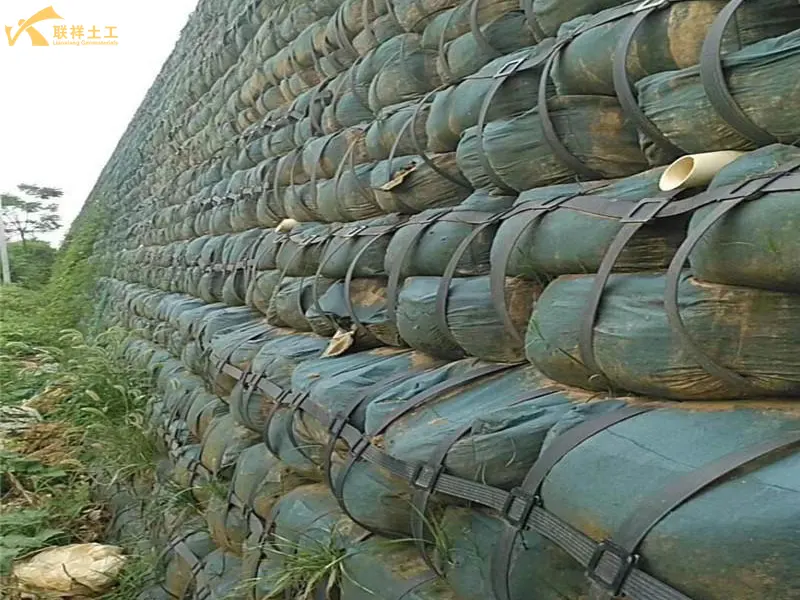
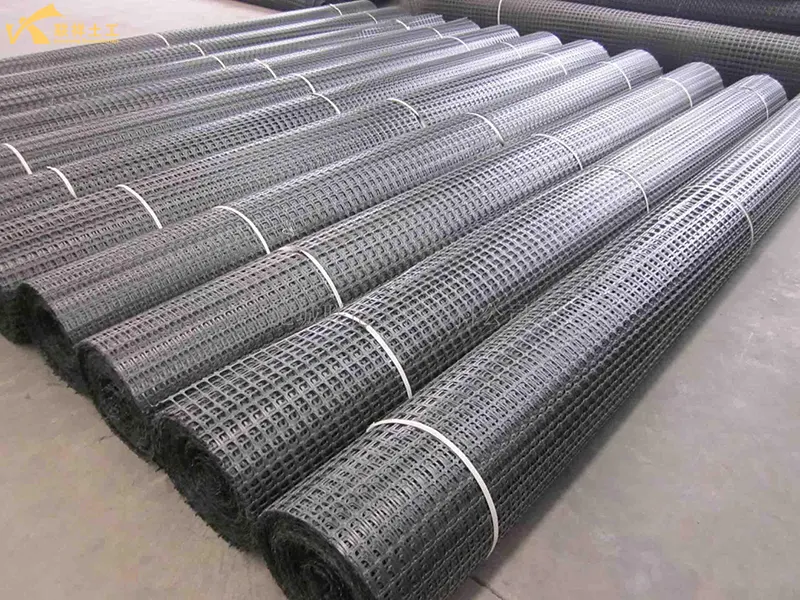
7. Inadequate Compaction of Fill Material
7.1 Four Major Causes of Inadequate Compaction of Fill Material
The visual manifestations of inadequate compaction on-site are: obvious wheel tracks on the fill material surface, loose and sandy texture; compaction degree tested using the ring cutter/sand cone method does not meet design requirements (subgrade ≥96%, base course ≥94%); noticeable sinking when stepped on in localized areas, especially at grid overlaps and edges; the corresponding characteristics of each cause are clearly identifiable.
7.1.1. Poor Compatibility of the Fill Material Itself (Basic Causes)
- Poor Fill Material Gradation: Using single-size sand, silt, or fill material with excessively high content of large stones prevents the filling of voids between particles through compaction, resulting in a "loose layer."
- Uncontrolled Moisture Content of Fill Material: Moisture content far exceeding/below the optimum moisture content (deviation > ±2%). Overly wet fill material is prone to springy soil and mud pumping during compaction; overly dry fill material has insufficient inter-particle cohesion and easily becomes loose after compaction.
- Incorrect fill material selection: Using inferior fill materials such as humus, silt, and construction waste directly, or laying coarse aggregate (particle size > 10cm) directly on the grid, prevents the aggregate from adhering properly during compaction.
7.1.2. Non-standard compaction process (most significant cause)
- Unreasonable compaction parameters: Failure to follow the principle of "light before heavy, edges before center," directly using a heavy roller, resulting in localized loosening of the fill material; insufficient number of compaction passes, wheel track overlap < 1/3 of the wheel width, creating missed compaction areas; excessive compaction speed (> 4km/h), resulting in insufficient compaction of the fill material.
- Excessive loose layer thickness: The fill material paving thickness exceeds the effective compaction depth of the roller (≤ 20cm for light rollers, ≤ 50cm for heavy rollers), preventing the underlying fill material from being compacted properly, resulting in a "dense surface layer and loose underlying layer."
- Incorrect compaction direction: The compaction direction is perpendicular to the grid ribs, or there are sharp turns at overlaps or edges, causing lateral slippage of the fill material and creating loose zones at grid joints.
- Localized under-compaction: Dead zones such as grid overlaps (double-layer grids), roadbed slopes, and bridge abutment connections exist where heavy rollers cannot reach, and smaller equipment is not used for supplementary compaction, creating blind spots.
7.1.3. Impact of Construction Environment and Substrate
- Uneven Substrate/Grid Layer: After grid laying, wrinkles and gaps appear, the substrate is locally loose and sunken, and the fill material, after being spread, forms localized loose patches due to substrate undulations, preventing uniform stress transfer during compaction.
- Harsh Construction Environment: Construction in rainy weather or at low temperatures (< 0℃) causes rainwater to seep into the fill material, leading to a sharp increase in moisture content. Low temperatures cause the fill material to freeze and harden between particles, resulting in a significant decrease in density after compaction.
- Interference at Grid Joints: Double-layered grids at overlaps and anchorages create tiny gaps between the fill material and the grid. Heavy compaction easily causes "jumping" of the fill material, resulting in poor adhesion at joints.
7.1.4. Secondary Impacts of Improper Construction Operations
- Disorderly Fill Material Spreading: Bulldozing leads to concentrated material piling and forced pushing, resulting in localized accumulation and voids in the fill material. Compaction is not performed using a grader.
- Delayed Compaction: If the interval between paving and compaction is too long after the geogrid is laid, the surface fill material may dry out and crack, or debris may fall into it, preventing proper compaction.
- Interference from Mechanical Operations: During compaction, heavy machinery repeatedly travels over already compacted areas, causing excessive compaction, resulting in peeling and loosening of the fill material. Alternatively, machinery may travel over uncompacted areas, pushing and shoving the fill material, creating a loose paving.
7.2 Two Optimal Solutions for Inadequate Compaction of Fill Material
7.2.1. Localized Small Areas of Inadequate Compaction (Single Plot Area < 5㎡, Middle of Subgrade, Non-Critical Nodes)
- Applicable Scenarios: Loose areas with minimal moisture content deviation, slightly excessive loose-lay thickness, and localized under-compaction resulting in a lack of springiness or siltation.
- Use a grader to loosen the fill material in loose areas to a depth of 30cm, removing debris. If the moisture content is too high, spread it out to dry; if too low, lightly sprinkle water and mix well, controlling the moisture content to within ±2% of the optimum moisture content.
- Use a grader for fine leveling, controlling the loose-lay thickness to ≤30cm. First, use a light roller (1~2t) for two static passes to ensure close contact between the fill material and the grid. Then, use a heavy vibratory roller (18~22t) for 3~4 passes, with the roller tracks overlapping by ≥1/3 of the roller width, and the compaction direction parallel to the grid ribs.
- After compaction, use a small plate compactor to further compact the edges. Immediately check the compaction degree; continue construction only after it meets the standard.
7.2.2. Large Areas of Loose Compaction (Area >5㎡, or key areas such as roadbed, bridge abutments, and slopes)
- Applicable Scenarios: Loosening of the entire area due to poor filler gradation, severely uncontrolled moisture content, or excessive loose-lay thickness, or localized springy soil or siltation.
- Complete Removal and Relay: Remove all filler from the loose areas down to the surface of the grid. Clean the grid of loose soil and debris. Check for displacement or wrinkles in the grid; if present, reposition, level, and reinforce it.
- Re-select and Lay: Replace with well-graded crushed stone/gravel/lime-soil (coarse aggregate ≤10cm), control the moisture content within the optimal range, lay in layers, each layer with a loose thickness ≤30cm, and finely level with a grader to ensure tight adhesion between the filler and the grid without any gaps.
- Standardized Layered Compaction: Following the principles of "light to heavy, edges to center, static to vibratory," perform two initial compactions with a light roller → four to five vibratory compactions with a heavy roller → one final compaction with a light roller. The compaction direction should be parallel to the grid ribs. For slopes and overlaps, use a hand-operated mini roller/plate compactor for additional compaction, ensuring no areas are missed.
- Layered Testing: Immediately after each layer is compacted, test the compaction degree. Only after meeting the standards should the next layer of fill material be laid. The compaction degree in key areas (bridge abutments, subgrade) should be increased by 1-2 percentage points.
8. Conclusion
The core function of steel-plastic geogrids is to improve the overall stability of the roadbed by providing tensile anchorage, distributing loads, and inhibiting roadbed settlement and lateral deformation. Therefore, during construction, it is necessary to control five core elements: subgrade treatment, geogrid laying, overlap anchoring, filler spreading and compaction, and joint protection. If the above problems are encountered during construction, we should immediately find the corresponding causes and formulate the most accurate remedial plan to ensure the construction period as much as possible and minimize corresponding losses. Lianxiang Geotechnical specializes in producing various types of steel-plastic geogrids, plastic geogrids, and other geosynthetic materials. Please feel free to contact us if you have any product needs.
Written by
SHANDONG LIANXIANG ENGINEERING MATERIALS CO., LTD.
Kyle Fan
WhatsApp:+86 139 5480 7766
Email:admin@lianxiangcn.com
-
WhatsApp
-
E-MailE-Mail:admin@lianxiangcn.com
-
WeChatWeChat:18554180188