
- Home
- Company
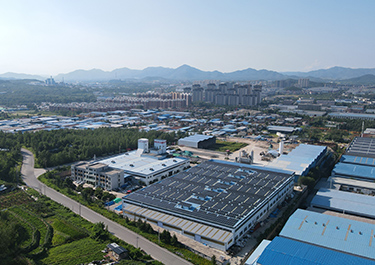 Our FactoryWe have a team of more than 30 talented geotechnical material R&D experts and a 30,000 square meter advanced modern intelligent manufacturing plant.
 - Products
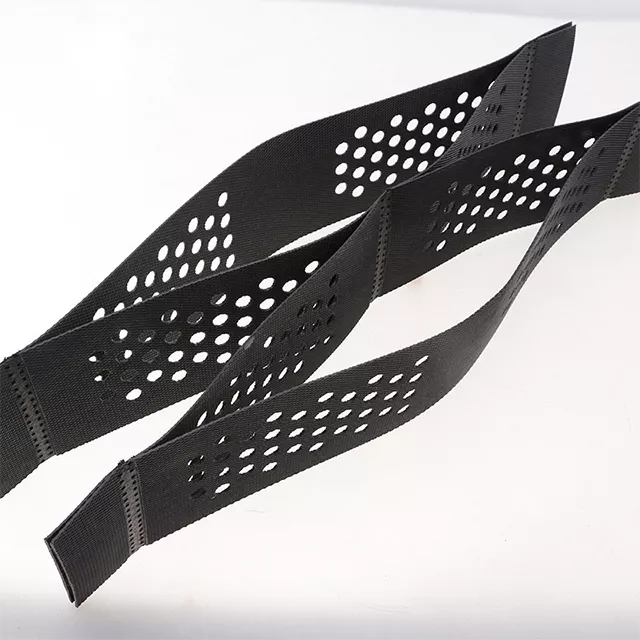 Geocell is a three-dimensional mesh structure made of high-strength polymer sheets (such as HDPE, PP, etc.) through ultrasonic welding. When unfolded, it presents a three-dimensional grid shape.
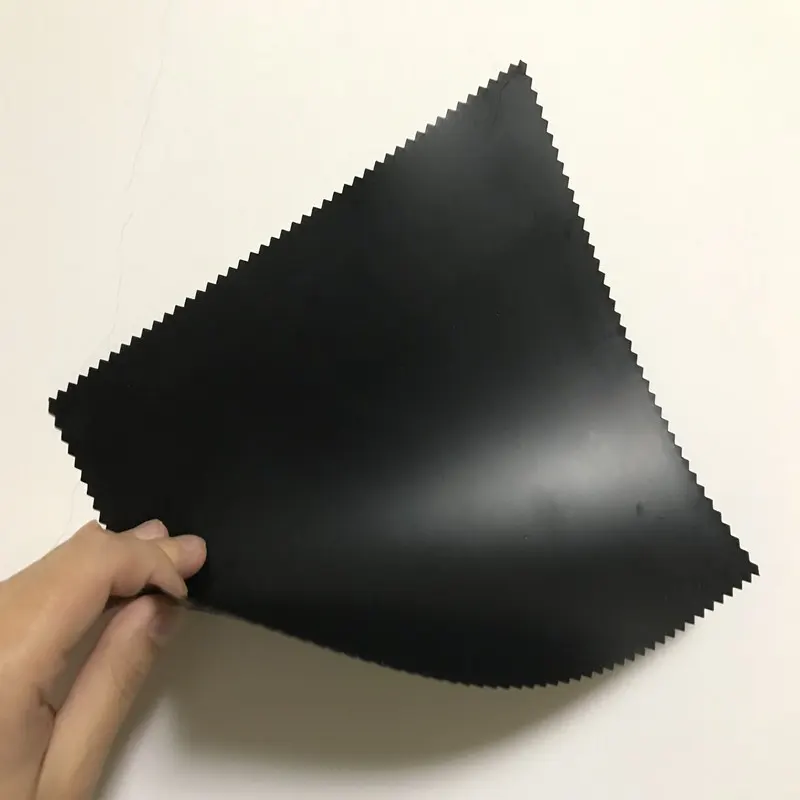 Geomembrane is a thin, extremely low-permeability sheet material made from high-molecular-weight polymers (high-density polyethylene, linear low-density polyethylene).
 - Blog
- Contacts
Seven Structural Design Features Further Enhance the Tear Resistance of Geocells


The core of improving the structural design for tear resistance of geocells lies in the systematic optimization across five dimensions: nodes, sheet material, unit shape, edge and stress control, and composite reinforcement. The goal is to reduce stress concentration, improve overall strength and force transfer efficiency, and achieve performance breakthroughs through experimental verification and engineering adaptation. Lianxiang Geotechnical has been engaged in the research and development of the practical performance of geocells for many years and possesses profound insights into tear resistance. Today, we will explain the key points of implementing the improvement scheme from these five aspects.
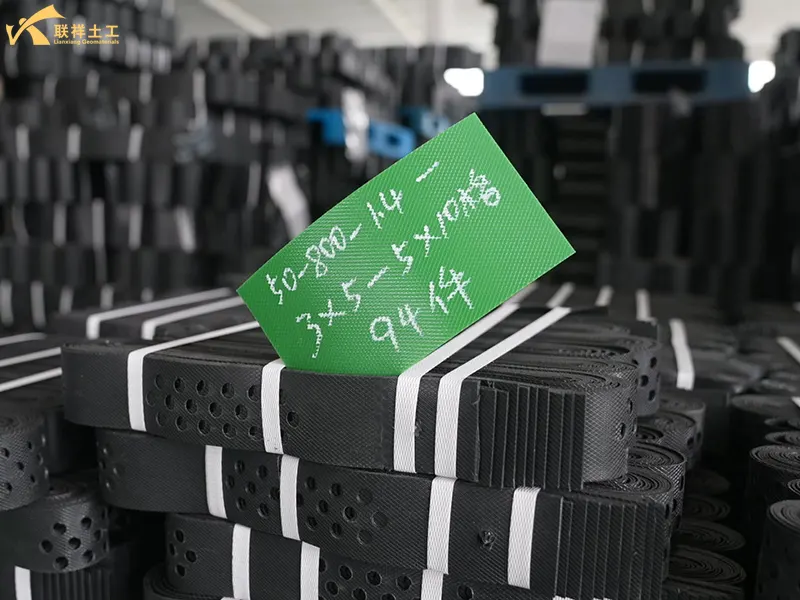
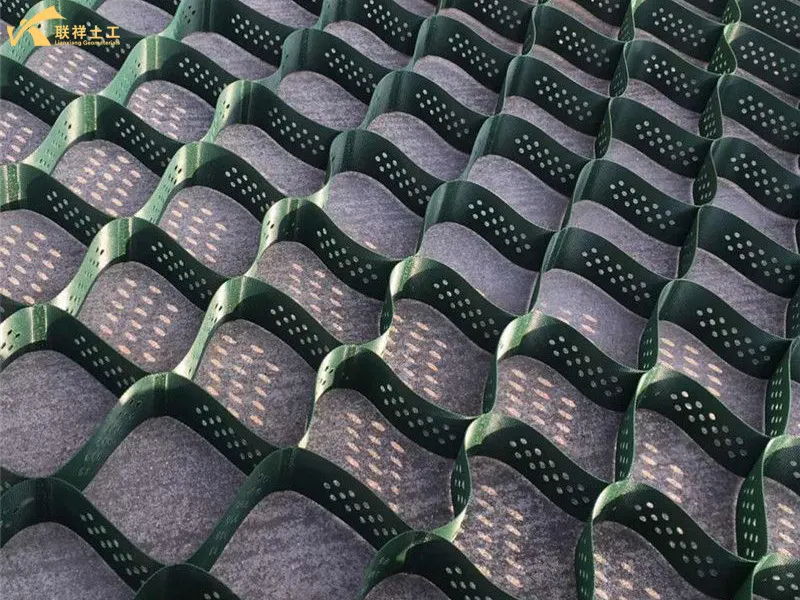
1. Node Connection Structure Optimization (Key to Tear Resistance)
Nodes are the most prone to tearing failure in geocells. Improvements focus on enhancing connection strength and uniform force transmission:
| Improvement Scheme | Technical Highlights | Tear Resistance Enhancement |
| Injection Molding Reinforced Nodes | A gap is reserved at the strip intersection, and a multi-layer connection structure is formed by hot-melt injection molding, with built-in reinforcement. | Node strength increased by 40-60%, preventing strip slippage or cracking. |
| Interlocking Self-Locking Nodes | Self-locking connection is achieved using an inner conical hole interlocking body and an outer conical interlocking rod, requiring no additional fasteners. | Easy assembly and disassembly; node tensile strength reaches over 500N/node. |
| Damping Block Connections | Damping blocks are installed at the connection to ensure uniform strength in all directions; pull-out strength and peel strength are equal. | Connection joint strength increased by 3 times, suitable for dynamic load scenarios. |
| Integrated Molded Nodes | Achieving molecular-level fusion at the intersection of geocell sheets through injection molding | Node strength reaches 98.7% of the base material, far exceeding traditional welding (70-80%) |
| Multi-layer cushioned nodes | Intermediate pads between two geocell sheets increase friction, and outer pads disperse pressure, equipped with dedicated fasteners | Node peel resistance increased by 50%, preventing localized stress concentration |
Implementation points:
- 1. Node thickness optimized from 3mm to 5mm, enhancing shear resistance.
- 2. High-frequency welding + injection molding secondary reinforcement process, weld strength reaches 2000N/node.
- 3. Avoid drilling holes in the strip body to prevent damage to overall performance.
2. Sheet body structural reinforcement (improving foundation tear resistance)
The sheet is the load-bearing foundation of the geocell. Its tear resistance is enhanced through structural design:
2.1. Rib reinforcement design
- Longitudinal, transverse, or diagonal ribs are set on the sheet surface to form a grid-like reinforcement structure
- Rib height 1-2mm, spacing 15-25mm, improving sheet stiffness and tear resistance.
- Ribs and sheet are integrally extruded, avoiding the risk of later adhesive detachment.
2.2. Composite Reinforced Structure
- Built-in carbon fiber/glass fiber mesh, composite with HDPE substrate, increasing tensile strength by 50%.
- Graphene-reinforced HDPE material, elastic modulus exceeding 28GPa, tear resistance improved by 30%.
- Reinforced type: Built-in 6-8mm diameter threaded steel bars, tear resistance reaches 250N/mm.
2.3. Thickness Gradient Design
- Sheet body thickness 1.0-1.5mm, gradually changing to 2.0-3.0mm at joints, forming a stress transition zone.
- The edge area is thickened to 1.8-2.5mm to prevent edge tearing during construction.
3. Element Shape and Size Optimization (Reducing Overall Tear Risk)
By adjusting the cell element parameters, the load distribution and constraint effect are optimized, indirectly improving tear resistance:
3.1. Element Shape Improvement
- High-angle (85°) hexagonal elements are used to reduce the peak foundation stress by 28%, reducing the tensile stress requirement of the cell wall.
- Octagonal transition elements are used in the edge area to alleviate stress concentration caused by right-angle connections.
- Triangular elements are used in special areas (such as the top of slopes and the edge of roadbeds) to improve local stability.
3.2. Size Parameter Optimization
- Element size: 10-20cm small aperture is used in heavy-load scenarios to distribute the load and reduce the stress on a single cell.
- Cell height: 15-20cm low height is used for soft soil treatment to reduce deformation and improve tear resistance.
- Weld Spacing Control: Welding spacing 30-50cm, adjusted according to project load to avoid excessive spacing leading to stress concentration in the sheet material.
3.3. Variable Density Gradient Layout
- Based on AI and generative design, the density of geocell units is increased in load-concentrated areas, while the spacing is appropriately increased in edge areas.
- Achieving "strong area strong matching, weak area adaptive matching," improving overall tear resistance efficiency by 25%.
4. Edge and Boundary Structure Reinforcement (Preventing Local Tear Propagation)
Edges are the most vulnerable parts during geocell construction and use, requiring targeted reinforcement:
4.1. Edge Banding Reinforcement
- Using HDPE edge banding of the same material, 5-8cm wide, wrapped around the geocell edges by hot air welding.
- The edge banding incorporates a polyester fiber reinforcement mesh, increasing tear resistance by 40%.
4.2. Interlocking Edge Design
- The stretched edge is equipped with an integrated injection-molded connecting buckle, fitted with a locking mechanism to prevent detachment.
- Adjacent cell panels are connected by interlocking clips, with an overlap width of 10-15cm. Double-layer connections enhance overall integrity.
4.3. Edge Anchoring Reinforcement
- During slope paving, one anchor nail (20cm spacing) is installed at each of the upper and lower edges, with an additional transverse anchoring strip (φ8mm steel wire rope, 1m spacing) in the middle.
- For soft soil sections, a double-layer overlap of "welding + nailing" is used to enhance edge pull-out and tear resistance.
5. Stress Concentration Relief Structural Design (Preventing Tear Propagation Path)
Structural design guides stress distribution, preventing localized tears from developing into overall failure:
5.1. Stress Dispersion Hole Design
- Stress dispersion holes with a diameter of 3-5mm are opened in areas of high stress concentration in the cell wall (such as near nodes and corners).
- Hole spacing is 10-15cm, arranged in a quincunx pattern to alleviate localized tensile stress concentration and prevent crack propagation.
5.2. Arc-Shaped Transition Design
- The corners of the cell wall are changed from right angles to R5-R10mm arc transitions. - Reduces stress concentration factor by 60%, preventing initial crack formation at sharp angles.
5.3. Transverse Connecting Rib Design
- A transverse connecting rib is installed every 3-5 cell units, connecting adjacent cell walls.
- Forms a "grid + rib" composite structure, enhancing overall stiffness and preventing the spread of localized tears.
6. Special Reinforced Structure Innovation (For Extreme Working Conditions)
Developing specialized tear-resistant structures for special engineering scenarios such as heavy loads, high slopes, and frozen soil:
6.1. Internally Reinforced Geocells
- Continuous glass fiber reinforcement is installed inside the cell wall, running along its length to enhance longitudinal tear resistance.
- Suitable for heavy-load subgrade engineering projects such as highways and railways, increasing tear resistance by 60%.
6.2. Expandable Structure
- Modular design with expansion joints between cell units to adapt to complex terrain and uneven settlement.
- Prevents tearing caused by excessive deformation, suitable for soft soil foundations and high embankment projects.
6.3. Three-Dimensional Reinforced Structure
- The cell walls feature a corrugated/wave-shaped design, increasing structural stiffness and deformation capacity.
- This creates a tighter interlock with the filler material, enhancing the overall tear resistance of the composite structure.
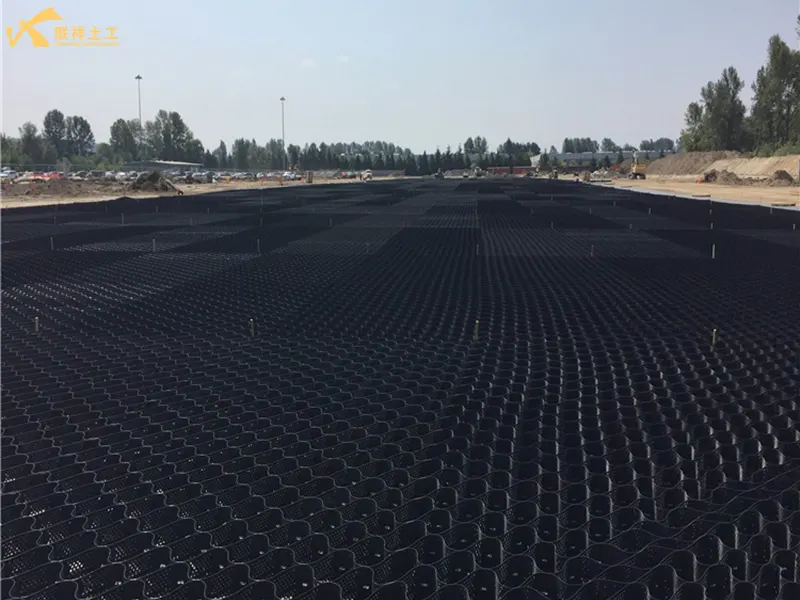
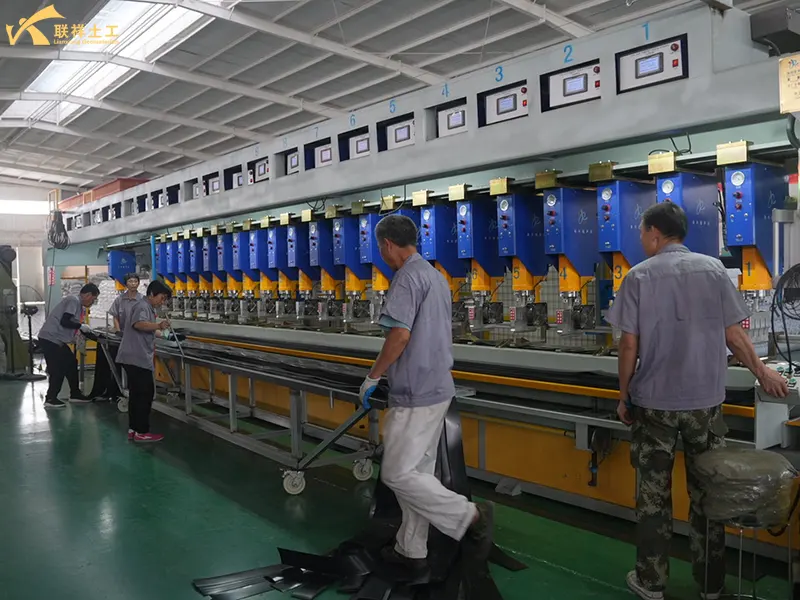
7. Implementation Effect Verification and Engineering Recommendations
7.1. Performance Test Indicators
- Right-angle tear strength ≥150N/mm (National Standard ≥100N/mm)
- Tensile strength of nodes ≥2000N/node
- Tensile yield strength of sheet material ≥25MPa (25% higher than traditional methods)
7.2. Engineering Adaptability Principles
- Slope protection: Prioritize injection-molded wrapped nodes + curved transition + edge strip reinforcement structure.
- Heavy-load roadbed: Recommended reinforced steel + small aperture + high-density node layout.
- Cold regions: Use low-height (15-20cm) + small aperture (10-15cm) + elastic node design
7.3. Construction Precautions
- Avoid over-tensioning of the cell sheets, control the elongation rate ≤10%.
- The filling material has a reasonable gradation, with the maximum particle size ≤ 1/3 of the cell size, preventing localized punctures.
- The edges are firmly fixed using double anchoring to prevent edge detachment during construction and use.
Conclusion:
Improving the structural design of geocells' tear resistance is a systematic project, requiring coordinated optimization from five core dimensions: nodes, sheets, units, edges, and stress control, combined with selecting an appropriate solution based on actual engineering needs. Through the above improvements, the overall tear resistance of geocells can be increased by 40-60%, extending their service life to over 20 years, significantly enhancing their safety and durability in slope protection, roadbed reinforcement, and other projects. These are the seven key improvement points for enhancing the tear resistance of geocells compiled and released by Lianxiang Geotechnical. We hope this explanation will be helpful when using geocells in the future.
Written by
SHANDONG LIANXIANG ENGINEERING MATERIALS CO., LTD.
Kyle Fan
WhatsApp:+86 139 5480 7766
Email:admin@lianxiangcn.com
-
WhatsApp
-
E-MailE-Mail:admin@lianxiangcn.com
-
WeChatWeChat:18554180188