
- Home
- Company
 Our FactoryWe have a team of more than 30 talented geotechnical material R&D experts and a 30,000 square meter advanced modern intelligent manufacturing plant.
 - Products
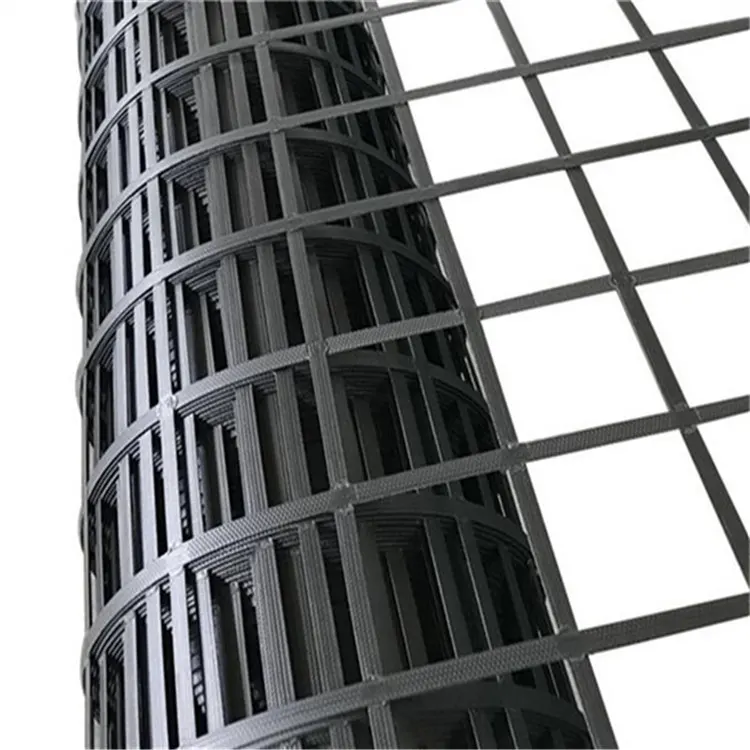
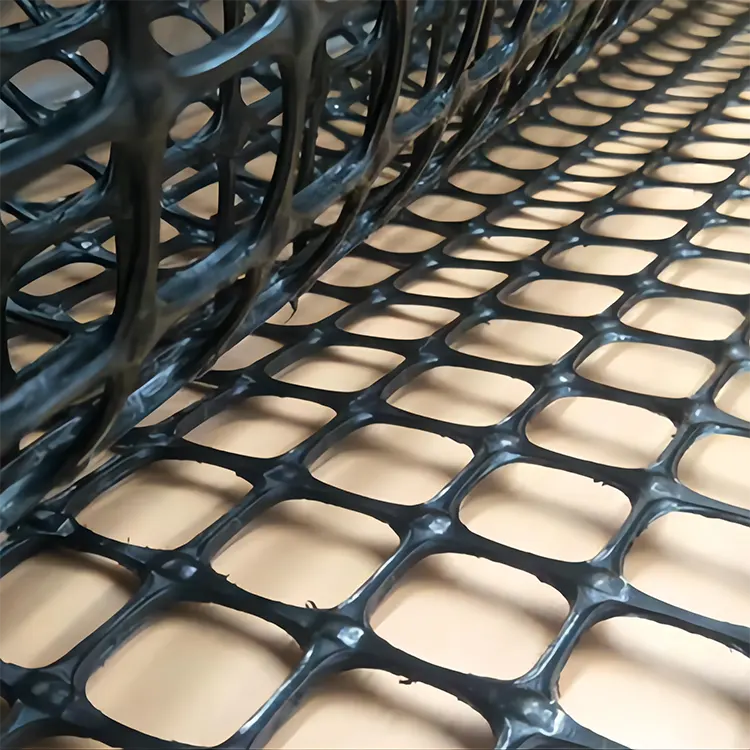
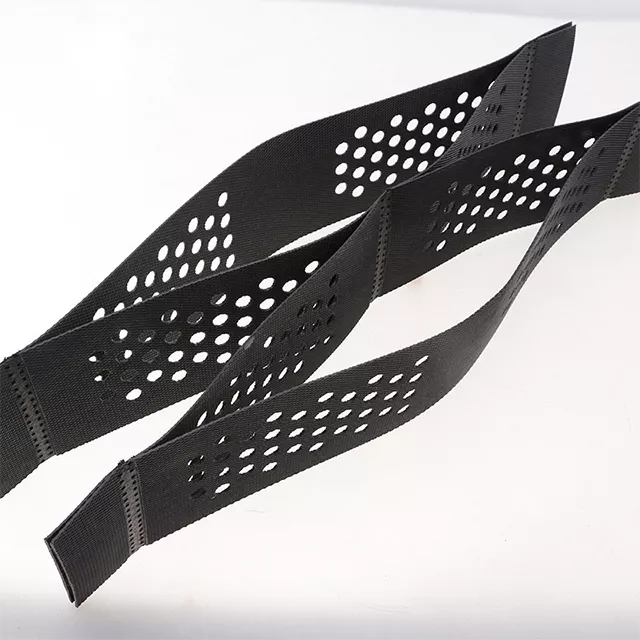 Geocell is a three-dimensional mesh structure made of high-strength polymer sheets (such as HDPE, PP, etc.) through ultrasonic welding. When unfolded, it presents a three-dimensional grid shape.
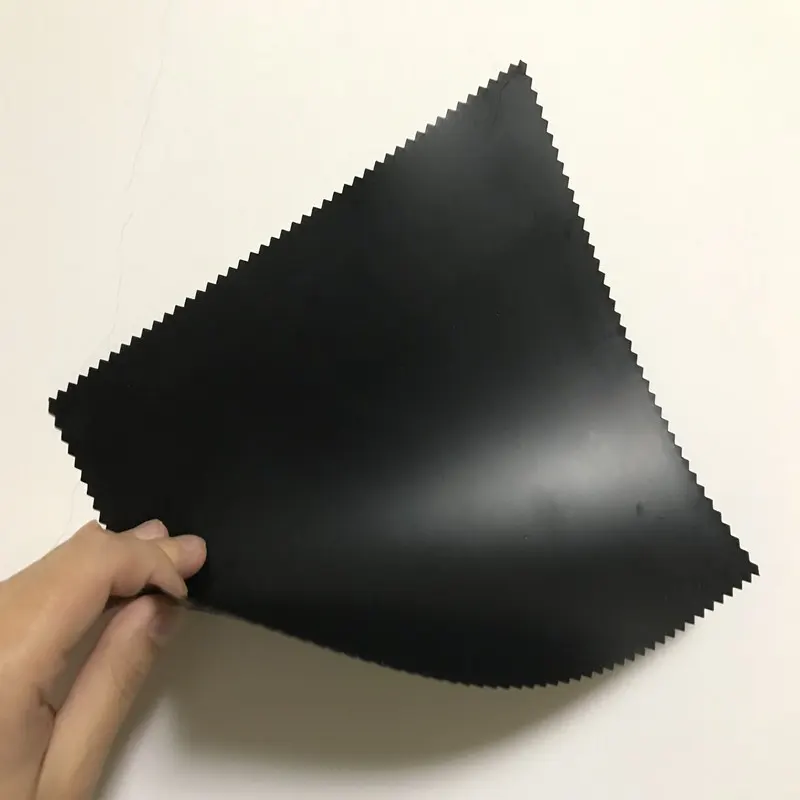 Geomembrane is a thin, extremely low-permeability sheet material made from high-molecular-weight polymers (high-density polyethylene, linear low-density polyethylene).
 - Blog
- Contacts
7 Fundamental Aspects for Distinguishing the Quality of Composite Geomembranes


As an indispensable material for seepage prevention and structural reinforcement in modern water conservancy, transportation, environmental protection, and municipal engineering projects, the quality of composite geomembranes directly determines the safety, service life, and operational performance of these projects. However, product quality on the market varies widely, and it is often difficult to distinguish genuine, high-quality products from inferior ones based solely on appearance or price. To assist engineering professionals in quickly and accurately assessing the quality of composite geomembranes—thereby preventing serious accidents such as leakage or cracking caused by material failure—the following discussion systematically outlines practical methods for evaluating the quality of composite geomembranes, focusing on seven fundamental aspects.
1. Visual Uniformity:
1.1. Dimensional Deviation
- Length Deviation: Must not be negative (only positive deviation is permitted, ensuring full quantity).
- Width Deviation: 0 to +1% (e.g., for a 6m-wide product, a range of 6.00m to 6.06m is permitted).
- Edge Quality: Edges must be neat, free of burrs, damage, or obvious waviness; edge defects are classified as minor defects.
1.2. Quantity of Surface Defects
- Major Defects: Residual broken needles, metallic foreign objects, film rupture, perforations, cracks, delamination, or large-area adhesion failure.
- Minor Defects: Slight creases, localized impurities, uneven edges, color spots, or small stiff lumps; limited to <= 5 instances per 200 m2, with the area of any single defect generally not exceeding 4 cm2.
1.3. Mass Uniformity per Unit Area
- Mass Deviation per Unit Area: <= +-5%.
- Uniformity Index (CV Value): <= 8%, where CV = (Standard Deviation / Mean Value) * 100%.
1.4. Film Layer Thickness Uniformity
- Total Thickness Deviation: <= +-10%.
- Average Film Material Thickness: Must be >= the nominal thickness (a requirement added in the 2025 National Standard to prevent localized thinning).
- Local Minimum Thickness: >= 85% of the nominal thickness (commonly used in internal controls and engineering specifications).
1.5. Color and Gloss Uniformity
- Black Film: Carbon black dispersion must be uniform, with no obvious color differences, white spots, glossy spots, or mottling.
- Free of localized yellowing, graying, or whitening (characteristics indicative of aging or raw material inconsistency).
1.6. Composite Layer Uniformity
- The fabric and film layers must be tightly bonded, free of localized voids, adhesive failure, wrinkling, or blistering.
- Peel strength must be uniform, with no localized areas that are noticeably too soft or too brittle.
1.7. Quick On-Site Self-Inspection
- Measure Dimensions: Are the width and length deviations within the 0 to +1% range?.
- Count Defects: Are there <= 5 minor defects within every 200 m2?.
- Gram Weight Measurement: Multi-point weighing; deviation <= +-5%.
- Thickness Check: Multi-point thickness measurement; fluctuation <= +-10%.
- Visual Inspection: Consistent color, no delamination, no needle-punch defects.
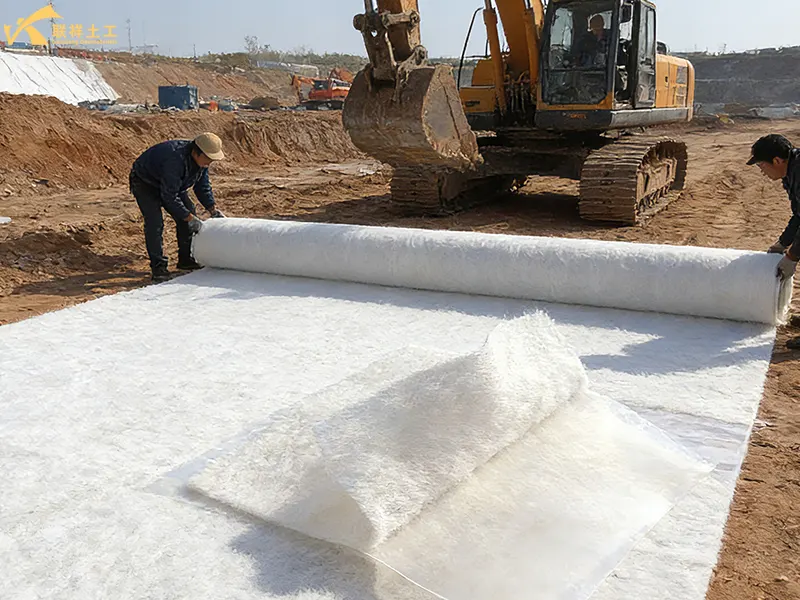
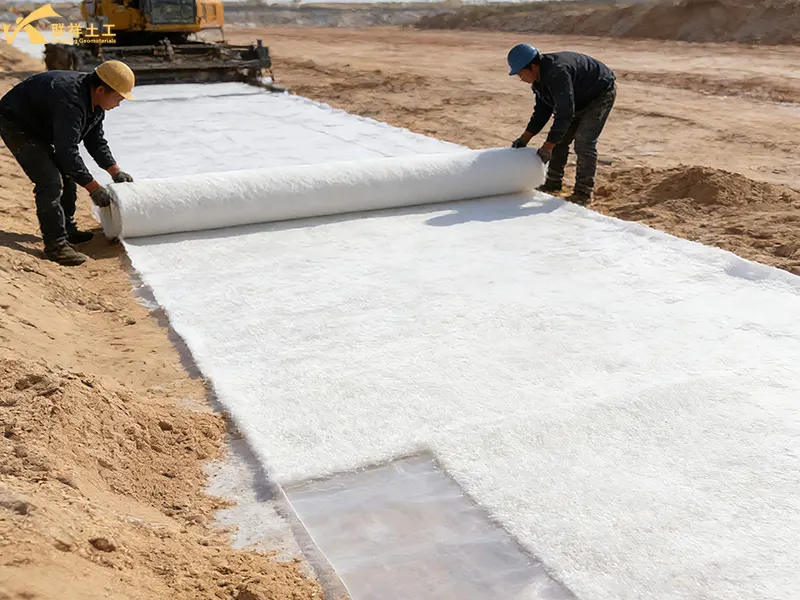
2. Thickness and Gram Weight:
2.1. Core Quantitative Indicators
| Item | Core Data | Description |
| Average Membrane Thickness | >= Nominal Thickness (e.g., 0.3/0.4/0.5 mm) | New requirement added in the 2025 National Standard; ensures the basic anti-seepage thickness is not lower than the nominal value. |
| Mass per Unit Area Deviation Rate | <= -5% | Actual gram weight must not be less than 95% of the nominal gram weight (e.g., if nominal is 400 g/m2, measured value must be >= 380 g/m2). |
| Mass per Unit Area CV Value | <= 10% | Uniformity indicator; a lower value indicates less fluctuation in gram weight (CV = Standard Deviation / Mean * 100%). |
| Total Thickness Deviation | <= +-10% | Overall thickness fluctuation range; controls suitability for construction applications. |
| Local Minimum Thickness | >= 85% of Nominal Thickness (Internal Control) | Prevents leakage caused by localized thin spots; a mandatory check during on-site inspection. |
2.2. Specifications and Grading Data
2.2.1. Short-Fiber Needle-Punched Non-Woven Composite Geomembrane
- Common Specifications: Membrane thickness 0.3-1.0 mm; overall gram weight 200–1600 g/m2.
- Corresponding Strength: Nominal strength 5.0–40.0 kN/m; increases in proportion to the gram weight and membrane thickness.
- Hydrostatic Pressure Resistance: Single-fabric/single-membrane configuration: 0.5–1.6 MPa.
- Double-fabric/single-membrane configuration: 0.6–1.4 MPa (increases with membrane thickness).
2.2.2 Continuous-Filament Spunbond Needle-Punched Non-Woven Composite Geomembrane
- Specifications & Features: Higher strength grades available (minimum requirement: 10.0–49.0 kN/m); superior matching between basis weight and film thickness.
- Core Requirements: Film thickness >= Nominal Value; Mass per unit area deviation rate <= -5%; CV value <= 10%.
2.3. On-site Practical Inspection Data
2.3.1. Thickness Inspection
- Instrument: Thickness gauge with an accuracy of >= 0.01 mm, applied pressure: 2 kPa.
- Sampling: Measure >= 5 points per roll; calculate the average value to determine the material's average thickness.
- Acceptance Criteria: The average value must be >= the nominal thickness, and every single point measurement must be >= 85% of the nominal thickness.
2.3.2. Basis Weight Inspection
- Sampling: Cut three 1 m2 samples; weigh each sample and calculate the average value.
- Acceptance Criteria: The average value must be >= 95% of the nominal basis weight, and the CV value must be <= 10%.
2.3.3. Quick Self-Check
- Film Thickness: Repeated bending should produce no white creases and reveal no obvious localized thin spots.
- Basis Weight: The material should feel substantial and "solid" to the touch, without a sense of being flimsy or "airy"; weight measurements taken at multiple points should show a deviation of <= +- 5%.
2.4. Key Reminders
- The new 2025 standard has removed the 0.20 mm film thickness specification. Since the market mainstream is now >= 0.30 mm, prioritize products with a thickness of >= 0.3 mm when purchasing.
- For exposed installations (outdoor projects), pay extra attention to UV aging resistance; a film thickness of >= 0.5 mm offers greater durability.
- Explicitly specify three key parameters in the contract—average film thickness, mass per unit area deviation rate, and CV value—to avoid potential quality disputes.
3. Peel Strength:
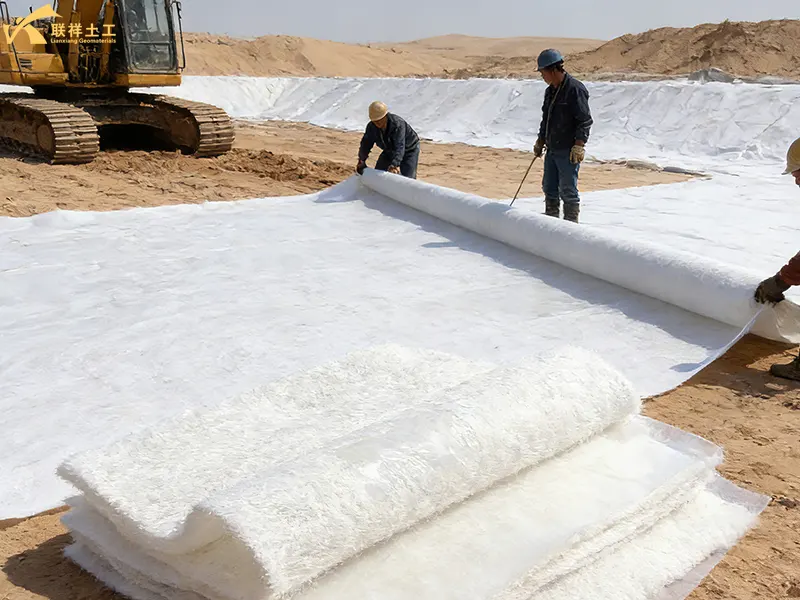
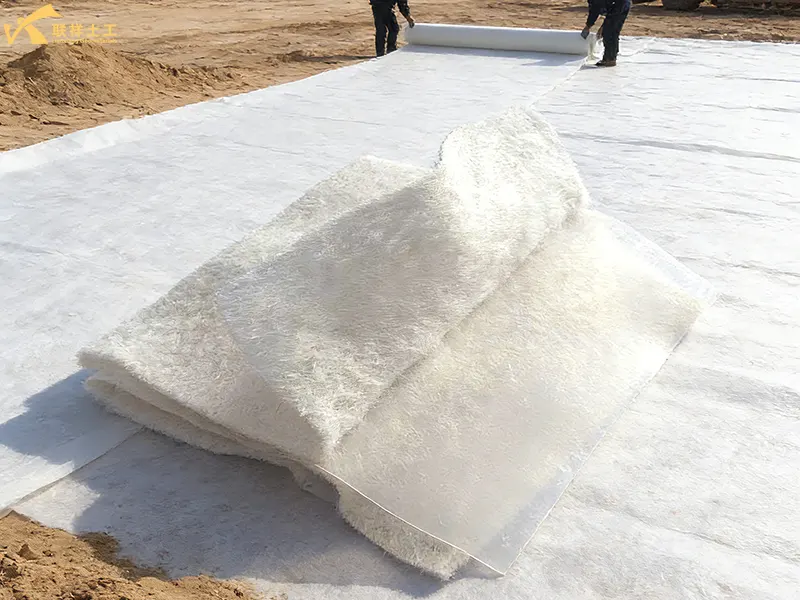
This is a critical performance indicator. Vigorously attempt to tear the material at the interface between the film and the fabric backing. If separation is difficult, or if the base fabric sustains damage (e.g., fraying) during separation, it indicates excellent composite bond strength. Conversely, if the film peels away easily in a complete sheet, leaving a smooth, undamaged fabric surface, it signifies poor quality; such material is prone to delamination and failure during installation.
3.1. Standards
- Standard Value: Both longitudinal and transverse directions must meet the requirement of >= 3.0 N/mm (i.e., >= 30 N/cm).
3.2. Reference for Common Specifications
3.2.1. Short-fiber Needle-punched Composite Geomembrane
- One Fabric / One Membrane: >= 6 N/cm (>= 0.6 N/mm)
- Two Fabrics / One Membrane: >= 6 N/cm (>= 0.6 N/mm)
3.2.2. Continuous-filament Spunbond Composite Geomembrane
- One Fabric / One Membrane: >= 6–8 N/cm
- Two Fabrics / One Membrane: >= 7–9 N/cm
3.3. Test Method
- Test Specimen: Width of 50 mm
- Speed: 100 mm/min.
- Assessment: Calculate the median average of 5 specimens each from the longitudinal and transverse directions. If the fabric/membrane itself ruptures without delamination occurring, the result is deemed compliant.
3.4. Unit Conversion
- 1 N/mm = 10 N/cm
- Industry Standard: 3.0 N/mm = 30 N/cm
- Manufacturer: 6 N/cm = 0.6 N/mm
4. Tensile and Tear Strength:
Simple Manual Pull Test (or Laboratory Testing). High-quality products exhibit balanced tensile strength in both longitudinal and transverse directions, displaying a distinct "toughness" or resilience when pulled to the breaking point; inferior products will snap immediately upon pulling or demonstrate abnormal elongation. One may also observe a long strip specimen to determine whether it fractures rapidly once subjected to stress.
4.1. Tensile Strength
4.1.1. Staple Fiber Needle-Punched Composite Geomembrane
- Nominal Strength 5.0 kN/m --> >=5.0 kN/m
- Nominal Strength 8.0 kN/m --> >=8.0 kN/m
- Nominal Strength 10.0 kN/m --> >=10.0 kN/m
- Nominal Strength 12.0 kN/m --> >=12.0 kN/m
- Nominal Strength 14.0 kN/m --> >=14.0 kN/m
- Nominal Strength 16.0 kN/m --> >=16.0 kN/m
- Nominal Strength 20.0 kN/m --> >=20.0 kN/m
- Nominal Strength 25.0 kN/m --> >=25.0 kN/m
- Nominal Strength 30.0 kN/m --> >=30.0 kN/m
- Nominal Strength 40.0 kN/m --> >=40.0 kN/m
4.1.2. Continuous Filament Spunbond Composite Geomembrane
- Nominal Strength 10.0 kN/m --> >=10.0 kN/m
- Nominal Strength 12.0 kN/m --> >=12.0 kN/m
- Nominal Strength 14.0 kN/m --> >=14.0 kN/m
- Nominal Strength 16.0 kN/m --> >=16.0 kN/m
- Nominal Strength 20.0 kN/m --> >=20.0 kN/m
- Nominal Strength 25.0 kN/m --> >=25.0 kN/m
- Nominal Strength 30.0 kN/m --> >=30.0 kN/m
- Nominal Strength 40.0 kN/m --> >=40.0 kN/m
- Nominal Strength 49.0 kN/m --> >=49.0 kN/m
4.2. Tear Strength
- Nominal Strength <= 30 kN/m --> Tear Strength >= 25 N
- Nominal Strength > 30 kN/m --> Tear Strength >= 30 N
4.3. Quick Reference for Most Common Specifications
- 8 kN/m Composite Geomembrane: Tensile Strength >= 8.0 kN/m, Tear Strength >= 25 N.
- 16 kN/m Composite Geomembrane: Tensile Strength >= 16.0 kN/m, Tear Strength >= 25 N.
- 30 kN/m Composite Geomembrane: Tensile Strength >= 30.0 kN/m, Tear Strength >= 25 N.
- 40 kN/m Composite Geomembrane: Tensile Strength >= 40.0 kN/m, Tear Strength >= 30 N.
5. Puncture Resistance and Hydrostatic Pressure Resistance:
These tests simulate the effects of sharp objects or water pressure encountered on-site. By using a blunt-tipped object to push against the membrane surface, a high-quality membrane will require significant force to rupture, and the resulting puncture hole will not easily propagate. When hydrostatic pressure is applied to the membrane (via laboratory methods), a higher resistance value indicates superior impermeability; conversely, a low-quality membrane will leak under even slight pressure.
6. Flexibility and Low-Temperature Brittleness
Observe the material after folding it in half. A high-quality membrane feels pliable to the touch and shows no creases or whitening at the fold line after bending; a poor-quality membrane feels stiff or tacky. Samples can also be placed in a low-temperature environment (e.g., a freezer) before bending; if the material becomes brittle and cracks, it indicates poor weather resistance and a high susceptibility to breakage during winter construction.
7. Raw Materials and Odor
Check for odor. Products made from 100% virgin materials are free of pungent or acrid smells. Inferior products, which often utilize recycled materials, may emit a sour or burnt-plastic odor; they also tend to appear grayish or dull in color, age rapidly, and have a significantly shorter service life.
The seven aspects outlined above—ranging from visual uniformity to the odor of the raw materials—encompass the core physical and mechanical parameters critical to assessing the quality of composite geomembranes. In practical applications, it is recommended to employ a simple, seven-step field screening method: 1. Visual Inspection; 2. Measurement; 3. Tearing; 4. Pulling; 5. Puncturing; 6. Folding; and 7. Odor Testing. For critical project components or large-scale procurement, it is imperative to cross-reference these checks with test reports from authoritative third-party institutions, and to retain samples for potential re-testing. Only by strictly controlling the quality of materials upon their arrival on-site can we ensure the integrity of the project's seepage prevention and its long-term stability at the very source.
Written by
SHANDONG LIANXIANG ENGINEERING MATERIALS CO., LTD.
Kyle Fan
WhatsApp:+86 139 5480 7766
Email:admin@lianxiangcn.com
-
WhatsApp
-
E-MailE-Mail:admin@lianxiangcn.com
-
WeChatWeChat:18554180188