
- Home
- Company
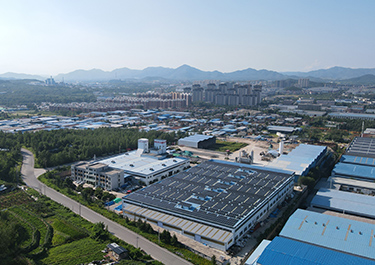 Our FactoryWe have a team of more than 30 talented geotechnical material R&D experts and a 30,000 square meter advanced modern intelligent manufacturing plant.
 - Products
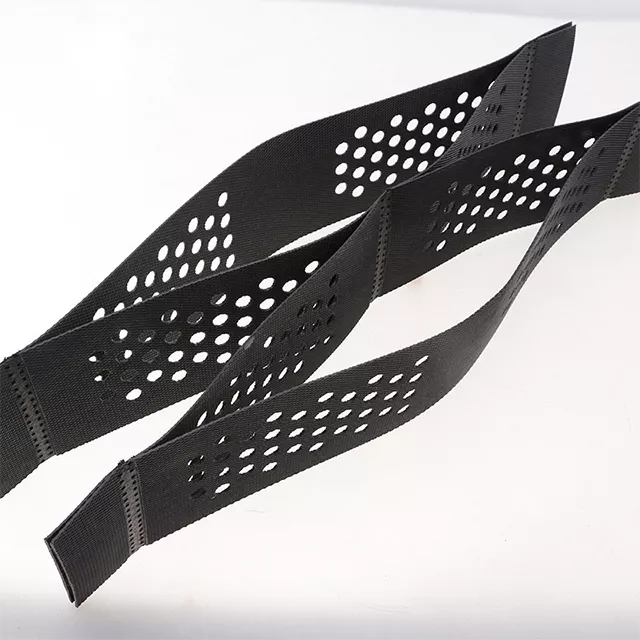 Geocell is a three-dimensional mesh structure made of high-strength polymer sheets (such as HDPE, PP, etc.) through ultrasonic welding. When unfolded, it presents a three-dimensional grid shape.
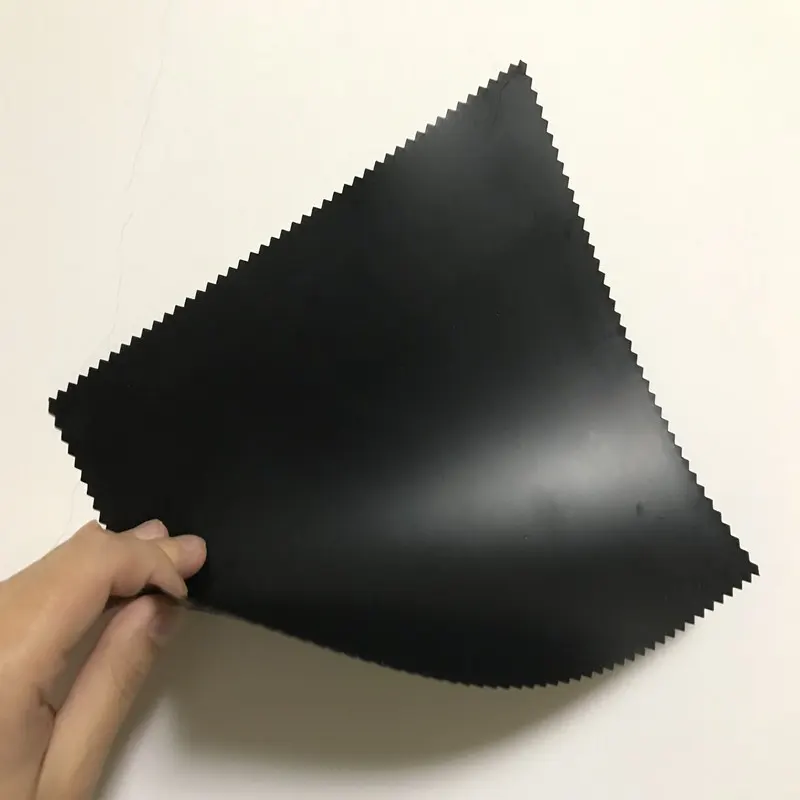 Geomembrane is a thin, extremely low-permeability sheet material made from high-molecular-weight polymers (high-density polyethylene, linear low-density polyethylene).
 - Blog
- Contacts
Four Key Effects of Elongation on the Performance of Steel-Plastic Geogrids


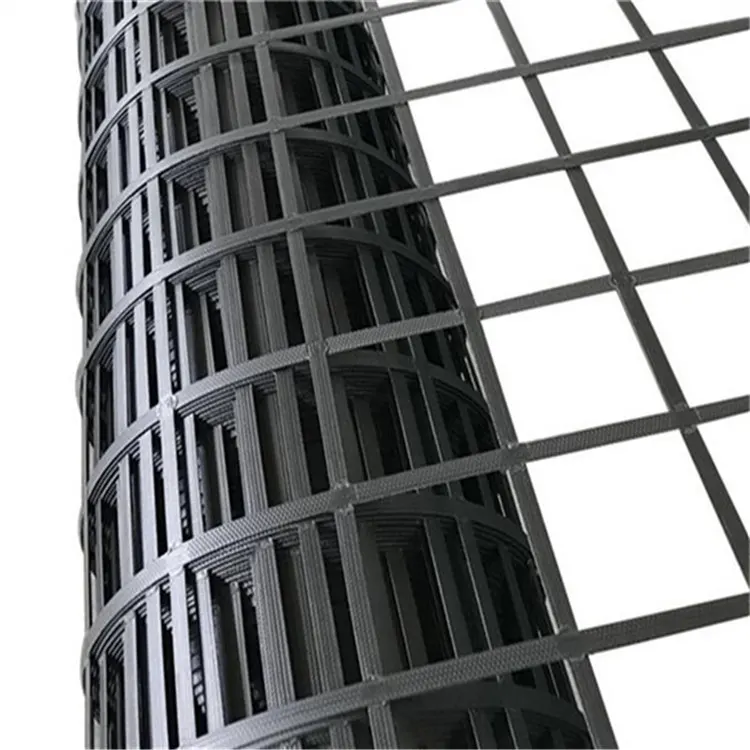
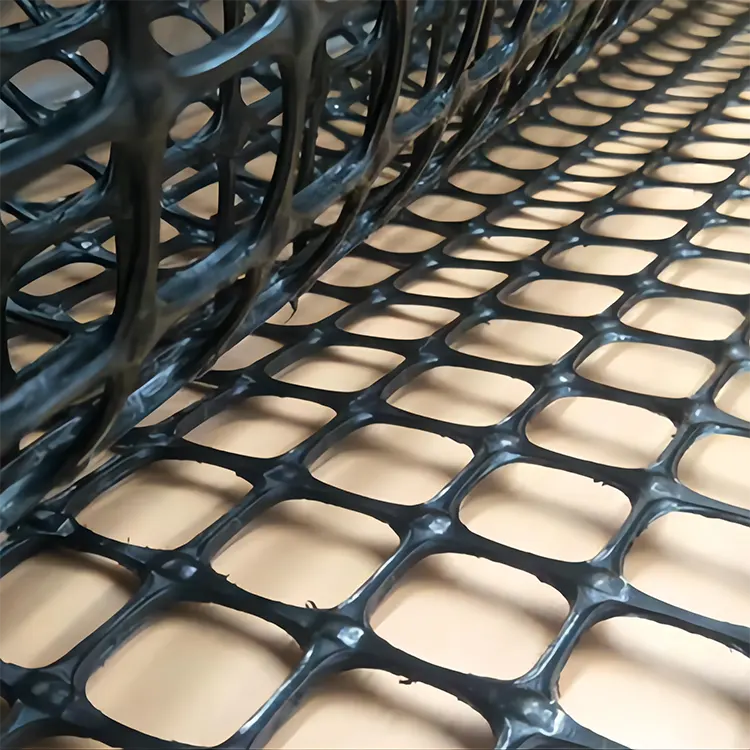
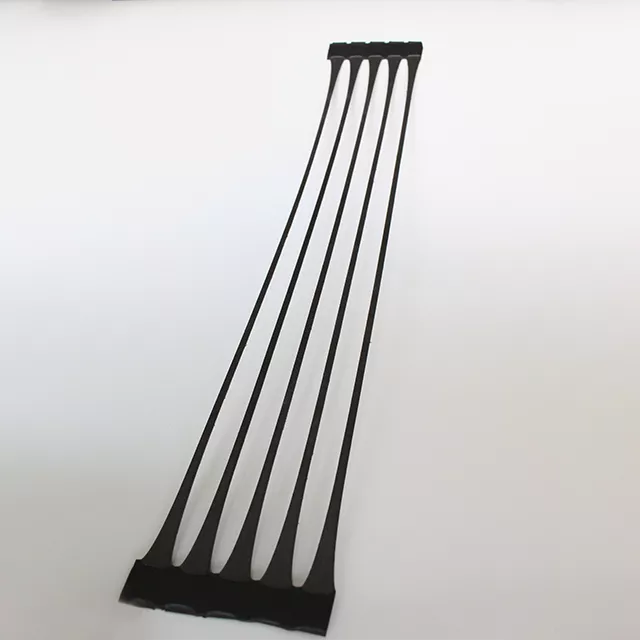
Elongation is a core control indicator for steel-plastic geogrids, directly determining their reinforcement effect, engineering stability, long-term service performance, deformation capacity under stress, and reliability of collaborative operation. Lower elongation results in stronger reinforcement and less engineering deformation; excessive elongation leads to reinforcement failure and structural instability. Therefore, reasonable control of the elongation of steel-plastic geogrids is a primary condition for ensuring their quality. Today, Lianxiang Geotechnical will explain the significant impact of elongation on the performance of steel-plastic geogrids.
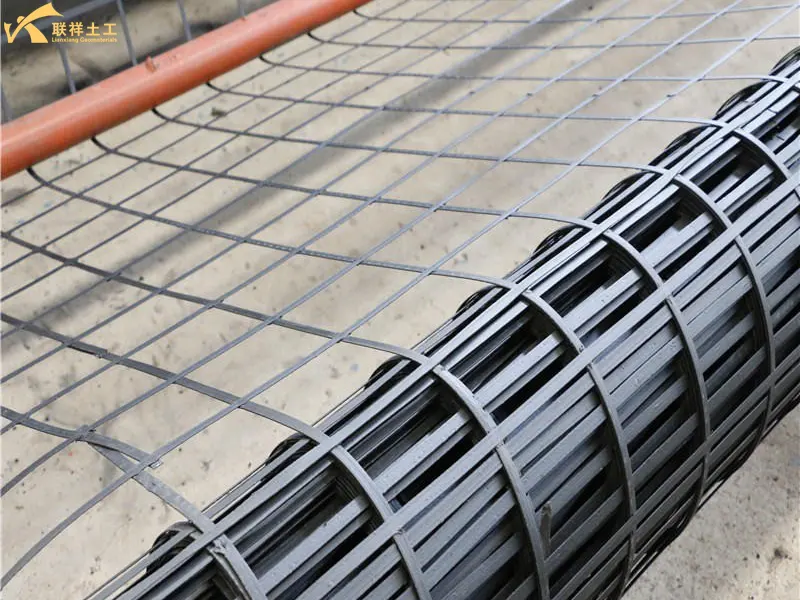
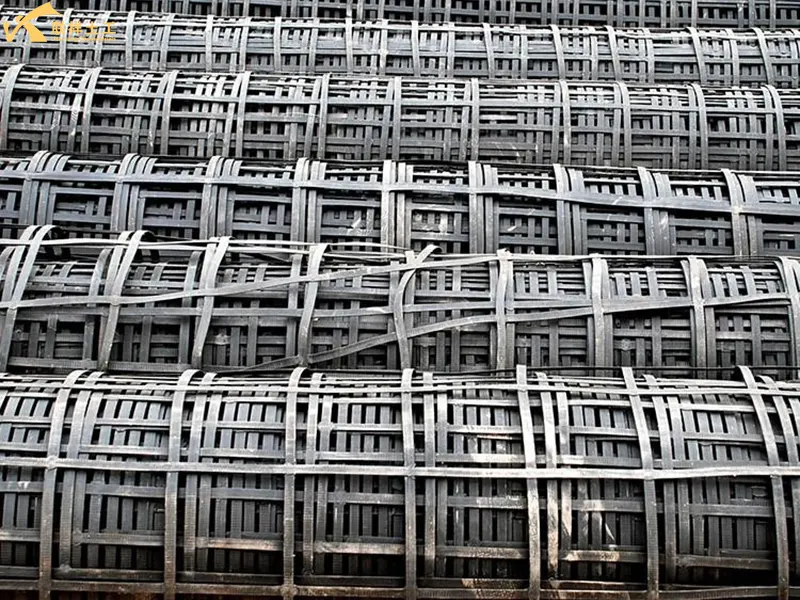
1. Core Definitions and Standard Values
- Elongation: The percentage increase in length relative to the original length when the geogrid breaks under tension; in engineering, the nominal elongation (the elongation at which the nominal tensile strength is reached) is more important.
- Steel-plastic geogrid standard: According to JT/T 925.1-2014, the nominal elongation in both longitudinal and transverse directions should be ≤3% (at 2% elongation, the tensile strength must retain ≥67% of the nominal value). - Comparison: Pure plastic grating typically has an elongation rate of 10%–13%, while steel-plastic composites have a significantly lower elongation rate due to their steel wire skeleton.
2. Two Major Factors Affecting Elongation Rate from Raw Materials
2.1. Steel Wire Quality
- High yield strength, low relaxation galvanized steel wire must be used.
- Insufficient strength or diameter → Elongation rate will inevitably exceed limits.
- Steel wire must be straight, without sharp bends or rust.
2.2. Polyethylene/Polypropylene Substrate
- Use high modulus, low shrinkage granules.
- Strictly prohibit the mixing of large amounts of recycled materials and impurities → This will significantly increase the elongation rate.
3. The Impact of Elongation Rate on Key Performance Characteristics
3.1. Tensile Strength and Stress-Strain Characteristics
- Low elongation rate (≤3%): The stress-strain curve is "gradual at first, then steep," with early plastic deformation and later steel wire dominance. It exhibits high tensile strength, high modulus, and a short yield segment, approaching linear elasticity, resulting in optimal reinforcement efficiency.
- High elongation (>3%): Excessive deformation of the plastic and delayed stress on the steel wire lead to a decrease in effective tensile strength and modulus, significantly weakening the reinforcement effect.
- Rate effect: As the tensile rate increases, the maximum force increases slightly (+3%–5%), but the elongation shows no obvious pattern.
3.2. Reinforcement and Engineering Stability (Most Critical Impact)
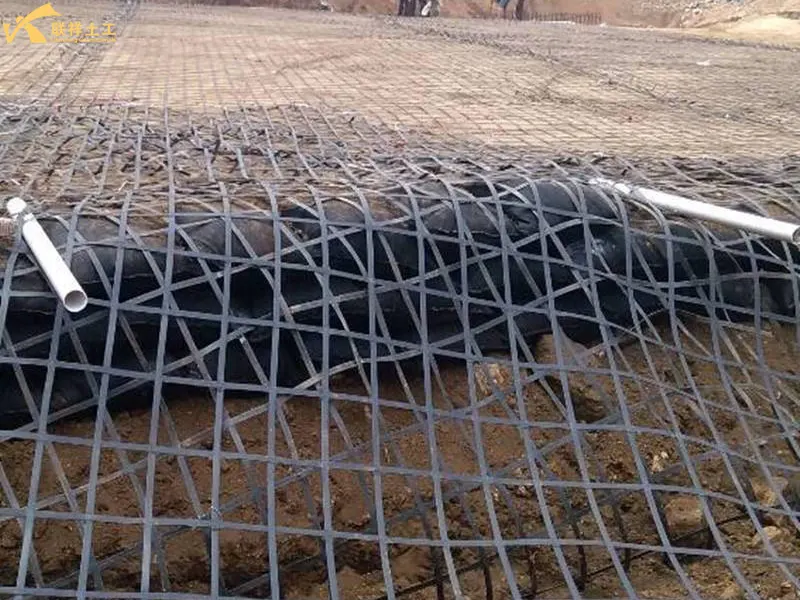
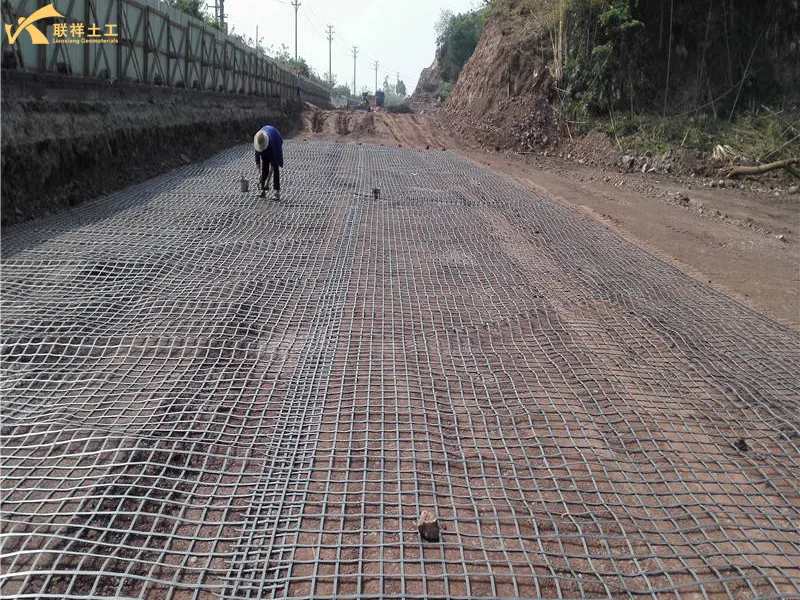
- Subgrade/Foundation Reinforcement: When the elongation is ≤3%, the geogrid can quickly constrain lateral soil displacement and suppress uneven settlement, showing significant effects in the connection of new and old subgrades, high embankments, and soft soil treatment.
- Slopes/Retaining Walls: Low elongation ensures coordinated deformation of reinforcement and soil, avoiding soil slippage and retaining wall collapse caused by the "lagging deformation" of the geogrid.
- Risks of excessive elongation: The geogrid deforms before the soil, rendering the reinforcement effect ineffective, leading to subgrade cracking, slope landslides, and structural instability.
3.3. Node Strength and Integrity
- Excessive elongation leads to inconsistent deformation between the strips and nodes (ultrasonic welding/fusion), easily causing nodes to fail before the strips, resulting in a sharp drop in overall strength.
- Low elongation ensures that nodes and strips are subjected to stress synchronously, with stable node separation force (≥300N) and good overall integrity.
3.4. Long-Term Durability
- Creep Control: Low-elongation materials exhibit small creep deformation and high strength retention under long-term loads (≥80%@500h UV).
- Environmental Adaptability: Within a temperature range of -50℃ to 70℃, low-elongation grids exhibit good dimensional stability, avoiding additional stress caused by thermal expansion and contraction.
4. Engineering Selection and Control Points
4.1. Selection Principles
- High-load/critical projects (high-speed, heavy-haul railways, high embankments >8m): Steel-plastic grids with an elongation ≤3% and tensile strength ≥50kN/m must be selected.
- General roadbed/slope: Specifications with an elongation rate ≤3% and 20–50 kN/m are recommended for optimal cost-effectiveness.
4.2. Quality Control
- Incoming Inspection: Longitudinal/transverse tensile strength, elongation rate, and joint strength must be inspected. Use is strictly prohibited if the elongation rate exceeds the standard.
- Construction Control: Maintain appropriate tension during laying to avoid excessive stretching that could lead to excessive initial elongation and strength loss.
5. Four Methods for Controlling Elongation Rate in Production Processes
5.1. Steel Wire Arrangement and Tension
- During production, the steel wire should be evenly tensioned, straightened, and neither too loose nor too tight.
- Uneven tension → High local stress → Fluctuating elongation rate
5.2. Extrusion Temperature
- Too high a temperature: Plastic softens → Weak wrapping → Increased elongation rate
- Too low a temperature: Poor plasticization → Weak adhesion → Easy detachment of joints
- Maintain a stable temperature range of 180–220℃
5.3. Traction Speed
- Too high a speed → Plastic is stretched → Excessive elongation rate
- Too slow a speed → Low efficiency, uneven thickness
- Maintain a uniform and stable speed to ensure synchronous molding of the steel wire and plastic
5.4. Joint Welding/Fusion Strength
- Weak joints → Joints break under stress → Inflated elongation rate
- Must ensure:
- Stable welding temperature
- Sufficient pressure
- Uniform weld points with no incomplete welds
6. Three Major Influences of Structural Design on Elongation
6.1. Matching the Number and Diameter of Steel Wires with Tensile Strength Grade
- Insufficient strength relying on plastic reinforcement → Elongation will inevitably exceed limits
6.2. Sufficient Rib Width and Thickness
- Too thin → Easy deformation, high elongation
6.3. Symmetrical Overall Structure of the Geogrid
- Asymmetrical stress → Abnormal local elongation
7. Summary
Elongation is the "rigidity index" of steel-plastic geogrids:
- ≤3%: High strength, high modulus, strong constraint, stable structure, optimal engineering performance.
- >3%: Reinforcement failure, uncontrolled deformation, significantly increased safety risks.
Conclusion
Elongation determines the balance between limiting soil deformation (stiffness) and adapting to soil settlement (toughness) of the steel-plastic geogrid. A qualified steel-plastic geogrid relies on low elongation to achieve its immediate reinforcement and displacement restriction effects on slopes and roadbeds. Therefore, it is essential to strictly control the elongation rate according to standards during engineering projects. This is a core prerequisite for ensuring the reinforcement effect of steel-plastic geogrids and guaranteeing the long-term safety of the project. Hopefully, the above explanation will be helpful when using steel-plastic geogrids in the future.
Written by
SHANDONG LIANXIANG ENGINEERING MATERIALS CO., LTD.
Kyle Fan
WhatsApp:+86 139 5480 7766
Email:admin@lianxiangcn.com
-
WhatsApp
-
E-MailE-Mail:admin@lianxiangcn.com
-
WeChatWeChat:18554180188