
- Home
- Company
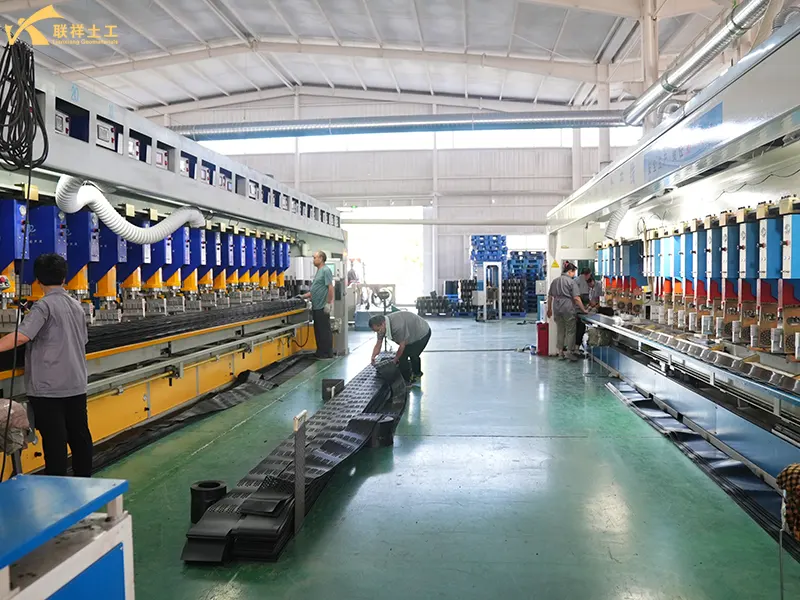
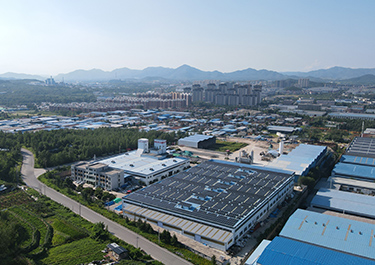 Our FactoryWe have a team of more than 30 talented geotechnical material R&D experts and a 30,000 square meter advanced modern intelligent manufacturing plant.
 - Products
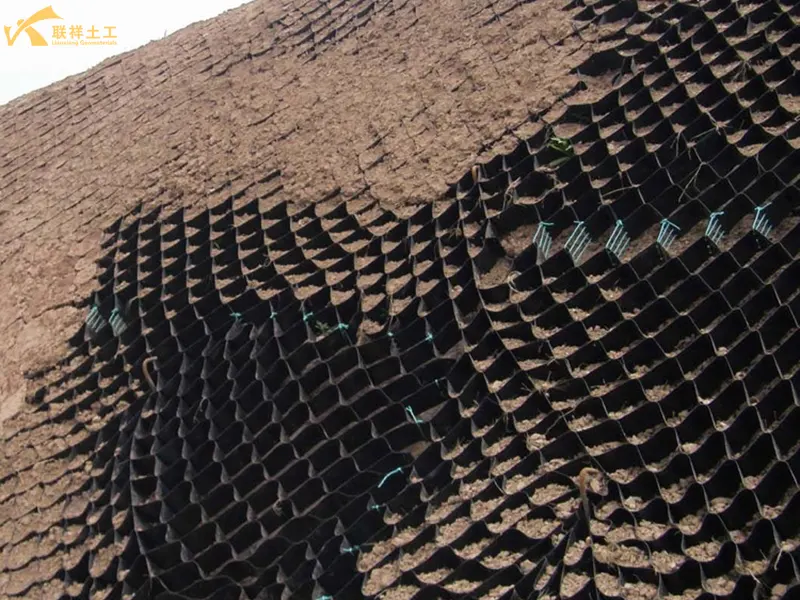
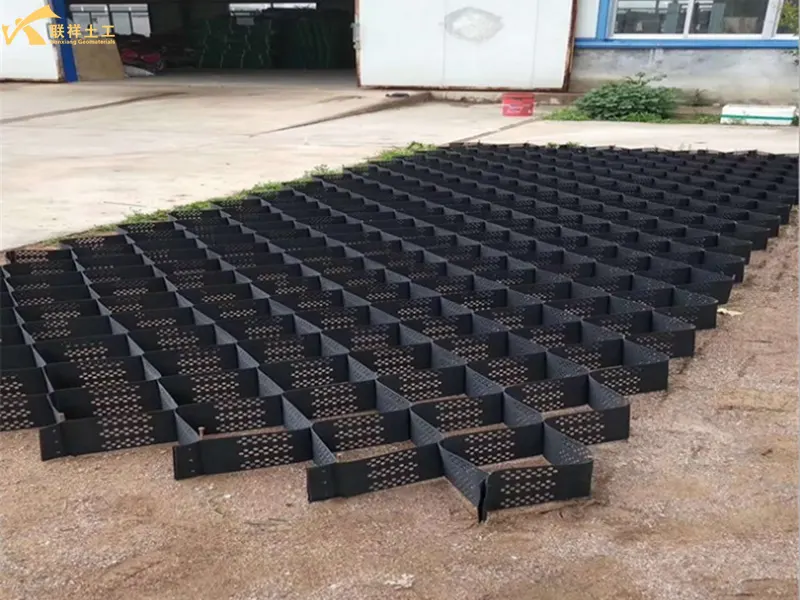
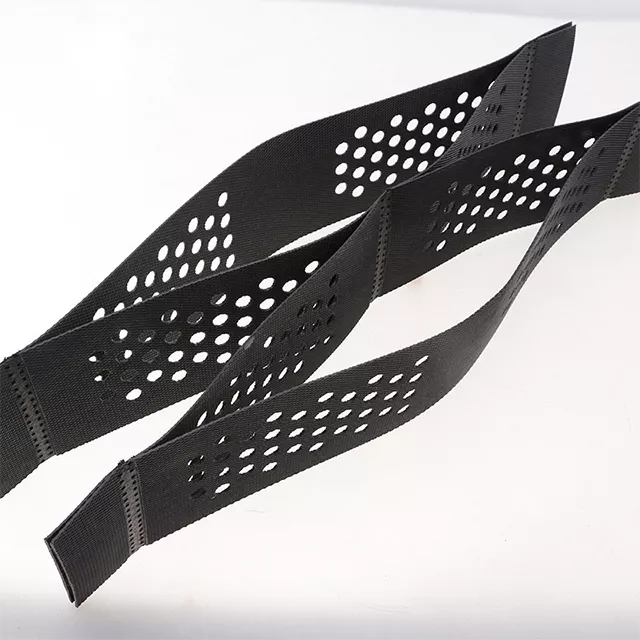 Geocell is a three-dimensional mesh structure made of high-strength polymer sheets (such as HDPE, PP, etc.) through ultrasonic welding. When unfolded, it presents a three-dimensional grid shape.
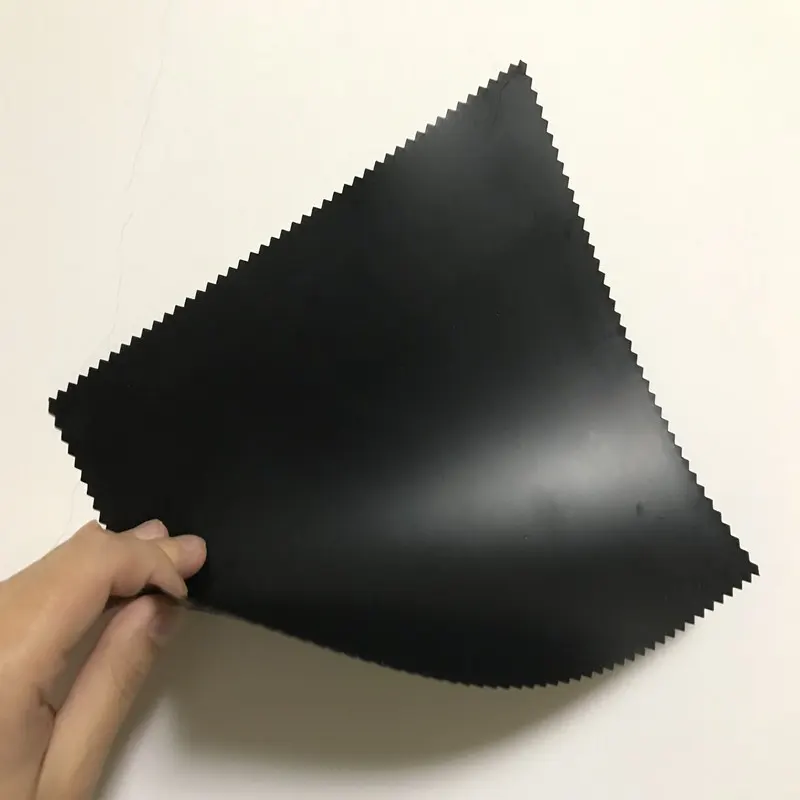 Geomembrane is a thin, extremely low-permeability sheet material made from high-molecular-weight polymers (high-density polyethylene, linear low-density polyethylene).
 - Blog
- Contacts
Optimization Design of Geocell Composite Structures Based on Different Fillers


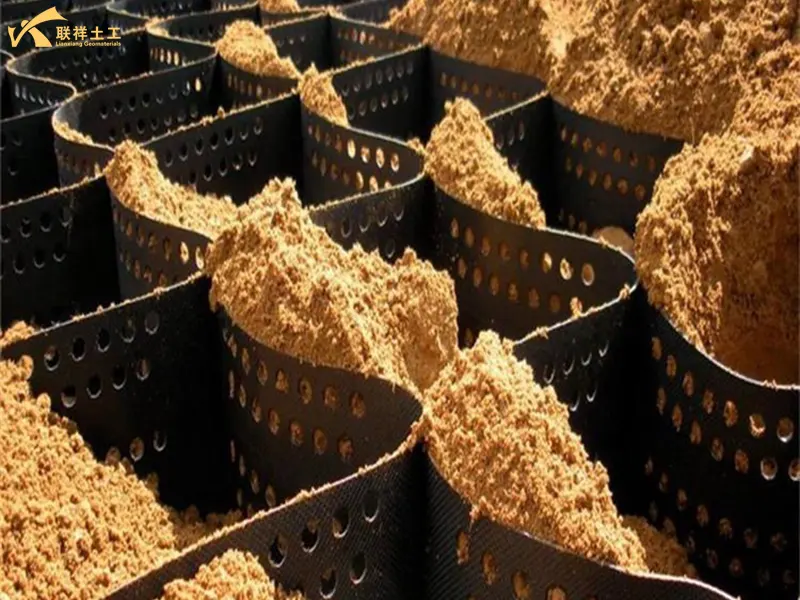
The core advantage of geocell composite structures lies in improving the mechanical properties of the fill material through the three-dimensional constraint effect of the cells. The core logic of its optimized design is the precise matching of "fill material characteristics - cell parameters - structural function." Different fill materials (crushed stone, sand, cohesive soil, special fill materials, etc.) have significant differences in particle size distribution, shear strength, permeability, and deformation characteristics. Therefore, it is necessary to specifically optimize cell selection, structural layer combinations, and construction parameters to achieve engineering goals such as increased load-bearing capacity, deformation control, and enhanced stability. The following detailed explanation, based on industry standards, covers core principles, optimized fill material schemes, and verification methods.
1. Core Principles of Optimized Design
- 1.1. Filler-Cell Parameter Matching Principle:The height, pore size, wall thickness, and material of the cells must be compatible with the particle size and mechanical properties of the filler (e.g., coarse-particle filler requires a larger cell height for constraint, while fine-particle filler requires a smaller pore size to prevent leakage).
- 1.2. Structural Function Orientation Principle: Determine the optimization focus based on the project's purpose (subgrade, slope, soft soil treatment, retaining wall, etc.) (load-bearing type focuses on strength improvement, seepage prevention type focuses on permeability control, and slope type focuses on anti-sliding stability).
- 1.3. Construction Feasibility Principle: The optimized scheme must consider the difficulty of filler compaction and the convenience of cell laying and fixing to avoid uncontrolled construction quality due to unreasonable parameters.
- 1.4. Economic Principle: Under the premise of meeting project requirements, balance the cell usage, filler cost, and construction period to avoid over-design.
2. Optimized Design Schemes for Different Fillers
2.1. Crushed Stone Filler (Particle size 5-31.5mm, well-graded, friction angle φ=35°-45°)
For highway/railway subgrades, airport runway base courses, and heavy-load site foundations (such as container yards), the core requirements are high load-bearing capacity, low deformation, and fatigue resistance. Through optimization measures, the load-bearing capacity of the composite structure is increased by 2-3 times compared to a pure crushed stone base course, settlement is reduced by more than 60%, and fatigue life is increased by 3 times (suitable for scenarios with cumulative axle loads ≥1×10⁶ cycles).
Cell Parameter Selection:
- Height (h): 100-200mm (150mm preferred), must meet the requirement of "cell height ≥ 3-5 times the maximum particle size of the filler" (GB/T 19274 requirement), ensuring that the particles are completely confined.
- Pore Size (a): 200-300mm (square or regular hexagonal), the ratio of pore size to the average particle size of the filler should be controlled at 8-12 to avoid particle segregation or cell failure.
- Wall Thickness (t): 2.0-3.0mm (HDPE material), tensile strength ≥ 25MPa, elongation at break ≤ 15%, meeting the tear resistance requirements under heavy load.
- Material: Use weather-resistant HDPE or PP, with added UV stabilizers to ensure a service life ≥ 50 years.
Structural Layer Optimization:
- Composite Structure: "Lower layer (10-15cm graded sand) + geocell + crushed stone fill (single layer thickness = cell height + 5cm compaction allowance) + Upper layer (5-10cm medium sand)".
- Layer Design: For heavy-load scenarios (axle load ≥100kN), a double-layer geocell design is adopted, with a layer spacing of 50-80cm. The upper and lower layers of geocells are staggered in aperture (60° angle) to enhance the overall restraint effect.
- Edge Treatment: A 30cm wide crushed stone shoulder is set on the outer side of the geocell and wrapped with geotextile to prevent filler loss.
Key Construction Control Points:
- Fill Material Compaction: Use a vibratory roller (excitation force ≥300kN) to achieve a compaction degree ≥96% (heavy compaction standard) to avoid over-compression that could cause cell deformation.
- Cell Fixing: Before laying, level the underlying layer (flatness error ≤5mm/m). Fix the cells with U-shaped nails (spacing 1.5-2.0m), increasing the spacing to 1.0m at corners.
2.2. Sandy Soil Fill Material (particle size 0.075-2mm, φ=28°-32°, cohesion c≈0)
For roadbed, slope protection, and coastal backfilling projects in desert areas, the core requirements are resistance to wind/water erosion, enhanced integrity, and prevention of quicksand. Through optimization measures, the overall shear strength of sandy soil can be increased by 50%-80%, the permeability coefficient can be reduced by 1-2 orders of magnitude, and the slope stability safety factor can be increased from 1.05 to over 1.3, effectively preventing quicksand and erosion.
Cell Parameter Selection:
- Height (h): 50-100mm (80mm preferred), 50-80mm for fine sand (particle size < 0.5mm), 80-100mm for medium-coarse sand.
- Aperture (a): 150-200mm, the ratio of aperture to average filler particle size should be controlled at 10-15 to prevent fine sand from escaping through the pores.
- Wall Thickness (t): 1.5-2.0mm (HDPE material), tensile strength ≥20MPa, elongation at break ≤20%, balancing flexibility and strength.
- Additional Functions: The cell surface can be sprayed with an anti-aging coating (such as polyurea), and salt-corrosion resistant materials should be selected for coastal areas.
Structural Layer Optimization:
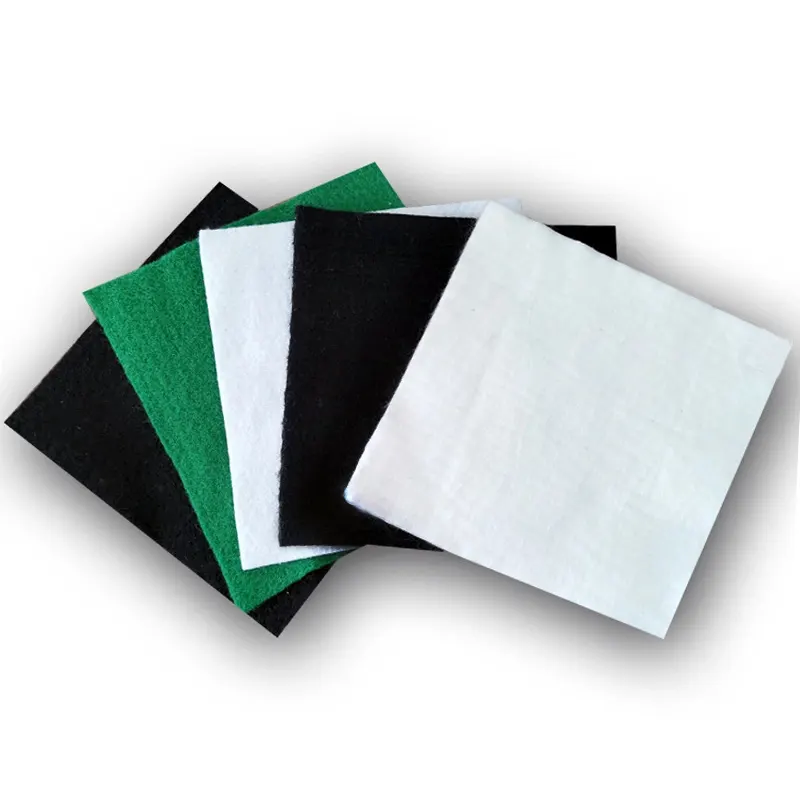
- Composite Structure: "Geotextile (non-woven fabric, weight ≥300g/㎡) + geocells + sand filler + geotextile (overlay)" forms a "sandwich" structure to prevent sand and soil infiltration and erosion.
- Slope Application: A composite protection system of "grids + sand + vegetation" is used. The grids are 80mm high with 200mm apertures. 30% planting soil is mixed into the filler, and grass seeds are sprayed onto the surface. The grids serve to stabilize the soil and guide vegetation growth.
- Subgrade Application: A single layer of grids is sufficient. The filler compaction degree is ≥95%. When laying the grids, they must be parallel to the subgrade centerline, with a lateral overlap width ≥15cm, and secured with clips.
Key Construction Control Points:
- Moisture Content Control: The moisture content of the sandy soil needs to be adjusted to ±2% of the optimum moisture content to avoid excessive dryness leading to compaction or excessive moisture causing quicksand.
- Wind Erosion Prevention Measures: After laying, promptly cover with a subbase or planting soil to prevent exposed sand from being eroded by wind.
2.3. Cohesive Soil Filler (Clay content ≥30%, φ=15°-25°, c=10-30kPa)
For rural roadbed and soft soil backfilling projects, the core requirements are improving water stability, reducing compression deformation, and increasing bearing capacity (cohesive soil softens easily when exposed to water and experiences severe strength degradation, requiring a focus on addressing constraint and drainage issues). Through optimization measures, the bearing capacity of cohesive soil composite structures can be increased by 1.5-2 times, the compression modulus by 2-3 times, and water stability significantly improved (saturated strength degradation rate reduced from 40% to below 15%).
Cell Parameter Selection:
- Height (h): 100-150mm. A greater height is needed to accommodate the volume changes of compacted cohesive soil and prevent the cell from being punctured.
- Aperture (a): 200-250mm. Too large an aperture can cause lateral extrusion of the cohesive soil, while too small an aperture hinders compaction.
- Wall Thickness (t): 2.0-2.5mm (HDPE material), tensile strength ≥22MPa, tear strength ≥50kN/m, to cope with the lateral pressure during cohesive soil compaction.
- Drainage Design: Drainage holes (5-8mm diameter, 100mm spacing) should be pre-reserved on the cell sidewalls, or a dedicated cell with drainage channels can be selected.
Structural Layer Optimization:
- Composite Structure: "Permeable cushion layer (10cm crushed stone) + geocells + improved cohesive soil (mixed with 3%-5% cement or 8%-12% lime) + drainage layer (5cm medium sand)". The improved soil enhances shear strength and water stability.
- Layer Design: For soft soil subgrade (bearing capacity ≤80kPa), a double-layer geocell system is used, with a layer spacing of 60-80cm. The bottom layer of geocells is laid on the permeable cushion layer, and the top layer is covered with a drainage layer, forming a "two-way drainage + double constraint" system.
- Edge Treatment: Crushed stone drainage blind ditches (30cm wide, 50cm high) are installed outside the geocells to drain water seeping from the cohesive soil into the subgrade area.
Key points for construction control:
- Fill material improvement: Clayey soil needs to be crushed (particle size ≤ 5cm), and conditioner should be added in proportion. After mixing, the moisture content should be controlled at the optimum moisture content ±1%.
- Compaction process: Use a static roller (pressure ≥ 200kN), compact in layers (each layer thickness ≤ cell height), avoiding vibration compaction that could cause cell deformation.
- Curing: Curing should be carried out for 7-14 days after compaction to ensure the improved soil strength is formed and to prevent early softening upon contact with water.
2.4. Special Fillers (Fly Ash, Tailings, Recycled Construction Waste)
2.4.1. Fly Ash (Particle size 0.01-0.1mm, lightweight, porous, compaction and contamination issues need to be addressed)
- Cell parameters: Height 120-150mm, pore size 200-250mm, wall thickness 2.0-2.5mm (corrosion-resistant HDPE).
- Structural optimization: “Geomembrane (seepage prevention) + permeable cushion layer (10cm crushed stone) + geocell + fly ash (mixed with 5%-8% cement for improvement) + geotextile (isolation)”, to prevent fly ash leaching and groundwater contamination.
- Construction points: Fly ash compaction uses a vibratory roller (excitation force ≥250kN), compaction degree ≥94%, curing period ≥14 days.
2.4.2. Recycled Construction Waste (particle size 5-40mm, including concrete blocks and bricks, with uneven strength)
- Cell parameters: Height 150-200mm, aperture 250-300mm, wall thickness 2.5-3.0mm (high-strength HDPE), to cope with the cutting action of the recycled material's sharp edges.
- Structural optimization: "Lower layer (15cm graded sand) + geocell + recycled material (particle size ≤ 2/3 of cell height) + upper layer (10cm medium sand)", the recycled material needs to be screened to remove impurities (wood, plastic).
- Construction points: Recycled material compaction degree ≥95%, cell overlap width ≥20cm, fixed with bolts (to avoid tearing of sharp edges).
2.4.3. Tailings (particle size 0.075-5mm, easily lost, may contain heavy metals)
- Cell parameters: Height 100-120mm, pore size 150-200mm, wall thickness 2.0mm (acid and alkali resistant material).
- Structural optimization: "Geotextile (filtration) + geocell + tailings (mixed with 10%-15% lime for improvement) + geomembrane (seepage prevention)" to prevent heavy metal migration.
- Construction key points: Tailings moisture content controlled at 18%-22%, layered compaction (each layer thickness ≤8cm), compaction degree ≥93%.
3. Optimization of geocell structural parameters
- Cell height: This is the most critical parameter. The greater the height, the stronger the lateral restraint and bending moment effect, the more significant the "deep beam" effect, and the stronger the ability to adjust for uneven settlement. It needs to be determined comprehensively based on the thickness of the weak foundation layer and the magnitude of the load.
- Weld Spacing and Cell Size: The weld spacing (single cell size) affects the arching effect and overall integrity of the packing material. Smaller cells provide stronger confinement but require more material and have lower construction efficiency; larger cells have the opposite effect.
- Celling Sheet Material Characteristics: HDPE (commonly used), PP, polyester, etc. Their long-term creep resistance, aging resistance, and chemical corrosion resistance must be considered.
- Thickness and Strength: The tensile strength of the sheet and the weld strength determine the confinement limit of the cell for the packing material. High-strength sheets can be used in conjunction with high-strength packing material to achieve maximum effectiveness.
4. Optimized Design Verification Methods
4.1. Indoor Test Verification
- Core Tests: Composite structure bearing capacity test (bearing plate method, 30cm diameter), shear strength test (large direct shear apparatus, specimen size 50cm×50cm), permeability test (variable head method), long-term deformation test (creep test, loading time ≥1000h).
- Standards: Performed according to GB/T 50123 "Standard for Geotechnical Testing Methods" and SL/T 235 "Specifications for Testing Geosynthetics".
4.2. Numerical Simulation Optimization
- Software Selection: FLAC3D (Discrete Element Method, suitable for granular fillers), ABAQUS (Finite Element Method, suitable for overall structural deformation analysis).
- Simulation Parameters: Shell elements (shell63) are used for the cells, and the Mohr-Coulomb model is used for the filler. The friction coefficient between the cells and the filler is 0.4-0.6 (determined based on experiments).
- Optimization Objective: By adjusting the cell height, aperture, and number of layers, the maximum settlement of the composite structure should be ≤ the allowable value (subgrade ≤ 30mm, slope ≤ 10mm), and the lateral displacement ≤ 5mm/m.
4.3. Field Monitoring and Verification
- Monitoring Indicators: Settlement (settlement plates, spacing 5-10m), stress (earth pressure cells, embedded in the upper and lower layers of the cells), lateral displacement (inclinometer, depth ≥ 1.5 times the thickness of the structural layer), permeability (piezometer).
- Monitoring Cycle: Every 3 days during construction, monthly for the first 6 months of operation, and every 3 months thereafter, for 1-2 years.
5. Engineering Case Reference
Case 1: Subgrade of a Highway (Crushed Stone Filler)
- Optimized Solution: Cell height 150mm, aperture 250mm, wall thickness 2.5mm, single-layer paving, structural layer consisting of "10cm graded sand + cell + 30cm crushed stone + 5cm medium sand".
- Results: Subgrade compaction degree ≥96%, maximum settlement 8mm after 1 year of operation, lateral displacement 3mm, meeting highway design requirements (settlement ≤15mm).
Case 2: Rural Road in a Soft Soil Area (Cohesive Soil Filler)
- Optimized Solution: Cell height 120mm, aperture 200mm, double-layer paving (layer spacing 60cm), cohesive soil mixed with 4% cement for improvement, structural layer consisting of "10cm crushed stone + cell + 20cm improved soil + cell + 20cm improved soil + 5cm medium sand".
- Results: Subgrade bearing capacity increased from 60kPa to 150kPa, maximum settlement after 2 years of operation was 12mm, with no cracking or instability.
6. Current Research Hotspots and Trends
- Intelligent Filler and Functionalization: Research on self-sensing fillers (e.g., incorporating optical fibers), self-healing fillers, etc.
- High-Value Utilization of Waste Materials: Using construction waste, industrial waste, etc., as cell fillers is an important direction for green civil engineering.
- Life Cycle Cost Analysis and Sustainability Evaluation: Considering not only initial construction costs but also long-term maintenance costs, carbon footprint, and environmental benefits.
- Dynamic Response and Long-Term Performance
7. Conclusion
The optimized design of geocell composite structures must focus on the core variable of "fill material characteristics": coarse-grained fill materials (crushed stone, recycled materials) emphasize the matching of cell height and pore size to enhance the constraint effect; fine-grained fill materials (sand, cohesive soil) emphasize drainage and improvement to enhance overall integrity; special fill materials must consider both environmental protection and mechanical performance, and specifically design impermeable and filter layers. Simultaneously, the optimization effect must be verified through a combination of indoor tests, numerical simulations, and field monitoring to ensure that the scheme meets the unity of engineering function, construction feasibility, and economy. During the design process, relevant industry standards must be strictly followed, with a focus on controlling the selection of cell parameters, structural layer combinations, and construction quality to maximize the performance of the composite structure.
Written by
SHANDONG LIANXIANG ENGINEERING MATERIALS CO., LTD.
Kyle Fan
WhatsApp:+86 139 5480 7766
Email:admin@lianxiangcn.com
-
WhatsApp
-
E-MailE-Mail:admin@lianxiangcn.com
-
WeChatWeChat:18554180188