
- Home
- Company
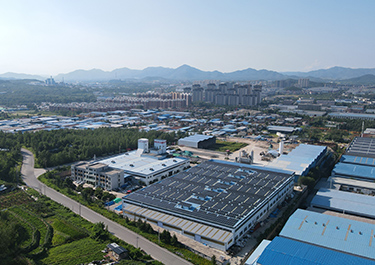 Our FactoryWe have a team of more than 30 talented geotechnical material R&D experts and a 30,000 square meter advanced modern intelligent manufacturing plant.
 - Products
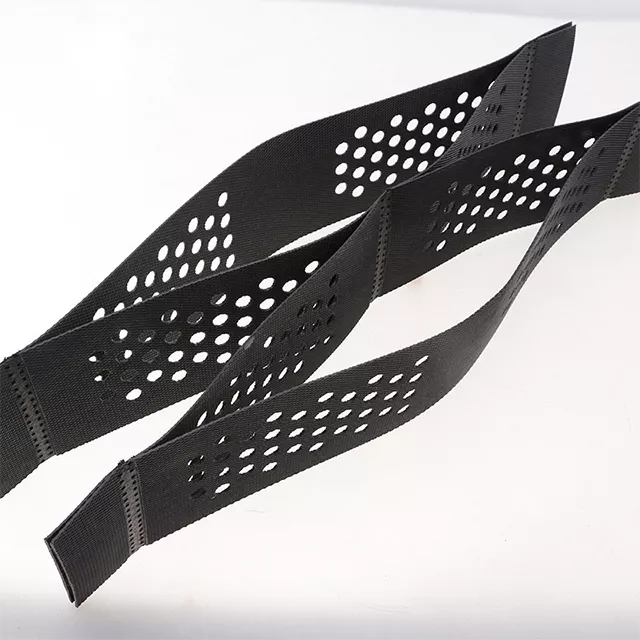 Geocell is a three-dimensional mesh structure made of high-strength polymer sheets (such as HDPE, PP, etc.) through ultrasonic welding. When unfolded, it presents a three-dimensional grid shape.
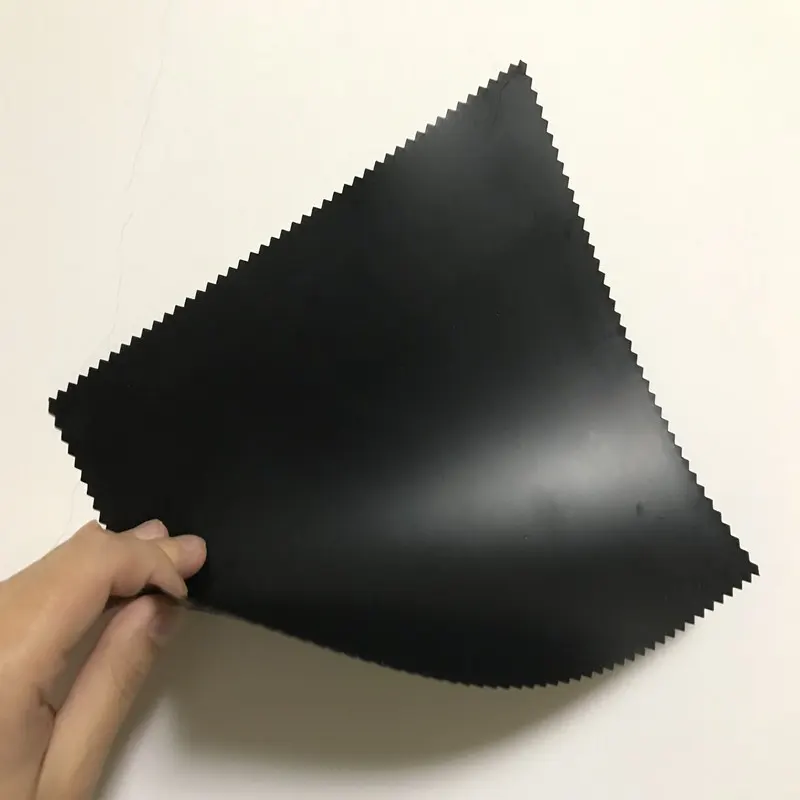 Geomembrane is a thin, extremely low-permeability sheet material made from high-molecular-weight polymers (high-density polyethylene, linear low-density polyethylene).
 - Blog
- Contacts
Mastering the 7 Most Important Knowledge Points About Geocell Fracture Elongation


The elongation at break (E) of geocells, according to current national standards and commonly used engineering values, typically ranges from 15% to 40%, with significant differences depending on the material, process, and standard requirements. Its core definition is elongation at break (%) = (gauge length at break - initial gauge length) / initial gauge length * 100%. For geocells, the elongation at break requirement is reflected in a very strict upper limit, emphasizing controllable toughness, strength matching, long-term stability, and full compliance across all criteria. Simply put, top-tier geocells require materials to maintain high strength while possessing extremely low elongation; that is, the material must be both strong and rigid.
1. Geocell Elongation at Break Testing Method
The core principle of geocell elongation at break testing is based on GB/T 19274-2024 "Geosynthetic Materials - Plastic Geocells," employing the strip tensile method. Two types of samples are used: the sheet material itself and welds/joints. The entire process is standardized to ensure data reproducibility and comparability.
1.1. Testing Basis and Scope
- Core Standard: GB/T 19274-2024 (Effective April 1, 2025, replacing the old version).
- Applicable Objects: Elongation at break of sheet material and weld/joint of HDPE/PP and other plastic geocells.
- Core Purpose: To measure the relative elongation at fracture to determine toughness and overall structural reliability.
1.2. Instruments
- Electronic universal testing machine: Load accuracy +(-)1%, range matching specimen fracture force (30%–90% range).
- Elongation measuring device: Extensometer/displacement sensor, accuracy +(-)0.1 mm.
- Sample preparation tools: Standard cutter, ruler, marker pen, constant temperature and humidity chamber.
1.3. Standard Environment
- Temperature: 23+(-)2oC.
- Relative Humidity: 50+(-)5%.
- Specimen pretreatment: Conditioning under standard conditions for >=4 hours.
1.4. Sample Preparation (Key: Non-destructive, Dimensionally Compliant)
Sampling is a crucial step in experimental testing. Strict requirements are placed on the size, quantity, and cutting standards of the sheet material itself. Our current standard is a length of 200 mm, a width of 50 mm, and a thickness equal to the actual product thickness. At least five valid samples are required in both the longitudinal and transverse directions. During cutting, the edges must be smooth, free of burrs, cracks, and scratches, and the initial gauge length should be marked at 100 mm. The sampling requirements for weld/node samples are even more stringent. The sample must contain a complete weld/node cell strip, printed with a length of 200 mm, with the weld centered. The clamping section should be the same as the sheet material, and the weld area should retain its original structure. The judgment principle is that fracture within the sheet material is acceptable, while fracture within the weld is unacceptable.
1.5. Testing Operation Procedures (Standard Process)
Each company or quality inspection unit has its own standard testing procedure. Here, we mainly explain the quality inspection procedure of Lianxiang Geotechnical. First, equipment calibration is performed, with the testing machine force and displacement zeroed, and the tensile rate set to 20%/min of the nominal gauge length. Next, the specimen is clamped, centered, and pre-tensioned to approximately 1% of the maximum load to eliminate slack and ensure clear gauge length lines without slippage. Then, the test is started, and the specimen is stretched uniformly until fracture. The maximum load at fracture, gauge length elongation at fracture, fracture location (sheet/weld), and fracture morphology (plastic/brittle) are recorded.
Finally, data recording and processing are performed, discarding invalid data from jaw fractures and abnormal fracture surfaces. At least five valid specimens must be recorded.


2. Five Core Factors Most Significantly Affecting the Elongation at Fracture of Geocells
The elongation at fracture of geocells is determined by the nature of the raw materials, the production and welding process, testing conditions, environmental aging, and structural design. The five most significant influencing factors are: raw material purity, welding process temperature/pressure/time, test temperature, humidity and rate, environment and aging, and structure and design.
2.1. Raw Material Factors
Firstly, the type of raw material has the greatest impact on elongation. For the base resin, HDPE has good toughness and high elongation at break. PP and PET have high rigidity and lower elongation. Secondly, regarding virgin and recycled materials, virgin materials have stable and high elongation, while recycled materials have broken molecular chains, resulting in a significant decrease in elongation and brittleness. Thirdly, melt flow rate (MFR) is crucial; mismatched MFRs lead to poor welding and low weld elongation. Finally, fillers and additives are important. Excessive calcium carbonate and talc can increase rigidity, decrease toughness, and reduce elongation. Insufficient antioxidants and light stabilizers can lead to easy aging and brittleness.
2.2. Production Process Factors
Extrusion molding requires precise temperature control. Both excessively high and low temperatures can lead to significant fluctuations in elongation. Low temperatures result in insufficient fusion, easily broken welds, and low elongation; excessively high temperatures cause material carbonization, embrittlement, and a sharp drop in elongation. Furthermore, the traction speed is crucial. Migration speed is closely related to sheet thickness; excessively fast migration speed leads to high internal stress and low elongation. Insufficient pressure or time during welding can result in incomplete welds, over-welds, and weak points at joints. Temperature control during cooling is also critical. Rapid cooling causes high internal stress and decreased elongation, while slow cooling results in low internal stress and higher, more stable elongation.
2.3. Test Condition Factors
In laboratory measurements, five factors significantly influence elongation: test temperature, humidity, tensile rate, clamping and alignment, gauge length, and measurement method. High temperatures soften the material and increase elongation. Low temperatures make the material brittle and decrease elongation. Humidity changes have little impact on HDPE but can affect equipment accuracy and sample condition. High stretching rates can lead to insufficient time for plastic deformation, resulting in lower elongation rates. Conversely, slow stretching rates can result in significant creep and higher elongation rates. Eccentric force during clamping and alignment, or excessive clamping causing damage, can lead to jaw breakage and invalid data. Different gauge lengths or the absence of an extensometer can cause significant deviations in elongation calculations.
2.4. Environmental and Aging Factors
During the use of geocells, elongation rates also change to varying degrees due to environmental factors. UV exposure can cause polymer chain breakage, embrittlement, and a significant decrease in elongation. Heat and oxygen aging can lead to oxidative degradation and loss of toughness. Exposure to acids, alkalis, salts, and oils can cause environmental stress cracking and reduced elongation. Long-term creep can continuously increase load, leading to cumulative deformation and a decrease in actual elongation capacity.
2.5. Structural and Design Factors (Overall Elongation)
Thicker sheets have a higher probability of internal defects, resulting in a slight decrease in elongation. Insufficiently small weld points or numerous sharp corners can lead to stress concentration and low elongation. Unreasonable cell height and weld spacing can lead to uneven stress distribution and localized premature failure.
3. Six Major Impacts of Geocell Elongation at Break on Engineering Stability
The elongation at break of geocells is essentially a core indicator of material toughness, deformation coordination, and damage resistance reserve. It directly determines the long-term stability, deformation resistance, and damage resistance of reinforced engineering structures such as roadbeds, slopes, and retaining walls. Sufficient elongation allows the cells to coordinate deformation, buffer loads, and adapt to uneven settlement and freeze-thaw cycles, ensuring long-term engineering stability. Insufficient elongation makes the material brittle and prone to premature fracture under settlement, load, and temperature deformation, leading to roadbed cracking, slope collapse, and premature failure of the reinforced structure. In engineering, the elongation at break of both the sheet material and the weld must be controlled simultaneously to truly ensure the overall safety and durability of the reinforced structure.
3.1. Impact on Roadbed Settlement and Uneven Deformation
Sufficient elongation at break allows the cells to deform in coordination with the roadbed, preventing premature cracking. Effectively distributing vehicle loads and foundation settlement stress reduces uneven settlement, rutting, and cracking. Insufficient elongation at break can cause the geocells to break even with slight foundation settlement, resulting in instantaneous failure of the reinforcement. This leads to localized subsidence, frost heave, pavement cracking, and early-stage project failure.
3.2. Impact on Overall Slope Stability
Geocells with adequate elongation will deform first and then bear stress without fracturing when the slope is displaced by rainwater, freeze-thaw cycles, or soil creep, forming a flexible reinforced structure that improves anti-sliding capacity and prevents overall landslides. If the elongation is too low, the slope will fracture brittlely with slight displacement, causing the reinforcement to separate from the soil. This leads to collapses, landslides, shallow sliding, and a sharp decrease in stability.
3.3. Impact on Impact, Vibration, and Blasting Load Resistance
High elongation means high toughness, enabling it to absorb impact energy and buffer dynamic loads, making it suitable for dynamic load scenarios such as roadbeds, railway subgrades, mining areas, and dams. Low elongation rates generally indicate higher brittleness, leading to direct brittle fracture under strong impacts, resulting in damage without buffering or warning, significantly reducing engineering safety.
3.4. Impact on Construction Adaptability and Project Qualification Rate
High elongation geocells are less prone to cracking during tensioning, laying, and backfilling, offering higher construction tolerance and ensuring project quality. Conversely, excessively low elongation rates can cause cracking and damage under slight stress during construction, leading to rework, localized weak points, and long-term hidden dangers.
3.5. Adaptability to Frost Heave, Thaw Settlement, and Wet-Dry Cycles
High elongation rates typically exhibit resistance to large deformations caused by frost heave without fracture, generally resulting in greater stability and longer lifespan in cold regions. Low elongation rates, on the other hand, often lead to geocell fracture after a single frost heave event, eventually causing complete failure of the reinforced structure over the years. Therefore, high elongation products must be used in low-temperature regions, while relatively low elongation products can be used in high-temperature regions.
3.6. Stability of Welds/Nodes (Most Critical)
The welded areas of geocells are their weakest points, facing higher risks of stress and corrosion than other areas. Therefore, the elongation requirement is highest at these locations. In practical use, if the weld elongation exceeds 80% of the sheet material, the overall stress is evenly distributed, and the breakage occurs at the sheet material, resulting in high safety redundancy. If the weld elongation is insufficient, the weld will break first, leading to geocell disintegration, loss of integrity, and direct instability of the project.
4. Elongation Requirements for Geocells in Different Fields
There is no fixed value for the fracture elongation of geocells; it is determined by the engineering scenario, load level, and environmental conditions. Heavy-load, high-speed, and high-safety-level projects (highways, railways, airports) require high elongation (20% to 30%). Generally, for slopes, river channels, and stockpiles, an elongation greater than 12% to 18% is sufficient. Harsh environments such as cold weather and strong ultraviolet radiation require not only high initial elongation but also guaranteed elongation retention after low temperatures and aging. All projects require weld elongation to be no less than 80% of the sheet metal length to ensure the overall structure does not fail at the joints.
- 4.1. The core requirements for using geocells in highway and municipal road subgrades are resistance to repeated vehicle loads, uneven settlement, rutting, and fatigue. The elongation at break must be greater than 15% for conventional roads, and greater than 20% to 30% for expressways, first-class highways, and heavy-load roads. Simultaneously, the weld elongation must be greater than 80% of the sheet metal length.
- 4.2. The core requirements for railway subgrades, high-speed rail, and rail transit are deformation coordination, vibration resistance, long-term stability, and uniform stiffness. The elongation at break must be greater than 18% to 25%, with uniform longitudinal and transverse elongation, and minimal anisotropy.
- 4.3. The core requirements for slope protection, hillside protection, and greening projects are adaptability to soil slippage, freeze-thaw deformation, and rainwater erosion. The elongation at break must be greater than 12% to 20%. Due to the large slope displacement, geocells with good toughness, resistance to brittle fracture, and high elongation are required.
- 4.4. The core requirements for river channels, dams, revetments, and flood control projects are resistance to water erosion, seepage deformation, and frost heave. The elongation at break is required to be greater than 15% to 25%.
- 4.5. The core requirements for mines, stockpiles, slag heaps, and backfilling projects are: bearing capacity, resistance to settlement, and resistance to uneven deformation. The elongation at break is required to be greater than 12% to 18%. Due to the large loads and settlement in these application areas, sufficient toughness is required to prevent sudden fracture.
5. Common methods for on-site acceptance of geocell elongation rate
5.1. Most commonly used on-site: Simple stretching method (manual/hand-pulling comparison method)
Cut seamless strips from the product, approximately 1.5–2 cm wide and 20 cm long. Mark a 100 mm gauge length with a marker. Two people stretch the material evenly and slowly, or use manual tension pliers to pull it at a uniform speed. Observe for signs of whitening, deformation, significant elongation, obvious plastic deformation before fracture, whether the fracture surface is stringy, and ductile fracture. Based on the above operations, the corresponding judgment criteria are given. A gauge length of 100 mm should be able to be stretched to 115-130 mm or more before breaking, without breaking at the weld, breaking within the sheet, and showing obvious plastic deformation; the elongation at break should be greater than 15%. If it is almost impossible to stretch, breaks brittlely with a single pull, shows no elongation, and does not whiten, it is unacceptable; the elongation is less than 10%.
5.2. Simple On-Site Measurement Method (closest to actual measurement, records can be kept)
Cut a standard strip: 200 mm long, gauge length 100 mm. Use a tensioner or manually to pull at a uniform speed until it breaks. Immediately measure the total length L of the two gauge lengths after the break. Calculate: Elongation at break = (L - 100)/100 × 100%. For general applications, a value greater than 15% is acceptable; for high-speed, railway, and key projects, a value greater than 20% is acceptable.
5.3. On-site Acceptance Method for Weld Joints (Most Critical)
Cut a sample with a complete weld joint, stretch it manually or with a tensioner, and observe the fracture location. If it breaks in the sheet material, it is acceptable; if it breaks in the weld, it is unacceptable.
6. Relationship between Construction Method and Geocell Elongation
6.1. Tensioning and Laying Method
Slow and uniform tensioning ensures uniform stress on the geocells, gradually utilizing the elongation, coordinated deformation, and avoids stress concentration, allowing the material's toughness and elongation to be fully realized. Forceful and sudden tensioning can cause impact loads on the sheet material and welds, preventing the material from undergoing plastic deformation, resulting in "brittleness and low elongation," and making it prone to micro-cracks, localized damage, and premature fracture in later stages of the project.
6.2. Backfilling and Compaction Method
Layered backfilling, light compaction, and uniform compaction ensure that the geocells and soil share the stress, resulting in gradual deformation, fully utilizing the elongation for coordinated deformation, and reducing the risk of localized breakage. Uneven filling, large stones, and heavy rolling can cause sharp-edged stones to puncture and scratch the cells, leading to localized stress concentration, premature cracking, and loss of elongation.
6.3. Overlapping, Fixing, and Connection Methods
Smooth connections, firm anchoring, and no hard bends ensure continuous overall stress distribution and even elongation, preventing breakage at the connection point. Hard bends, forced twisting, and excessively tight connections create internal stress, creases, and damage. If these areas become weak points, breakage will occur at the damaged point during tension, resulting in a lower measured elongation.
6.4. High and Low Temperatures and Harsh Environments
Construction at normal temperatures and in normal environments allows for optimal material toughness and full elongation. Forcibly tensioning HDPE at low temperatures causes it to harden and become brittle, significantly reducing the usable elongation and making it prone to brittle fracture. This is not due to material defects but rather to incorrect construction timing.

7. Relationship between Creep and Geocell Elongation
7.1. Materially Similar:
High elongation at break generally indicates good plasticity, strong chain segment movement, and typically large creep. Low elongation at break indicates high rigidity, brittleness, and small creep. Both are determined by molecular weight, crystallinity, cross-linking structure, and filler material, representing two aspects of the short-term toughness and long-term stability of the same material system.
7.2. Engineering "Contradictory Relationship":
Excessively high elongation at break results in good toughness but also large creep, leading to excessive elongation, subgrade settlement, slope relaxation, and reduced reinforcement effectiveness under long-term loads. Conversely, excessively low elongation results in small creep and dimensional stability but also high brittleness, making the geocell prone to sudden fracture and structural instability under impact, settlement, and frost heave. Therefore, the design principle for high-quality geocells is to achieve a moderate and controllable elongation at break (around 20%), while maintaining a low creep elongation (below 5%), thus achieving both toughness and long-term stability.
7.3. The weakening effect of creep on the "actual effective elongation rate"
Under long-term loads, materials first undergo creep deformation. As the remaining deformable space decreases, the actual usable elongation reserve decreases when encountering sudden loads (vehicles, heavy rain, frost heave). Simply put, creep consumes a portion of the elongation, reducing the engineering safety redundancy.
7.4. Difference between Creep Fracture and Instantaneous Fracture
Instantaneous fracture elongation is determined by short-term tensile stress and has a high value. Creep fracture elongation is determined by time; even under long-term small loads, it can break, and its value is much lower than that of instantaneous fracture. For long-term load-bearing projects such as highways, railways, and dams, creep performance is more critical than instantaneous fracture elongation.
Conclusion
The fracture elongation of geocells is a core indicator for measuring the toughness, deformation compatibility, and damage resistance reserve of materials, directly determining the construction adaptability, stress safety, and long-term stability of reinforced projects. With a qualified elongation, the geocells can adapt to settlement, freeze-thaw cycles, vibration, and soil displacement without brittle fracture or premature failure. Insufficient elongation makes the material prone to sudden fracture under load and deformation, leading to roadbed cracking, slope collapse, and structural instability. Lianxiang Geotechnical's geocells fully meet international standards in terms of elongation. Please contact us for product inquiries.
Written by
SHANDONG LIANXIANG ENGINEERING MATERIALS CO., LTD.
Kyle Fan
WhatsApp:+86 139 5480 7766
Email:admin@lianxiangcn.com
-
WhatsApp
-
E-MailE-Mail:admin@lianxiangcn.com
-
WeChatWeChat:18554180188