
- Home
- Company
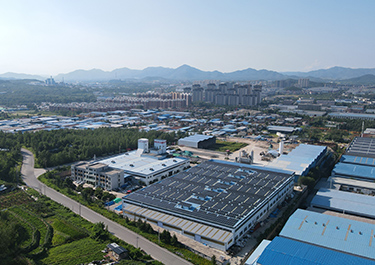 Our FactoryWe have a team of more than 30 talented geotechnical material R&D experts and a 30,000 square meter advanced modern intelligent manufacturing plant.
 - Products
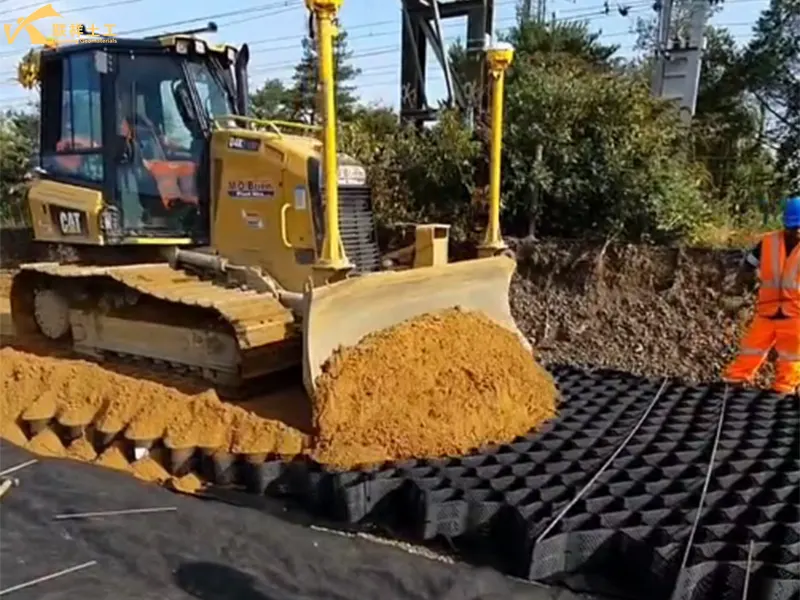
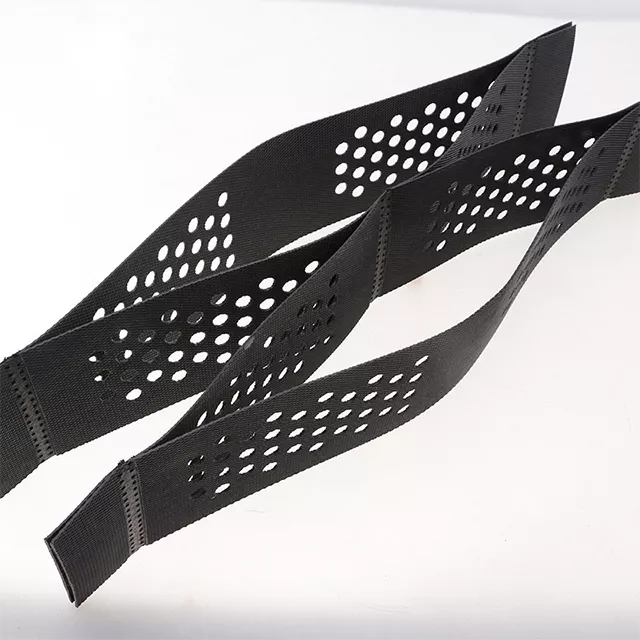 Geocell is a three-dimensional mesh structure made of high-strength polymer sheets (such as HDPE, PP, etc.) through ultrasonic welding. When unfolded, it presents a three-dimensional grid shape.
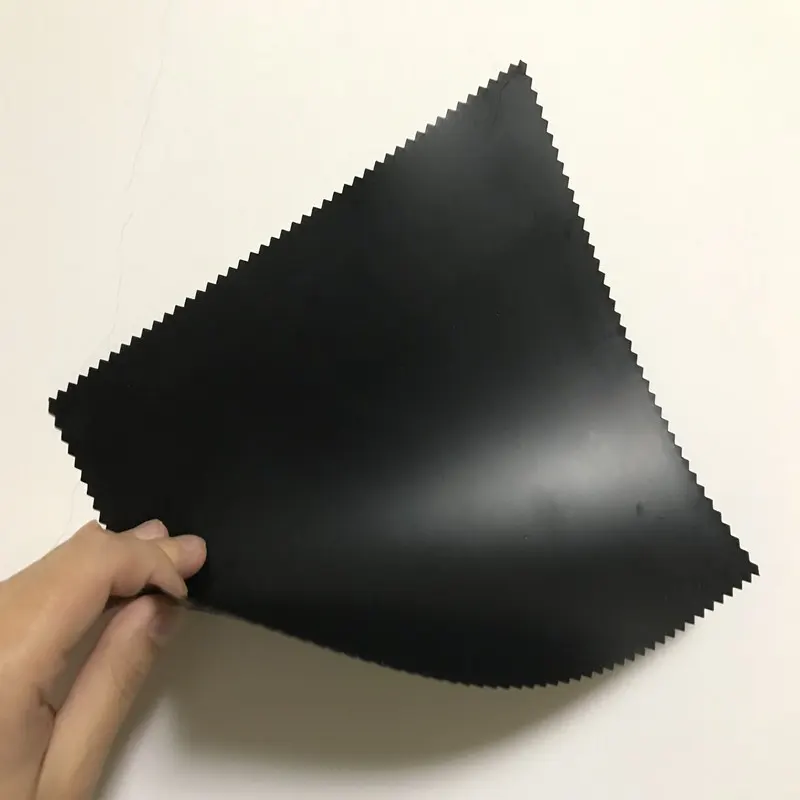 Geomembrane is a thin, extremely low-permeability sheet material made from high-molecular-weight polymers (high-density polyethylene, linear low-density polyethylene).
 - Blog
- Contacts
Hardcore Data: How Geocells Conquer Road Engineering with 9 Key Indicators


Anyone in the engineering field knows that the biggest headache in road construction is soft soil settlement, roadbed landslides, and repeated maintenance - costly, labor-intensive, and stressful! Having developed products for so many years, we firmly believe in one principle: a good product speaks for itself. Truly good products solve user pain points and create real value. Geocells are such a product. They have no fancy concepts or unnecessary designs; their core focus is on making roadbeds stable, solid, and durable, ensuring every penny of investment is used effectively. This perfectly aligns with our seven-word mantra: "Focus, Excellence, Reputation, Speed!" Today, we'll use real data to demonstrate the crucial role of Lianxiang geocells in road paving.
1. Significantly Improved Foundation Bearing Capacity
In the road base structure, Lianxiang geocells can increase the overall modulus of the crushed stone base layer through lateral constraint, thereby achieving thinning replacement or performance improvement. Cyclic load tests on recycled asphalt pavement (RAP) base courses showed that a 0.15 m thick geocell-reinforced base course was superior to a 0.30 m thick unreinforced base course in controlling surface deformation and vertical stress. This means that using geocells can reduce the thickness of the base course filler by 50% while maintaining or improving structural performance.
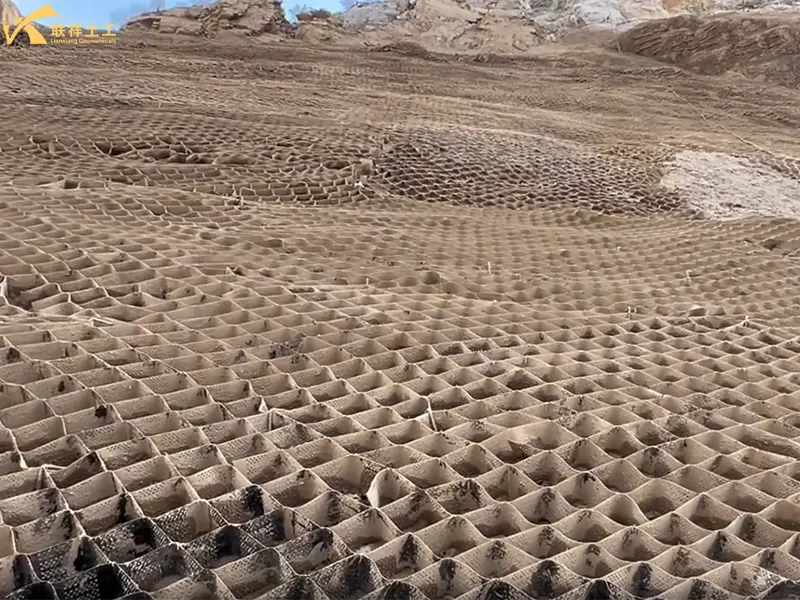
1.1. Core Quantitative Data on Bearing Capacity Improvement
| Foundation Soil Type/Condition | Bearing Capacity Improvement Effect (Using vs. Not Using) | Key Influencing Factors and Data | Data Source |
| Saturated Loess Foundation | Increases by 2-3 times | Suitable for treating shallow saturated loess foundations less than 3 m thick, with significant reinforcement effects. | |
| Sandy Soil Foundation | Increases by more than 2 times | High-strength geocell-reinforced sandy soil foundations can increase bearing capacity by more than 2 times while effectively reducing settlement. | |
| Aeolian Sand Foundation | Increases bearing capacity by 2 to 4 times | - Single-layer reinforcement: Bearing capacity can be increased by 2 to 4 times, with the best effect when the cell depth is 0.3 times the foundation width. - Stress diffusion: Under single-layer reinforcement, the soil pressure at the center of the cell is reduced by about 1.5 to 1.8 times; under multi-layer reinforcement, it is reduced by about 4.5 to 7.8 times, showing a stronger stress homogenization ability. | |
| Highway Foundation | Increases bearing capacity by 4 to 8 times | Under optimal reinforcement effect, the ultimate bearing capacity can be increased by 4 to 8 times. At the same time, the maximum soil pressure of the reinforced layer is reduced by 50% to 60% compared with the unreinforced layer. | |
| Foundations on Slopes | Significant improvement, especially for steep slopes | Numerical studies show that for steep slopes with a small internal friction angle, the reinforcement effect of geocells is the most significant. | |
| Composite Foundation Subbase | Superior Performance to Geogrids | In horizontally reinforced foundation layers, geocells offer superior load-bearing capacity enhancement compared to geogrids. They effectively distribute upper loads and improve overall bearing capacity. |
2.2. Summary Table of International Case Data
| Project Location | Original Foundation Type | Original Bearing Capacity (f / CBR) | Cellular Scheme | Bearing Capacity After Reinforcement | Increase in Bearing Capacity | Key Settlement/Performance |
| Saudi Desert Highway | Aeolian Sand | 80 kPa / = 2 | 200mm Cellular + Sand | >=250 kPa / 18-22 | +212% | Passes 55-ton vehicles, 50-year lifespan |
| Malaysian Port | Marine Soft Soil | 90 kPa / 3.5 | 200mm Cellular + Crushed Stone | 240 kPa / 16 | +167% | Settlement 3.2 cm, reduced by 65% |
| Hamburg Railway, Germany | Coastal Soft Soil | 110 kPa | 200mm High-strength geocells | 280 kPa | +155% | Monthly settlement < 2 mm |
| Port of Los Angeles, USA | Backfill | 120 kPa | 200mm HDPE geocells | 270 kPa | +125% | Supports 40-ton containers |
| M6 Motorway, UK | Peat soil | CBR=3.0 | 150mm geocells | CBR=14 | +367% | Meets 120km/h traffic requirements |
| Mining areas, Australia | Saline sand | 95 kPa | 200mm corrosion-resistant geocells | 230 kPa | +142% | Lifespan 30+ years |
Based on multiple authoritative research and engineering application data, using Lianxiang geocells to reinforce foundations typically increases bearing capacity by 2 to 8 times. The specific values depend on factors such as the foundation soil type, the cell structure design (e.g., height, weld spacing), and construction techniques (e.g., compaction degree, burial depth). Through its unique three-dimensional constraint (i.e., the "flexible raft foundation" effect), geocells can more effectively distribute the superstructure load to a wider range of soil layers, thereby significantly improving the ultimate bearing capacity of the foundation and greatly reducing the concentration of earth pressure.
2. Load Dispersion, Reducing Foundation Stress
The core value of Lianxiang geocells in load dispersion and reducing foundation stress lies in their ability to transform concentrated vertical loads into a wider range of "membrane effect" and "net effect" generated by the cell sidewall constraints. This not only reduces the peak stress transmitted to the foundation but also significantly homogenizes the stress distribution.
2.1. Earth Pressure Attenuation:
- Pile Top and Between Pile Soil: In pile-supported embankments, after using geocell reinforced cushion layers, the earth pressure transmitted to the pile top and between pile soil decreased by 61.51% and 56.35%, respectively. This indicates that the geocells transfer part of the load to the pile body through the "net effect," significantly reducing the stress burden on the soil between piles.
- Middle Position of the Geocell: In aeolian sand foundations, under single-layer geocell reinforcement, the earth pressure at the center of the geocell is reduced by approximately 1.5 to 1.8 times compared to the unreinforced state; when using multi-layer reinforcement, the earth pressure at this location is reduced by 4.5 to 7.8 times, demonstrating the extremely strong stress homogenization capacity of multi-layer geocells.
2.2. Reduction of Maximum Earth Pressure:
- In highway foundation applications, when achieving optimal reinforcement effects, the maximum earth pressure of the Lianxiang geocell reinforced layer is reduced by 50% to 60% compared to the unreinforced layer. This means the foundation surface no longer bears peak loads, resulting in a more uniform stress distribution.
2.3. Changes in Stress Distribution Pattern
- Comparing the stress characteristics of geogrids (two-dimensional) and geocells (three-dimensional), we find that the stress distribution of geogrids is "U-shaped," primarily bearing tensile forces; while the stress distribution of geocells is "V-shaped," indicating that their three-dimensional structure not only bears tensile forces but also, through friction and passive resistance of the sidewalls, transmits stress in a "wedge-shaped" manner to a deeper and wider area, more fully mobilizing the bearing capacity of the surrounding soil.
- Geocells significantly restrict the lateral displacement of gravel or sand fillers. Data shows that the three-dimensional constraint of the cells is equivalent to applying an equivalent confining pressure to the filler. This confining pressure effect greatly increases the modulus of the filler, thereby more efficiently converting vertical stress into lateral constraint forces and preventing lateral extrusion of the material. It is this restriction on lateral deformation that fundamentally reduces excessive stress concentration in a certain area.
2.4. Comprehensive Data Comparison Table
To more intuitively demonstrate the data differences in stress dispersion between "using" and "not using" geocells, the following comparison table has been compiled:
| Comparison Indicators | Using Geocells | Not Using Geocells | Improvement Effect/Data Change | Applicable Working Conditions |
| Inter-pile Soil Stress | Low (attenuation 56.35%) | High (directly bears the entire load) | Half the load on the inter-pile soil, reducing differential settlement | Pile-supported embankments, soft soil treatment |
| Pile Top Stress | Concentrated (attenuation 61.51%) | Extremely concentrated (prone to pile top puncture) | Stress shifts to the pile top, but the peak value is significantly reduced | Bridge-road transition sections, rigid pile composite foundations |
| Base Peak Earth Pressure | Low (reduced by 50%-60%) | High (significant stress concentration) | Avoid localized damage and protect weak underlying layers | High embankment subgrades, oil tank foundations |
| Stress concentration areas | Dispersed in a "V" shape | Concentrated in a "U" shape | More uniform stress diffusion, enhanced lateral restraint | All granular filler base layers |
| Earth pressure in the center of the geocell | Low (reduced by 1.5-1.8 times) | Benchmark value (100%) | Significantly reduced stress in the core area | Treatment of aeolian sand and desert foundations |
Geocells can reduce the maximum earth pressure transmitted to the foundation surface by 50%-60%, effectively preventing damage caused by localized overloading.
3. Significantly Reduce Subgrade Fill Material Usage
Lianxiang geocells reduce the amount of subgrade fill material through "structural enhancement" to achieve "material substitution." That is, utilizing the three-dimensional restraint capability of the geocells, inferior fill material (or a thinner layer of high-quality material) can achieve the mechanical effect that originally required a large amount of high-quality fill material, or directly reduce the design thickness.
3.1. 50% Thickness Reduction (Base Course Substitution Effect)
- Data: Cyclic load tests on recycled asphalt pavement (RAP) base courses show that a 0.15 m (15 cm) thick geocell-reinforced base course outperforms a 0.30 m (30 cm) thick unreinforced base course in controlling surface deformation and vertical stress.
- Interpretation: This means that, while meeting the same design specifications, using geocells can directly reduce the amount of base course filler by 50%. For large-scale subgrade construction, this directly corresponds to a 50% reduction in extraction volume, transportation costs, and carbon emissions.
3.2. Approximately 30% Thickness Reduction (Conventional Empirical Value)
- Data: In the reinforcement of conventional highway base and subbase courses, extensive engineering practice and numerical simulations show that using geocells can typically reduce the thickness of crushed stone or graded crushed stone filler by approximately one-third.
- Interpretation: If the original design requires a 60cm layer of graded crushed stone subbase, using geocells can typically reduce this to around 40cm, with mechanical properties improving rather than decreasing.
3.3. 100% Fill Material Replacement (Using Local Soil/Waste)
- Data: In the railway settlement treatment case of Kailuan Group, the traditional solution required replacement with high-quality crushed stone or gravel. However, by adopting the flexible support technology of "weathered coal gangue + geocells," 100% of the natural crushed stone was replaced with industrial waste (coal gangue).
- Interpretation: Although this does not directly reduce the "total volume," it reduces the demand for high-quality natural fill material to near zero. Data shows that this technology saves more than 50% in treatment costs, with significant environmental benefits.
3.4. Inferior Soil Meets Bearing Capacity Requirements (Bearing Capacity Improvement Offsets Material Defects)
- Data: In the treatment of saturated loess foundations, the bearing capacity of unreinforced plain loess is often insufficient. After reinforcement using geocells, even if local loess is still used as the fill material (instead of replacing it with crushed stone), the bearing capacity of the foundation can still be increased by 2-3 times, thus meeting the design load requirements.
- Explanation: Previously, inferior soil that required complete replacement or extensive cement/lime amendment can now be used simply by compacting it and encasing it within the geocells. This is equivalent to replacing "material force" with "structural force," directly saving on amendments and the need to transport high-quality fill material from elsewhere.
This "reduction" not only lowers material procurement costs but also directly relates to green construction indicators such as reduced land excavation, lower transportation energy consumption, and lower carbon emissions.
4. Controlling Lateral Deformation and Preventing Subgrade Slippage
The core mechanism of Lianxiang geocells in controlling lateral deformation and preventing subgrade slippage is its three-dimensional structure, which generates a "confining pressure effect" and "flexible-rigid constraint" on the fill material.
4.1. Lateral Displacement Reduction of Up to 46% - 77%
- Data: In model tests on geocell-reinforced soft foundations, displacement monitoring points revealed that compared to unreinforced foundations, geocell reinforcement significantly reduced lateral displacement of the foundation soil by 46% to 77%.
- Interpretation: This means that potential slope heave or toe extrusion deformation is effectively suppressed by the geocells. The geocell acts like a rigid grid embedded in the soil, forcing the soil to share stress and preventing local particle rolling and slippage.
4.2. Slope Toe Displacement Reduced by Over 50%
- Data: In specific slope loading tests, when loads were applied to the slope, significant heave and horizontal displacement occurred at the toe of the unreinforced slope. After laying the geocell reinforcement layer, the maximum horizontal displacement at the toe was reduced by over 50%.
- Explanation: The toe of a slope is the "breakthrough point" for roadbed slippage. Controlling the deformation of the toe is equivalent to locking the "throat" of the landslide, significantly improving the stability of the free face of the slope.
4.3. Safety Factor (FoS) Increased by 30% - 60%
- Data: Numerical simulations for different slope gradients and foundation conditions show that after laying geocell reinforcement layers, the overall stability safety factor of the roadbed or slope typically increases by 30% to 60%.
- Explanation: For example, a slope with an original safety factor of only 1.05 (close to the landslide critical value of 1.0) can have its safety factor increased to over 1.4 after reinforcement, fully meeting the specifications (usually requiring >=1.2-1.3).
This constraint is equivalent to adding a "cage" to the originally loose granular material, preventing it from being squeezed out to the sides under vertical loads, thereby significantly improving the overall shear strength and stability of the soil.
5. Extended Road Surface Lifespan and Reduced Maintenance Costs
- For heavy-load road sections, road surface lifespan is extended by 8-10 years.
- Over the entire lifespan, maintenance costs are reduced by 60%-80%.
6. High Construction Efficiency and Significantly Shortened Construction Period
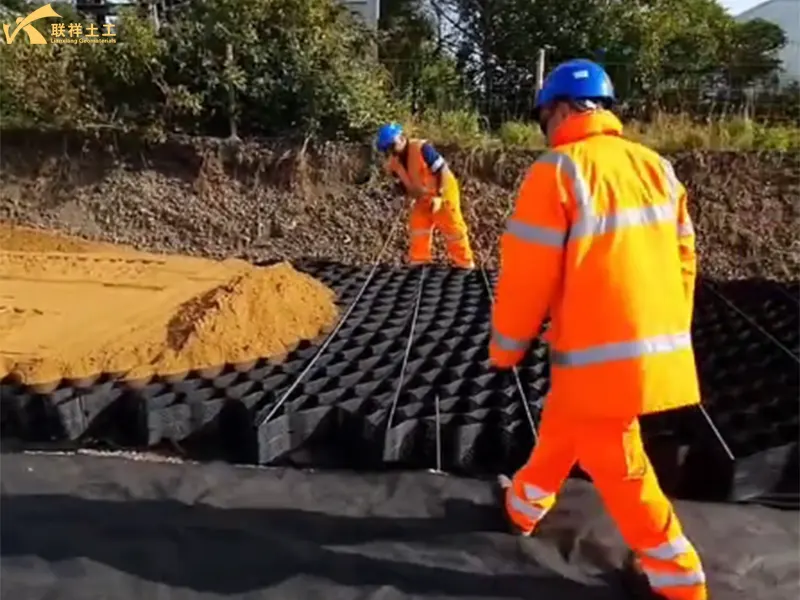
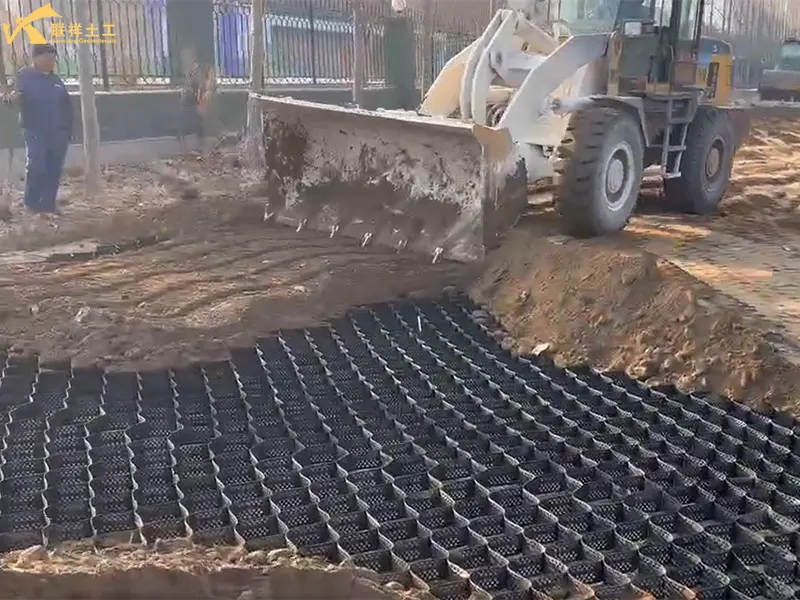
- Modular and foldable transportation (volume reduced to less than 1/5), allowing for immediate filling upon unfolding, shortening the construction period by 20%-50%.
- No large equipment required, increasing labor efficiency by over 40%, and reducing the construction cycle per kilometer by 15-25 days.
7. Reduced Overall Cost and Significant Economic Benefits
- The overall cost of materials, construction, and maintenance is reduced by 25%-41% (20-year operating period).
- Slope protection engineering: Cellular slope protection costs 85 yuan/m2, while traditional mortar-grouted rubble masonry costs 120 yuan/m2, a cost reduction of 29%.
- Transportation energy consumption is reduced by over 40%, and carbon emissions from the project are reduced by 28%-45%.
8. Adaptable to Complex Geological Conditions, Resistant to Freeze-Thaw/Erosion
- Permafrost Regions: Annual settlement controlled within 5mm, frost heave deformation reduced by 60%.
- Slopes/Roadbeds: Erosion reduced by 90%-98%, soil erosion reduced by 98%.
- Strong Weather Resistance: Stable from -40oC to 60oC, service life >=20-50 years.
9. Eco-Friendly, Enables Ecological Slope Protection
- Open structure, permeable and soil-retaining, permeability coefficient 10-3-10-4 cm/s, facilitating drainage and vegetation growth.
- Combined with grass planting/hydroseeding, vegetation coverage increases by 30%, forming a self-sustaining ecological system in 3-6 months.
- Slope greening coverage can reach 95%, combining protective and aesthetic functions.
I believe that good engineering materials should make every road stronger and more durable, reduce the worries of every engineer, and allow the public to travel on safer and smoother roads. This is the value of geocells, and it is also our original intention in promoting this product—no empty promises, just practical work, letting our strength speak for itself, and winning through word of mouth! Lianxiang Geotechnical has been engaged in the production, research and development, and sales of geocells for many years. Please feel free to contact us if you have any product needs.
Written by
SHANDONG LIANXIANG ENGINEERING MATERIALS CO., LTD.
Kyle Fan
WhatsApp:+86 139 5480 7766
Email:admin@lianxiangcn.com
-
WhatsApp
-
E-MailE-Mail:admin@lianxiangcn.com
-
WeChatWeChat:18554180188